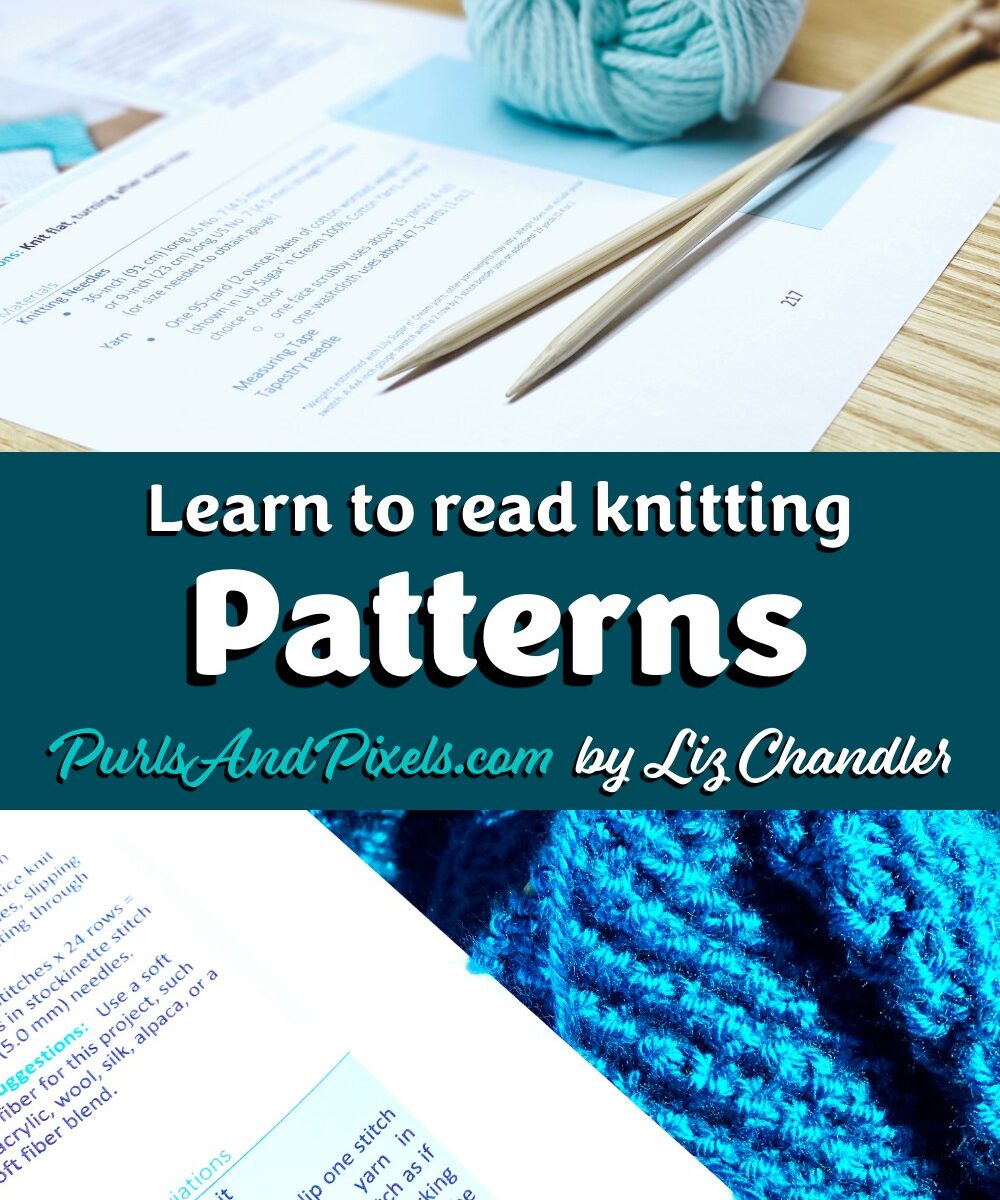
Reading Knitting Patterns

Learn to read knitting patterns with Liz Chandler @PurlsAndPixels.

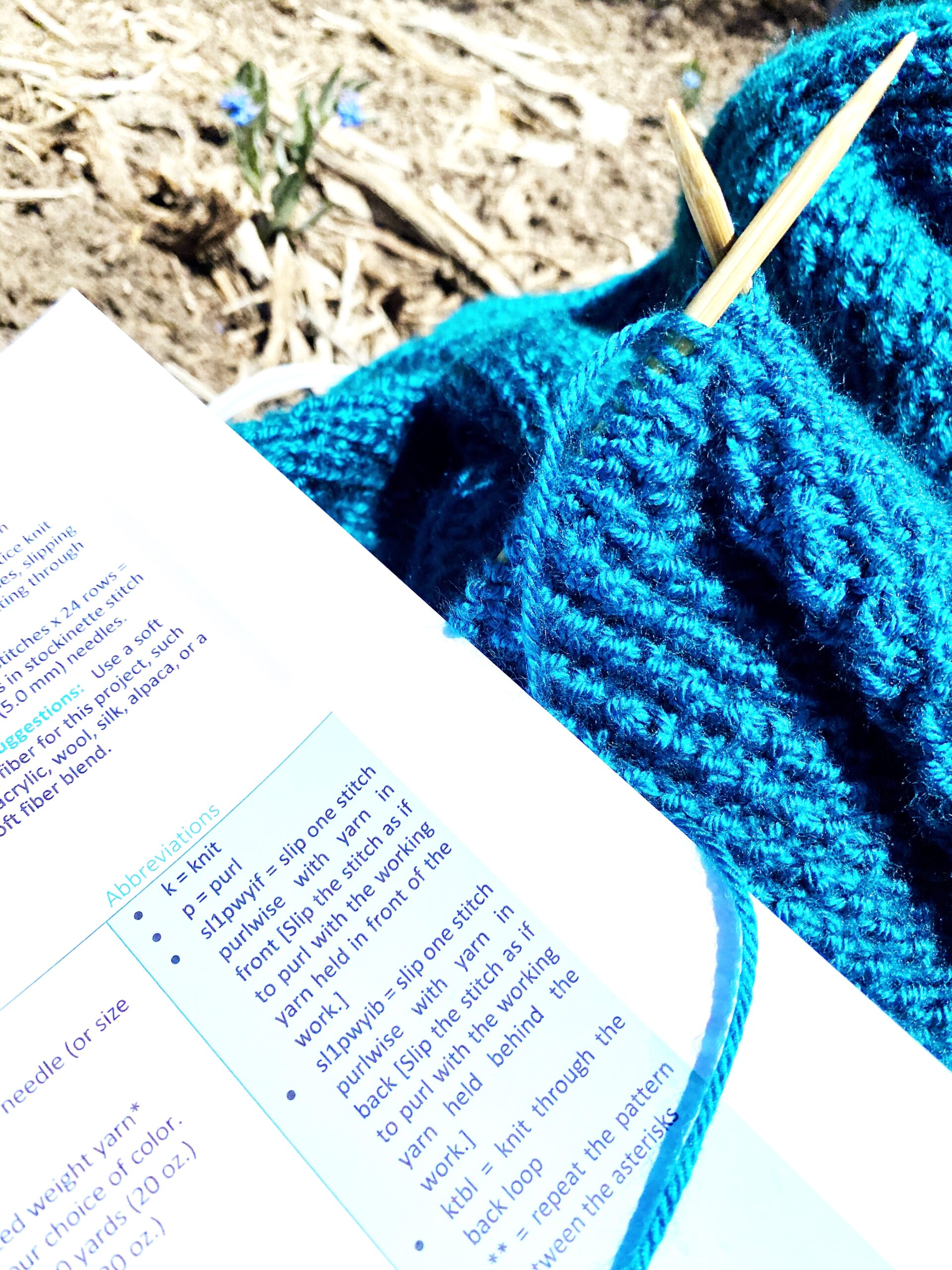
Much like recipes in baking, knitting patterns try to break down a project into simple steps to help you create a copy of the designer’s creation. Looking at your first knitting pattern can sometimes be overwhelming; there tend to be many sections and a lot of abbreviations. But when you break them down, you will find that almost all knitting patterns are made up of similar parts.

Reading knitting patterns and understanding abbreviations,. Get the free knitting lesson online in this guide from Liz Chandler at PurlsAndPixels

Most patterns structured in the same way. They will usually include:

Materials

Almost every knitting pattern will list the materials required to make the item exactly as the author did. You should see knitting needle sizes as well as a yarn suggestion. In most cases, the author has not attempted to make the item with more than one type of yarn. Often, they have only knit it in one color. If you wish to replicate the pattern exactly, you must find the recommended yarn.

Substituting Materials

If you are unable to locate the yarn used by a pattern’s author, you can try substituting yarn. If you try this, you will need to ensure you select yarn in the same weight as the suggested yarn. Because the thickness of yarns in the same weight category can vary slightly, before you substitute, always make sure you work up a gauge swatch to ensure your knit will work out to be the correct size.

Substituting yarn in knitting patterns, reading knitting patterns with Liz Chandler @PurlsAndPixels.

What is Gauge?

Your pattern will likely have a section that reads something like: “Gauge:   19 stitches x 26 rows = 4 x 4 inches in stockinette stitch on No. 7 (4.5 mm) needles.” This tells you how large each stitch needs to be for your final knitting project to be the correct size. Check your gauge when you need your knitted item to fit properly or match a specific dimension. Learn how to check your gauge in this free knitting guide.

Understanding Abbreviations

Knitting patterns are full of abbreviations and learning what they mean makes reading knitting patterns easier. Knitters use a shorthand to keep track of the stitches they make when writing a pattern. Knitting designers usually provide a key at the beginning of the pattern, which explains their abbreviations. Always refer to this key. Some designers do not follow the standardized abbreviations, and others will create their own abbreviations for unique stitches.

If you find a pattern with no key, you can follow the more standard knitting abbreviations. Below are some basic knitting abbreviations that most knitters use; this is also a complete list of the abbreviations used throughout my Learn to Knit Guide. You will want become familiar with these as you start learning to knit.

Knitting Abbreviations Used in My Learn to Knit Guide

CO = cast on

k = knit

p = purl

** = repeat the pattern between the asterisks

sl1pwyif = slip one stitch purlwise with yarn in front

sl1pwyib = slip one stitch purlwise with yarn in back

sl = sl1pwyib = slip one stitch purlwise with yarn in back

sl marker = slip the stitch to which a marker is clipped purlwise with yarn in back [Slip the stitch as if to purl with the working yarn held behind the work.]

ktbl = knit through the back loop

k2tog = knit two together

ssk = slip, slip, knit

M1L = make one left [Pick up the strand between the stitch just worked and the next stitch from front to back with the left needle and knit into the back of it.]

M1R = make one right [Pick up the strand between the stitch just worked and the next stitch from back to front with the left needle and knit into the front of it.]

BO = bind off

Learn More Abbreviations

Want to explore more abbreviations with a side of silly fun? Read my Knitting Abbreviations Explained Series here.

As your knitting becomes more complex, you will come across abbreviations for increasingly more advanced stitches. Many knitters follow the Crafty Yarn Council’s collection of knitting abbreviations as a standard way of shortening words in knitting patterns. If the pattern you are working does not come with a key, you can look online at the Crafty Yarn Council’s list of standard knitting abbreviations, which can be found at:  https://www.craftyarncouncil.com/knit.html.

Knitting patterns by Liz Chandler @PurlsAndPixels.

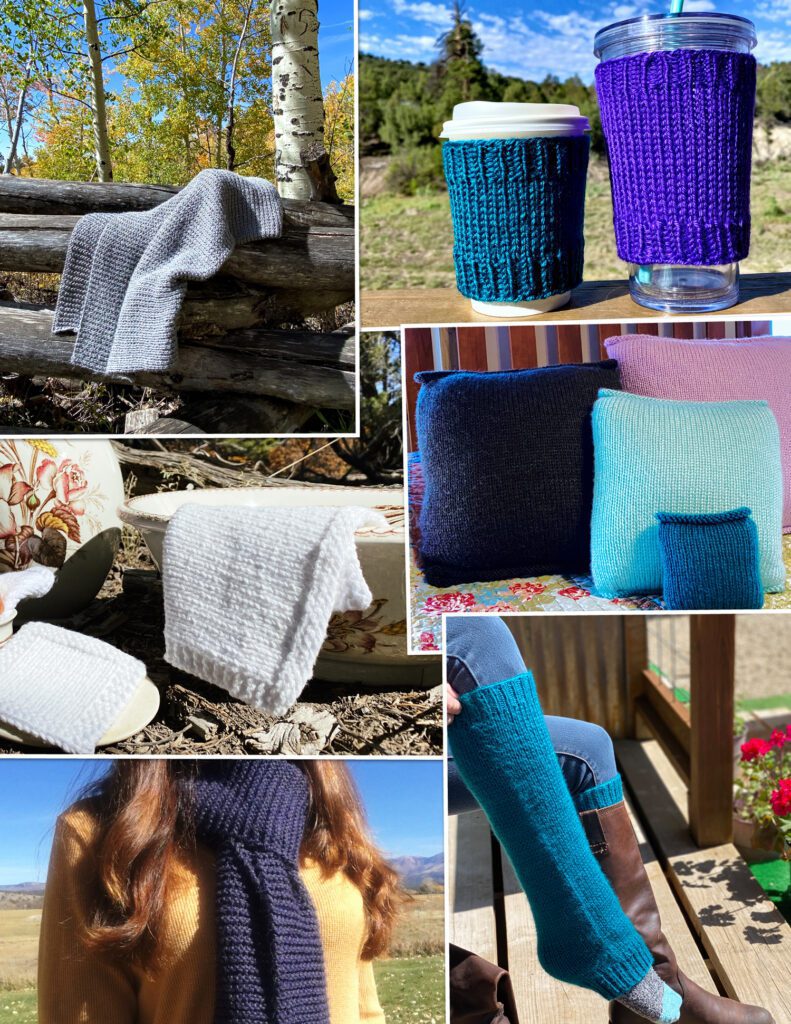
Now, select a pattern, and practice reading it before you start knitting. Find my full collection of knitting patterns here.

Up Next

Find tips and tricks to help you with Following Knitting Patterns in the next lesson.

Following knitting patterns, counting rows, with Liz Chandler @PurlsAndPixels.

Go Back to the Learn to Knit Index

Blocking Knits

Learn when and how to block knitting to even out your stitching and form your shapes. Get the free knitting lesson in this online guide by Liz Chandler @PurlsAndPixels.

You’ve done it! Congratulations on your beautiful knit piece. You may notice one last instruction after knitting and tying up the loose ends of your project. Often, at the end of a knitting pattern the final step will read, “block if desired.” Blocking knits is a way of forming your project into a more perfect shape. There are several techniques you can use to block knitwear, including wet, dry, steam, and damp blocking. No matter what method you use, the blocking process will stretch and smooth your stitching.

Learn about blocking knits in this knitting lesson from Liz Chandler @PurlsAndPixels.

What is blocking knitwear?

Blocking in knitting is a finishing touch for your knit work. It allows you to stretch and manipulate your knitting into a more consistent, even stitch pattern.

Below, you will see two fingerless mittens I have made. These mittens were made two at a time on the same pair of needles in the same knitting session. The glove on the left has not been blocked. The glove on the right has been blocked. As you can see, the right mitten has a much better shape and the stitching seems much more even.

How to block knits

To block your knitting, you will need to prepare a blocking board. You will lay or pin your knits to the blocking board to ensure they keep their shape. If you do not have a blocking board, you can usually substitute an ironing board or a spare mattress covered in towels.

You can order a blocking board on Amazon.com with this affiliate link.

There are a few techniques you can use when blocking your knits. You will want to consider the type of yarn you have used for your piece when choosing a blocking method. Wool and natural fibers hold their shape better after wet or damp blocking, while acrylics seem to do well with damp and dry blocking. All these blocking methods involve stretching your knitting work a bit, in order to even out the stitching. Then you will lay your item out flat or pin it to a blocking board, while forming it into the correct shape and size.  

Wet blocking knits

For wet blocking, you will completely submerge your newly knitted item in water. Let the piece soak until the yarn is fully saturated, then gently wring out any extra drippy water. I shake the item out a bit; this not only gets rid of excess water but also helps the stitches to pull themselves into a more even pattern. Next, lay your item on your mattress or blocking board. Gently pull your work into the desired shape.

Your pattern may ask you to block your knit to a certain measurement. This happens often when you are making patchwork blankets or other knit pieces that should line up perfectly to be sewn together. In this case, stretch the piece to match the given measurements and pin your knit to the board. Pinning it down keeps your piece from shrinking back out of shape while it dries. Once your knit is completely dry, you are ready to continue with your pattern or use you item.

Learn about wet blocking knits in this knitting lesson with Liz Chandler @PurlsAndPixels.

Dry blocking knits

While wet blocking is the most effective way to make sure your knits are in perfect shape, dry blocking sometimes does the trick for items like gloves and hats. Simply tug and pull on your completed work to even out the stitching. When you have focused on your tension while knitting and have a well-shaped knit from the start, a gentle stretch may be all your work needs.

Learn about dry blocking knits in this knitting lesson with Liz Chandler @PurlsAndPixels.

Steam Blocking knits

Another option to block your knits is to use a stream iron to moisten the stitches. First, stretch your knit into shape and pin it to your blocking board. Wave a steam iron a half inch or so above the knitting to moisten the fabric. Then, use your hands to gently smooth the stitching. Allow your knit to fully dry before unpinning. Be very careful if you try this with acrylics; acrylic yarn is made of plastic and too much heat could make it melt. In most cases, it is best to avoid steam blocking acrylics for this reason.

Learn about steam blocking knits in this knitting lesson with Liz Chandler @PurlsAndPixels.

Damp blocking knits with the washing machine

Toss your knits in the washing machine on hand wash or gentle cycle with cold water. Once the wash cycle has finished, the machine will have wrung out just enough water to leave the knits damp, but not wet. This allows for a bit more malleability than just stretching out your dry knits, which helps the stitches to fall into an even pattern. The stitches wont shift around as much as wet blocking, so it doesn’t allow the knit to change its shape as dramatically as a wet blocking would. On the other hand, drying time is cut dramatically when using a washing machine to damp block.

Learn about damp blocking knits in this knitting lesson with Liz Chandler @PurlsAndPixels.

Knit These Projects

Washcloth and Face Scrubby Knitting Pattern

Free Beginner Face Scrubby knitting pattern by Liz @PurlsAndPixels.

In this post, I blocked a Beginner Face Scrubby and Beginner Washcloth. Both patterns are included in my Simple Washcloth Knitting Pattern Collection.

Fingerless Glove Knitting Pattern

Simple fingerless glove knitting pattern in all sizes by Liz Chandler @PurlsAnd Pixels.

Also pictured, are gloves made by following my Simple Fingerless Glove Knitting Pattern.


Learn how to block knitting projects in this lesson with Liz Chandler @PurlsAndPixels.

Find More Knitting Patterns

If you like this, check out the other knitting patterns I’ve written. They’re all gathered on one page, which you can find here.

Find all of the knitting patterns by Liz Chandler @PurlsAndPixels.

After making some simple projects, you may want to know how to customize your knitting to make it more unique. Find out how in the next knitting lesson.

Learn to customize simple knitwear by substituting yarn and adding embellishments in this knitting lesson with Liz Chandler @PurlsAndPixels.

Go Back to the Learn to Knit Index

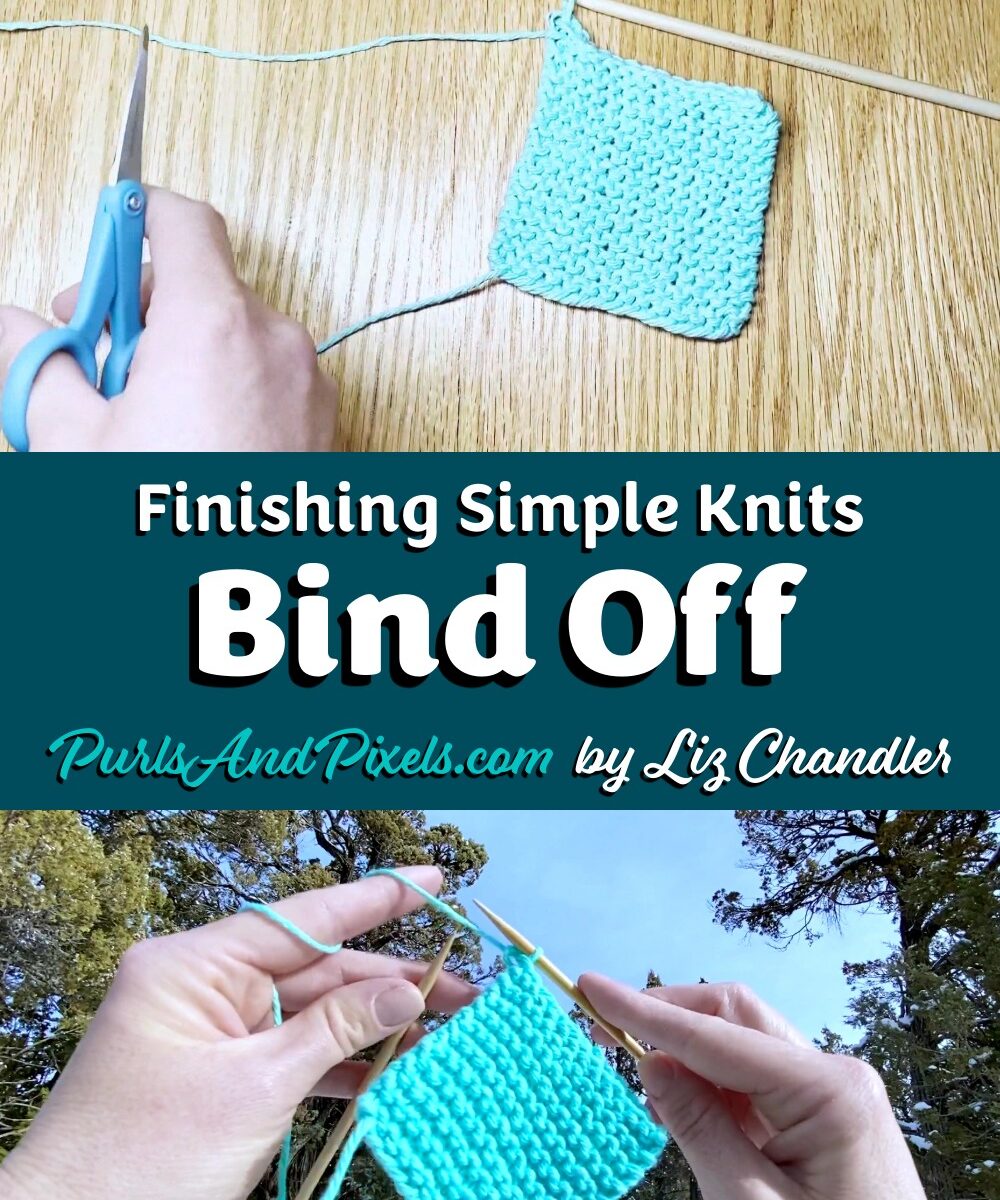
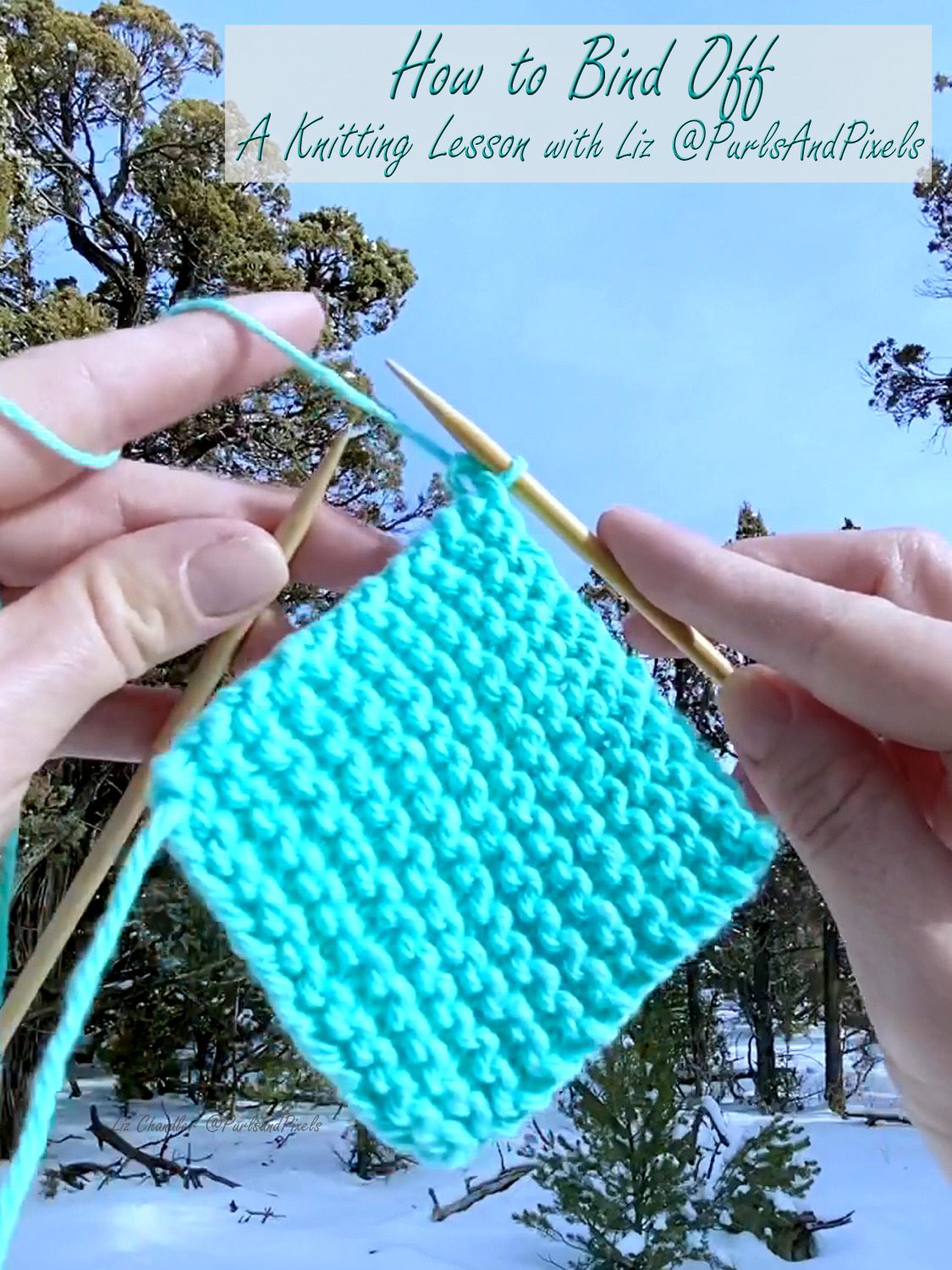
Bind Off or Cast Off Stitches to Finish Knitting

Finish your simple knits by learning to bind off, which means take your last stitches off the knitting needles. Get the free knitting guide from Liz Chandler @PurlsAndPixels.

Once you have finished knitting a project, you will want to know how get your work off the needles. You’ll need to “bind off” or “cast off” the piece to secure your last row of stitches in place. There are several ways to end a knitted project. Here I will show you a basic bind off, commonly known as the “standard bind off.” This method can be used on a wide variety of knitted items.

Learn to take knit stitches off needles with a standard bind off, a knitting lesson from Liz @PurlsAndPixels.

A standard bind off chains together the stitches in your last row so you can remove them from your needles without your work coming undone. To finish your knitted piece, you will work the first two stitches of you last row. Then, you’ll slip the first stitch over the second, which will start removing stitches from the needles and keep them securely in place.

Here, you will learn to bind off in only knit stitches. Later, after you have learned the purl stitch, you can learn to cast of a piece that was made in a pattern of knits and purls.

Before you start, remember to loosen up:

Keep in mind that this bind off tends to be a bit tight, so you may want to loosen up your tension when knitting this last row. Many patterns will specifically tell you to “bind off loosely,” to remind you to adjust the tightness of the stitches.

Or, go up two or three needle sizes:

Instead of adjusting how tightly you knit, you can also switch needle sizes. Try moving to a needle that is two or three sizes larger than the one you have been using for the rest of the pattern. This allows you to keep the same knitting tension in your yarn as you cast off, while still loosening the bind off stitches enough to match the rest of the piece. Some patterns instruct you to switch needle sizes for the last row, to help you ensure your ends are more even.

Video Guide: How to Bind Off Knitting

Written Guide: How to Bind Off Knitting

The steps below assume you have been working in a pattern of only knit stitches (garter stitch). Find a free sample pattern to follow here; it is a face scrubby made of only knit stitches. If you have been knitting in a pattern of knits and purls, make sure to follow your pattern as you bind off.

Bind Off, Step 1:

Following the pattern you have been using for previous rows, knit the first two stitches of your last row.

Step 1: Learn to take knit stitches off needles with a standard bind off, a knitting lesson from Liz @PurlsAndPixels.

Bind Off, Step 2:

Insert the left needle tip into the front loop of the first knit stitch on your right needle from front to back.

Step 2: Learn to take knit stitches off needles with a standard bind off, a knitting lesson from Liz @PurlsAndPixels.

Bind Off, Step 3:

Lift the first stitch on the right needle up and over the second stitch on the right needle.

Step 3: Learn to take knit stitches off needles with a standard bind off, a knitting lesson from Liz @PurlsAndPixels.

Bind Off, Step 4:

Pull the second stitch on the right needle through the first stitch on the right needle. 

Step 4: Learn to take knit stitches off needles with a standard bind off, a knitting lesson from Liz @PurlsAndPixels.

Bind Off, Step 5:

Slide the left needle out of the stitch on the right needle.

Step 5: Learn to take knit stitches off needles with a standard bind off, a knitting lesson from Liz @PurlsAndPixels.

Bind Off, Step 6:

At this point, the first knit stitch should be anchored onto the second and only one loop should remain on your right-hand needle.

Step 6: Learn to take knit stitches off needles with a standard bind off, a knitting lesson from Liz @PurlsAndPixels.

Bind Off, Step 7:

Knit the next stitch off your left needle and onto the right needle.

Step 7: Learn to take knit stitches off needles with a standard bind off, a knitting lesson from Liz @PurlsAndPixels.

Bind Off, Step 8:

In the same manner as before, lift the first stitch on your right-hand needle over the second stitch, drawing the second stitch through the first, leaving only one stitch on your right-hand needle.

Step 8: Learn to take knit stitches off needles with a standard bind off, a knitting lesson from Liz @PurlsAndPixels.

Bind Off, Step 9:

Repeat steps seven and eight until you have reached the last two stitches and freed the left-hand needle from your work.

Step 9: Learn to take knit stitches off needles with a standard bind off, a knitting lesson from Liz @PurlsAndPixels.

Bind Off, Step 10:

Lift the first stitch on the right needle over the second, leaving only one stitch on your right-hand needle.

Step 10: Learn to take knit stitches off needles with a standard bind off, a knitting lesson from Liz @PurlsAndPixels.

Bind Off, Step 11:

Set your work down, leaving the knitting needle in the last stitch. With very sharp scissors, clip the working yarn about eight or ten inches away from your last  stitch. This will free your work from the ball of yarn.

Step 11: Learn to take knit stitches off needles with a standard bind off, a knitting lesson from Liz @PurlsAndPixels.

Bind Off, Step 12:

Pull the yarn tail through to anchor it in; do this by enlarging the last stitch with your knitting needle until the tail slides completely through. The loop will become a straight loose end.

Step 12: Learn to take knit stitches off needles with a standard bind off, a knitting lesson from Liz @PurlsAndPixels.

Practice With My Knitting Patterns

Free Beginner Face Scrubby knitting pattern by Liz @PurlsAndPixels.

Knit along with me and practice your knit stitches with my Free Beginner Face Scrubby Pattern.

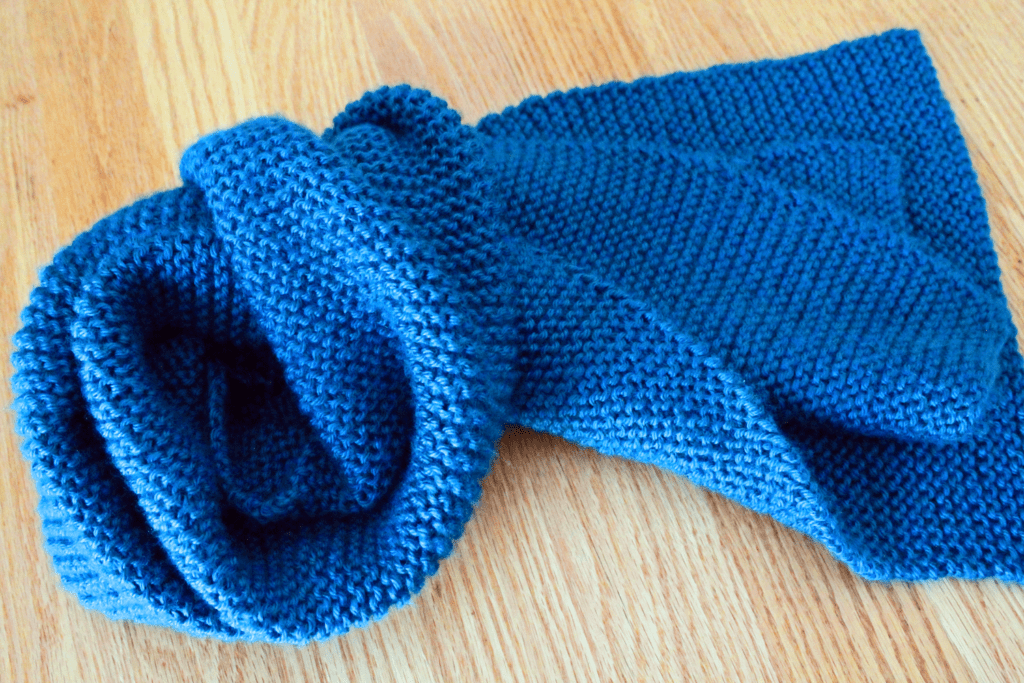
Simple garter stitch scarf easy beginner scarf knitting pattern by Liz @PurlsAndPixels

If you would rather try a longer pattern, my Free Beginner Scarf Pattern is made entirely of knit stitches, as well. Because it has more stitches in the pattern, it will take longer than a scrubby to finish.

 Learn to take knit stitches off needles with a standard bind off, a knitting lesson from Liz @PurlsAndPixels.

Up Next

Once have learned to take your knitting off the needles, you will have a couple of loose ends to take care of. Next, you can learn to weave in and tie off the ends on your flat knitted piece.

Go Back to the Learn to Knit Index

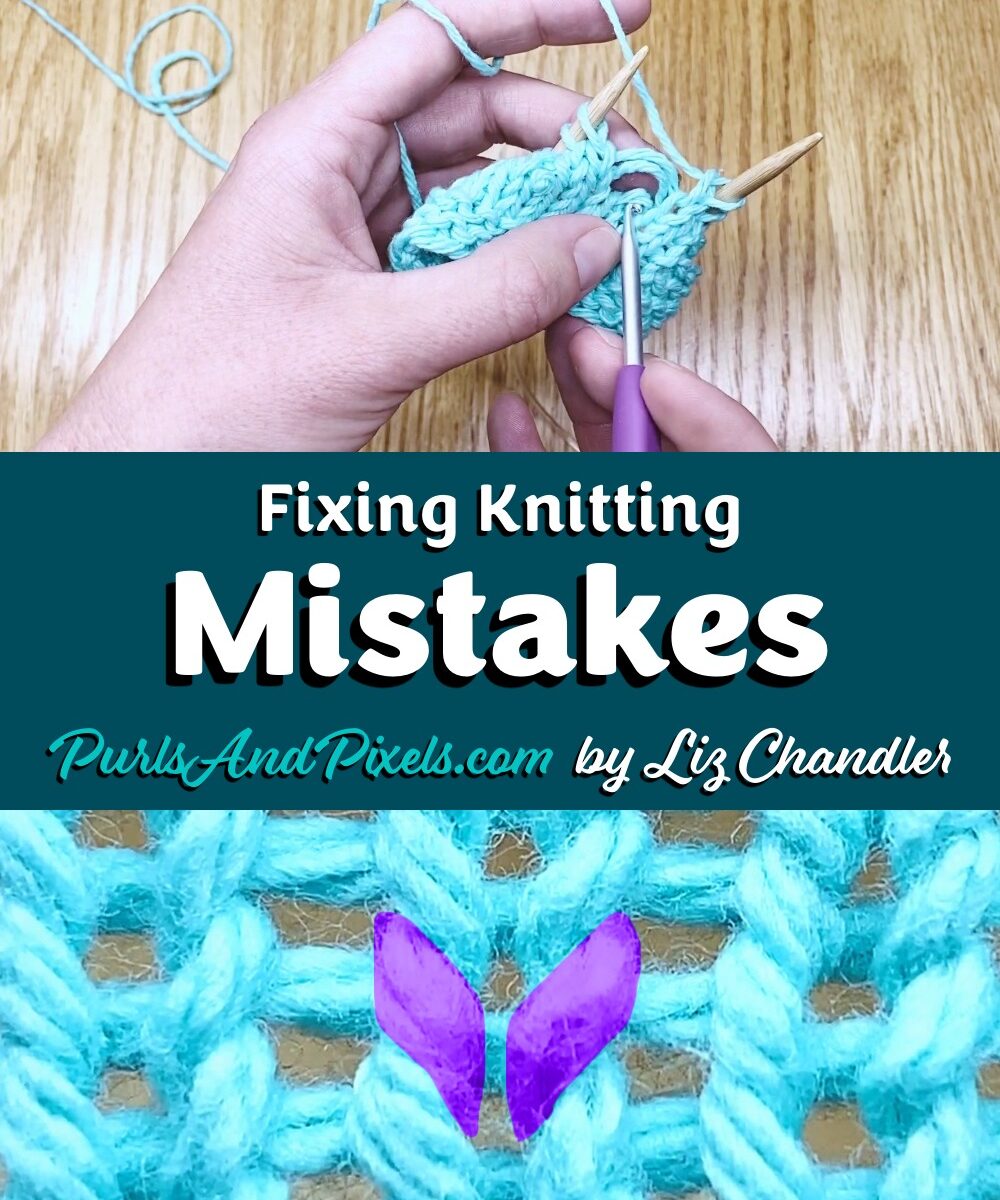
Fix Knitting Mistakes

Learn to spot knitting mistakes then fix dropped and twisted stitches in this tutorial from Liz @PurlsAndPixels

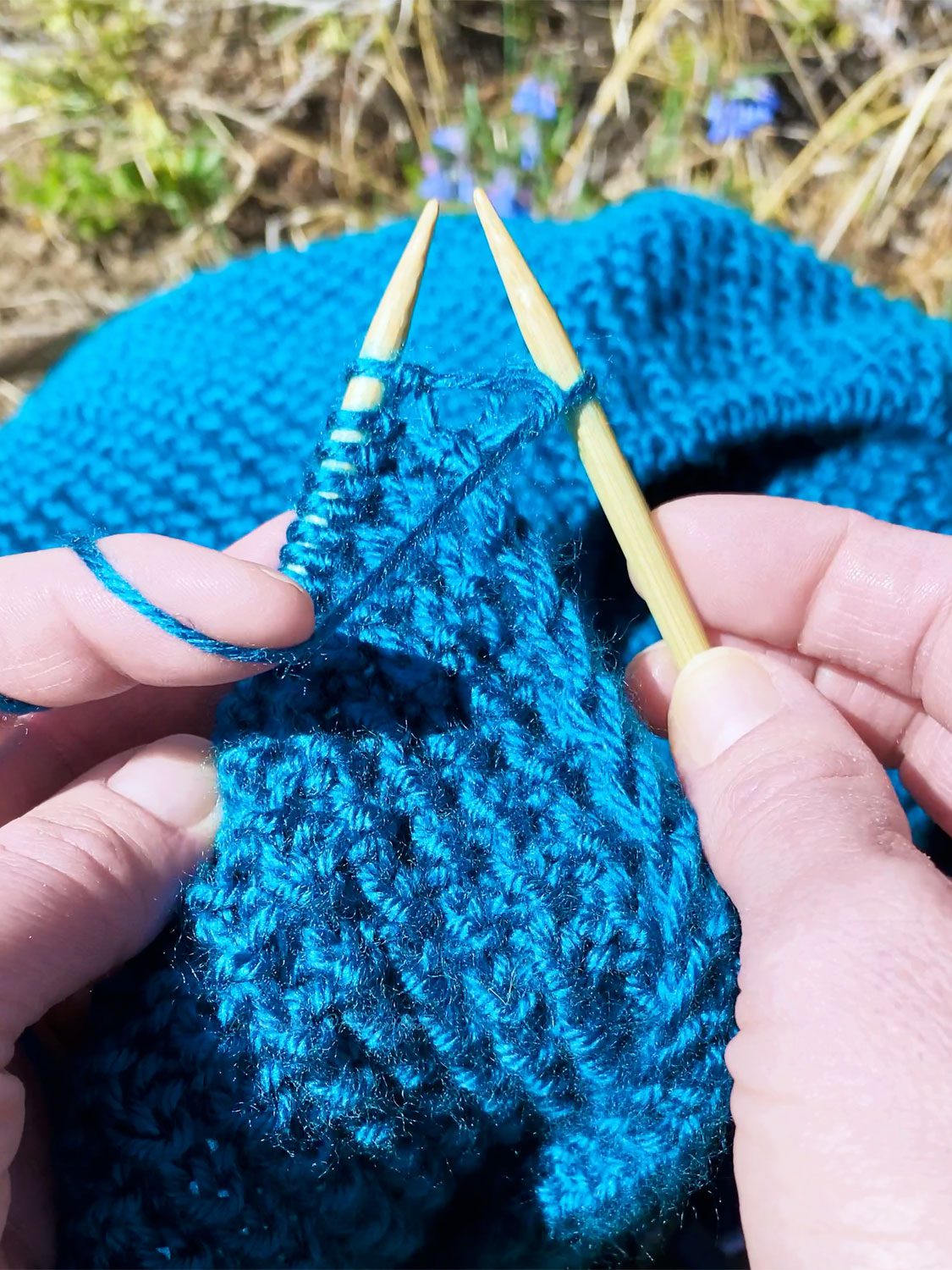
Sometimes, you will notice a stitch in your knitting that looks just a bit strange. As you begin to recognize the shapes of knits and purls, you will learn to “read” your knitting as you work. Once you know what your stitches should look like, you will start to spot mistakes. Twisted, dropped, and slipped stitches are common errors that almost every knitter makes. If you learn to identify them, you can fix knitting mistakes before you bind off your project.

Learn to spot knitting mistakes then fix dropped and twisted stitches in this tutorial from Liz @PurlsAndPixels

The video lesson below will show you how to spot and fix twisted and dropped stitches. Then, continue reading to see more about spotting and fixing common knitting mistakes.

Video Guide: Common Knitting Mistakes, Fixing Dropped & Twisted Stitches

Written Guide: Common Knitting Mistakes, Dropped & Twisted Stitches

Fixing Knitting Mistakes with a Crochet Hook

Many common knitting mistakes are fixed by intentionally dropping a stitch off your knitting needles. Knitters commonly refer to this as “laddering down” to the mistake. This allows you to correct your mistake, then return the stitch to its place. When correcting a mistake, you will want to be sure to always put the stitch back onto the needles with the right leg in front, if you do not want a twisted stitch.

Using a crochet hook helps when fixing mistakes in knitting that a few rows back. Learn to fix mistakes with Liz @PurlsAndPixels

When you have knit several rows before you notice your mistake, dropping the column of stitches directly above your mistake will allow you reach the problem stitch and fix it. Then, you will re-loop the dropped stitches by climbing up the “ladder” of stitches, anchoring them back in place one at a time. When you reach the top, you can put the last stitch back on the needle and resume your project.

While this can be completed with just your hands, using a crochet hook makes straightening the column of stitches an easier task. Choose a crochet hook that is the same size or just a bit smaller than your knitting needles. Crochet hooks and knitting needles are both labeled with millimeter measurements, so you can easily compare sizes. Here, I am working US No. 7 (4.5 mm) knitting needles and a G (4.0 mm) crochet hook.

Examining Correct Knit Stitches

Before you can spot mistakes, you need to know what a proper knit stitch and purl stitch should look like. So, let’s first look more closely at what knit stitches typically look like, without mistakes.

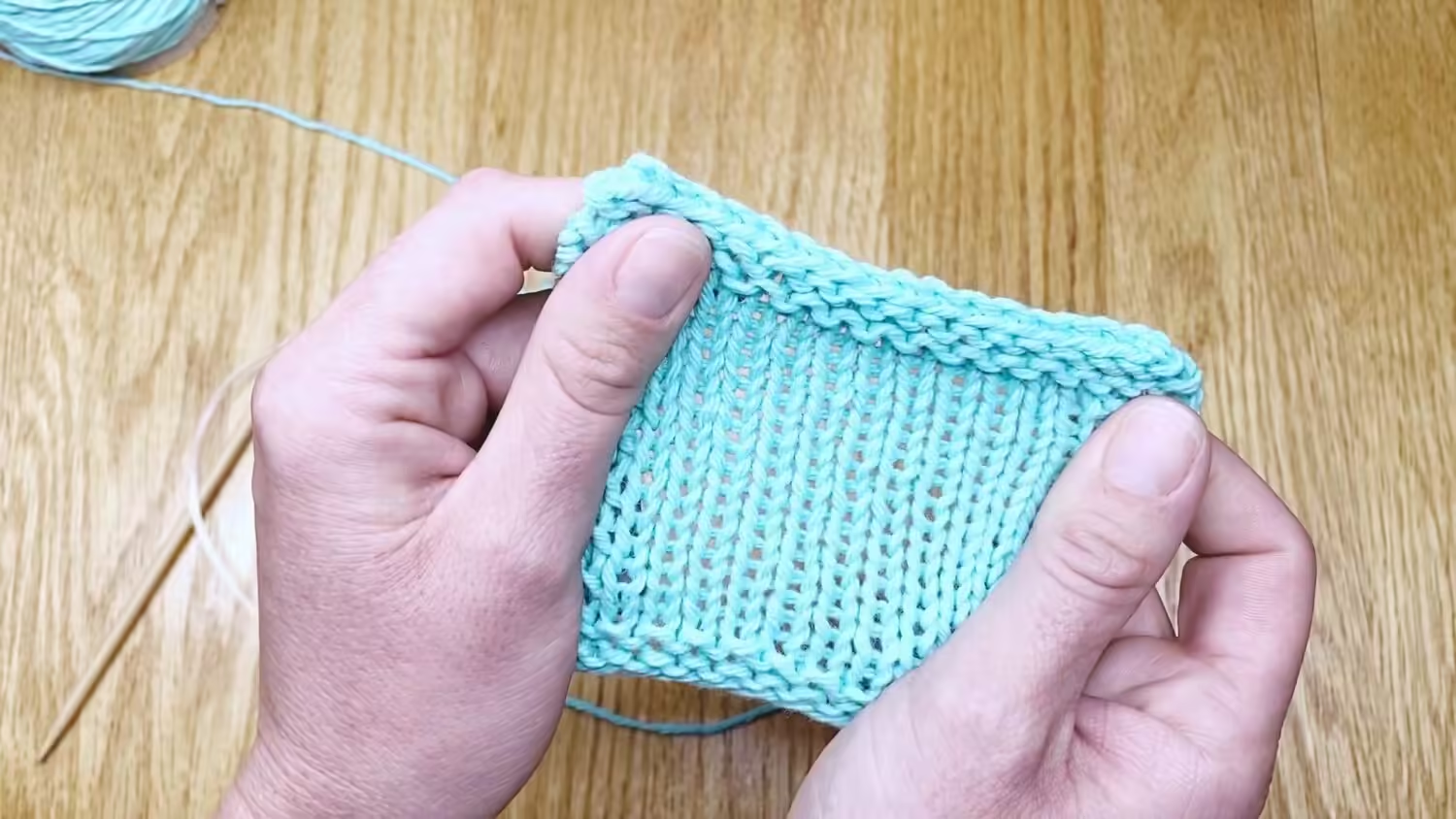
The “knit-side” of a stockinette stitch pattern should be flat and should be completely made up of the V-shaped stitches.

This knit has no twisted or dropped stitches. Learn more about knitting mistakes with Liz @PurlsAndPixels.

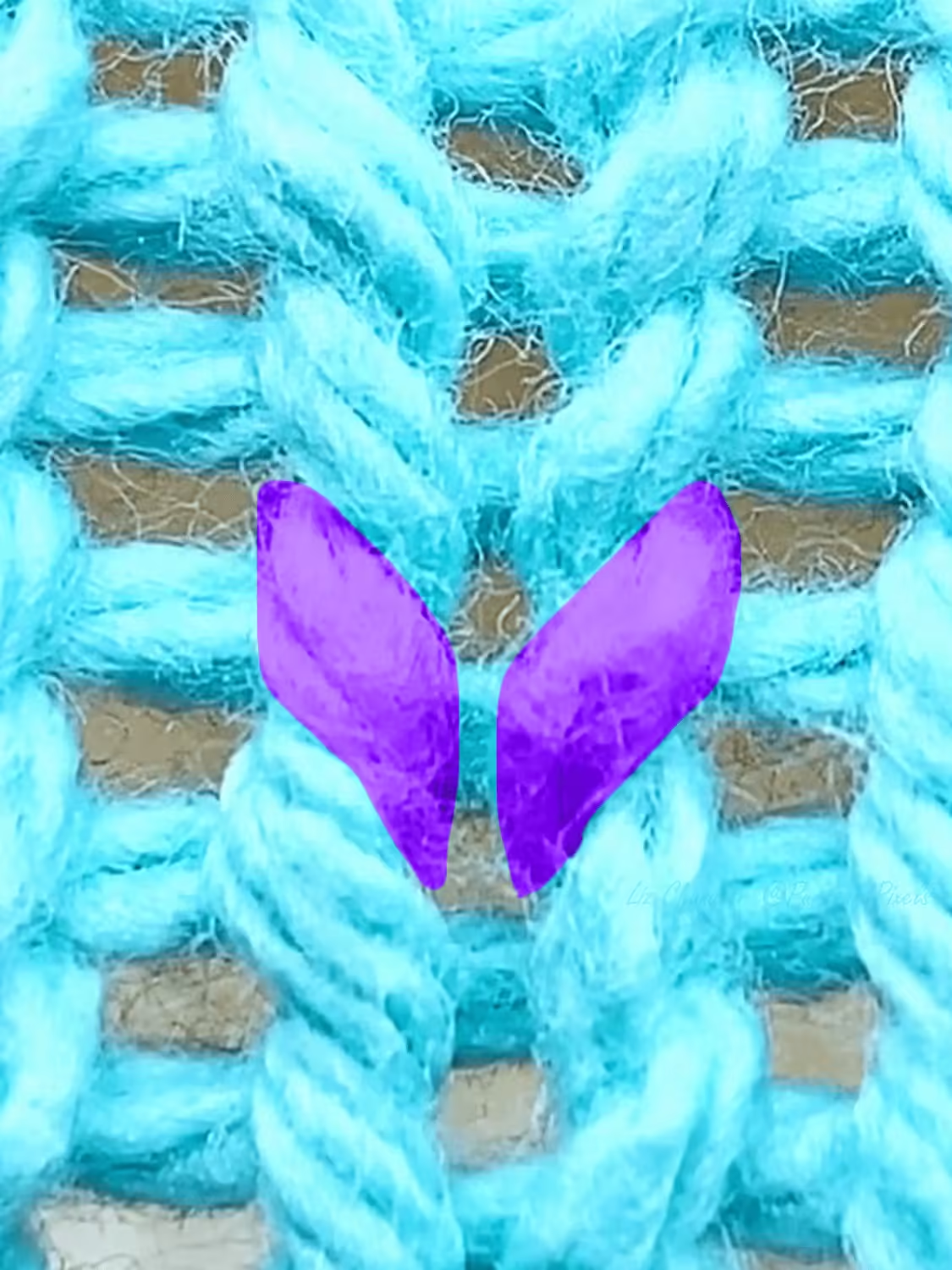
If you examine a correct (untwisted) knit “V” closely, you will notice the point at the bottom of the “V” should stretch apart, like so: “ /”. Each half of the “V” is referred to as a “leg.”

An untwisted knit stitch is open, not crossed, at the tip of the "V" - a knitting lesson from Liz @PurlsAndPixels

Identify Twisted Stitches

Unlike a regular knit stitch, a twisted knit stitch will have its legs crossed.

Learn to identify twisted knit stitches and fix knitting mistakes with Liz @PurlsAndPixels.

Fixing Twisted Stitches

Fix a Twisted Stitch, Step 1:

You can find the complete step-by-step tutorial to fix twisted stitches on its own page. Go to full tutorial.

Identify Dropped Stitches

A dropped stitch is simply one that has fallen off the needles at some point in your work.

Fixing Dropped Stitches

Fix a Dropped Stitch, Step 1:

You can find the complete step-by-step tutorial to fix dropped stitches on its own page. Go to full tutorial.

Learn to fix dropped stitches with this knitting lesson from Liz Chandler @PurlsAndPixels.

Identify Slipped Stitches

A slipped stitch is an unworked stitch. This will cause one stitch to look much bigger than the others.

There will also be a loose loop on the purlside where you have slipped a stitch.

Fixing Slipped Stitches

Fix a Slipped Stitch, Step 1:

You can find the complete step-by-step tutorial to fix slipped stitches on its own page. Go to full tutorial.

Learn to fix slipped stitches with this knitting lesson from Liz Chandler @PurlsAndPixels.

“Tink” – Knit Backward to Fix Mistakes

Tink, Step 1:

You can find the complete step-by-step tutorial to knit backward to fix mistakes on its own page. Go to full tutorial.

Learn to knit backward ("tink") to fix mistakes in this knitting lesson with Liz Chandler @PurlsAndPixels.

Practice With My Knitting Patterns

Basic Washcloth and Face Scrubby knitting pattern by Liz @PurlsAndPixels

In this guide I was making a Simple Face Scrubby. Knit along with me. This pattern is part of my Simple Washcloth Knitting Pattern Collection.

A knit stitch should look like a little "v" with an opening at the bottom.

Up Next

After you have learned to fix knitting mistakes, you may want to know how to unravel a few rows to correct a problem. Or undo an entire knitting project to reuse the yarn. Either way, knitters call this “frogging,” and I will show you how in the next tutorial.

Learn how to unravel your knitting aka "frog" knitting in this lesson with Liz @PurlsAndPixels

Go Back to the Learn to Knit Index

How to Remove Labels from Beechnut Baby Food Jars with No Chemicals

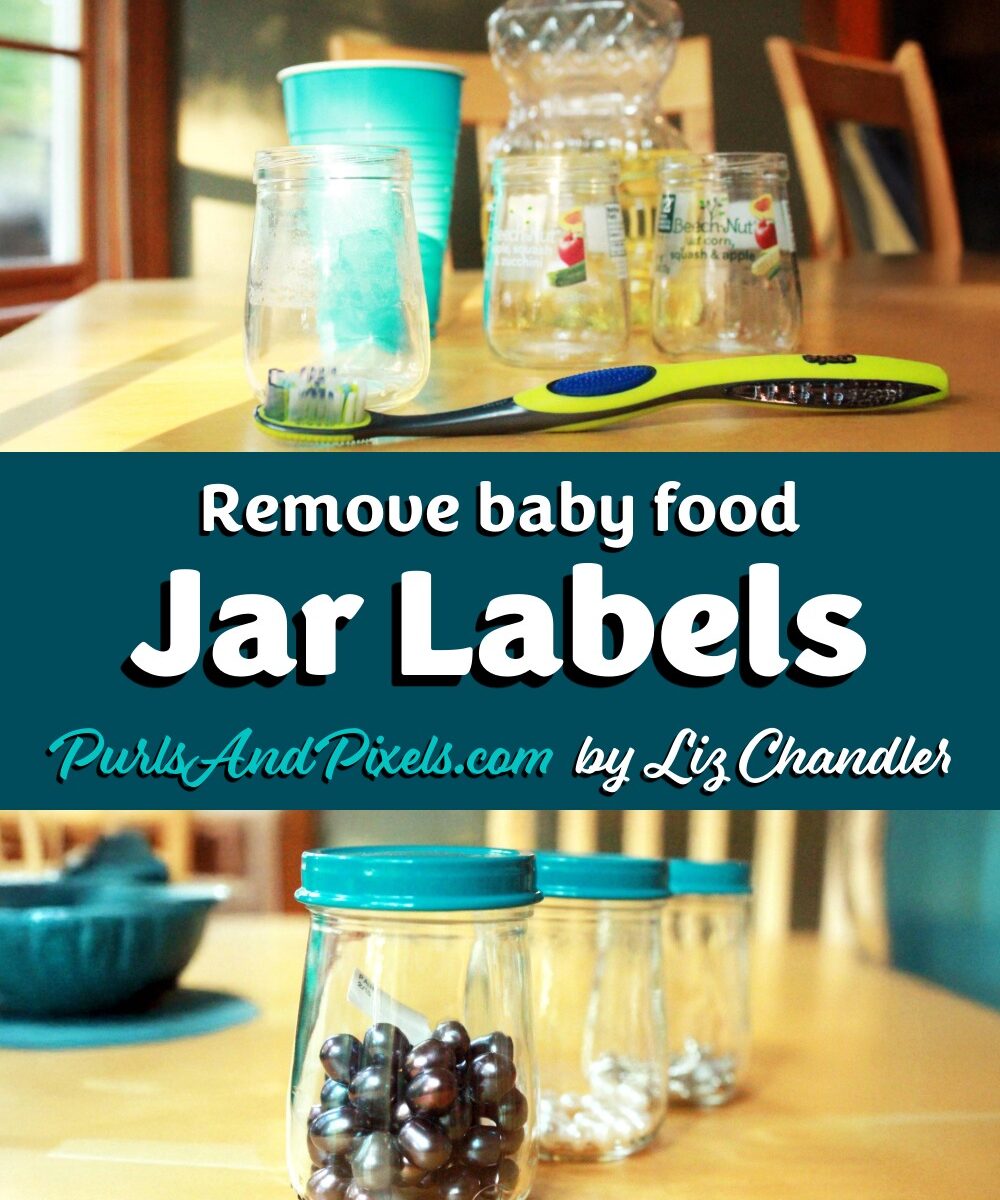
Learn how to remove baby food jar labels and sticky glue without chemicals in this guide from Liz Chandler at PurlsAndPixels.

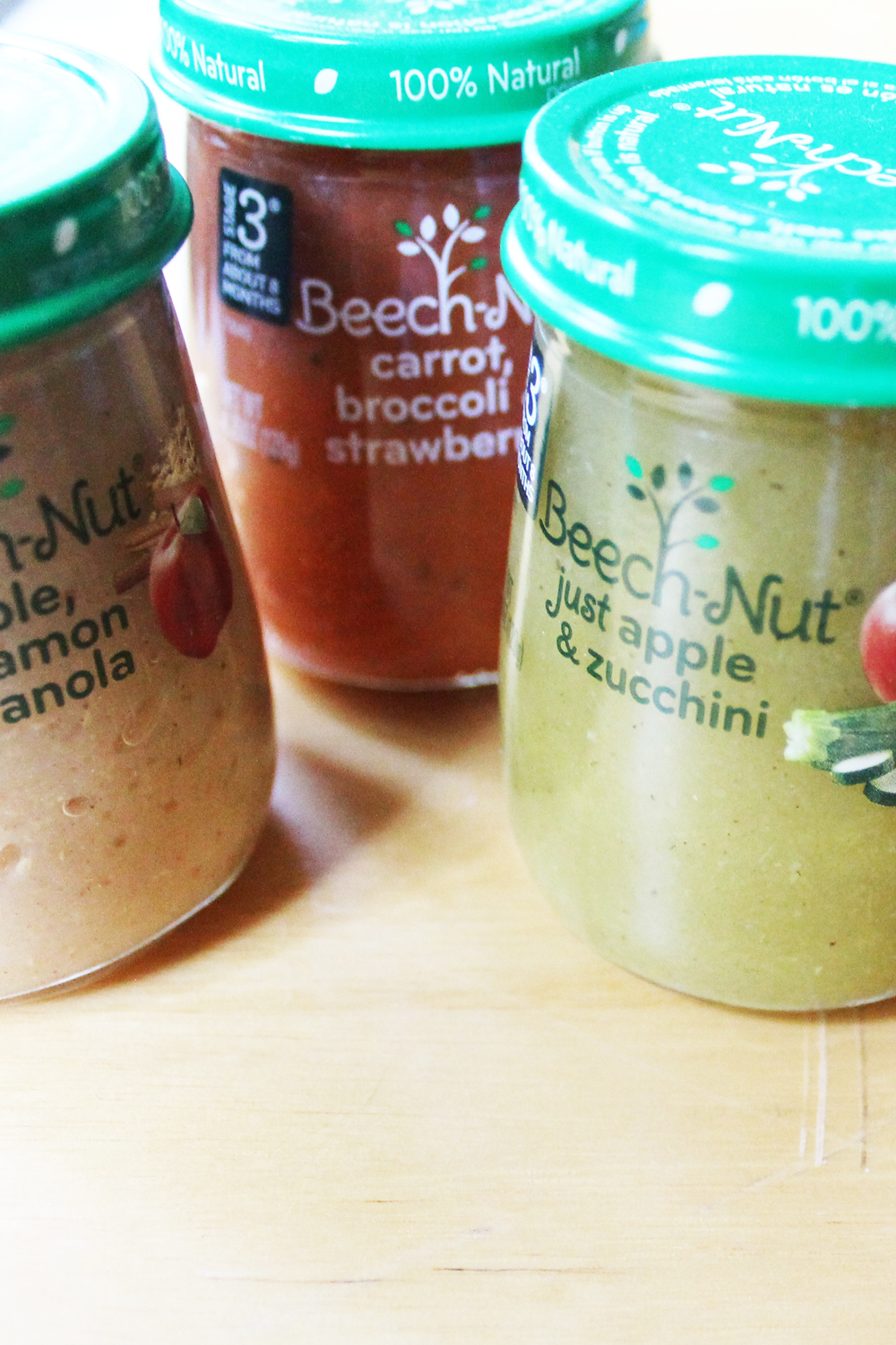
Beechnut baby food jars are some of my favorite little containers. The rounded pear shape is adorable, sturdy, and surprisingly useful. I saved a collection of them for future projects because they felt too charming to toss into the recycling bin.

How to remove baby food labels from Beechnut jars, tutorial from PurlsAndPixels

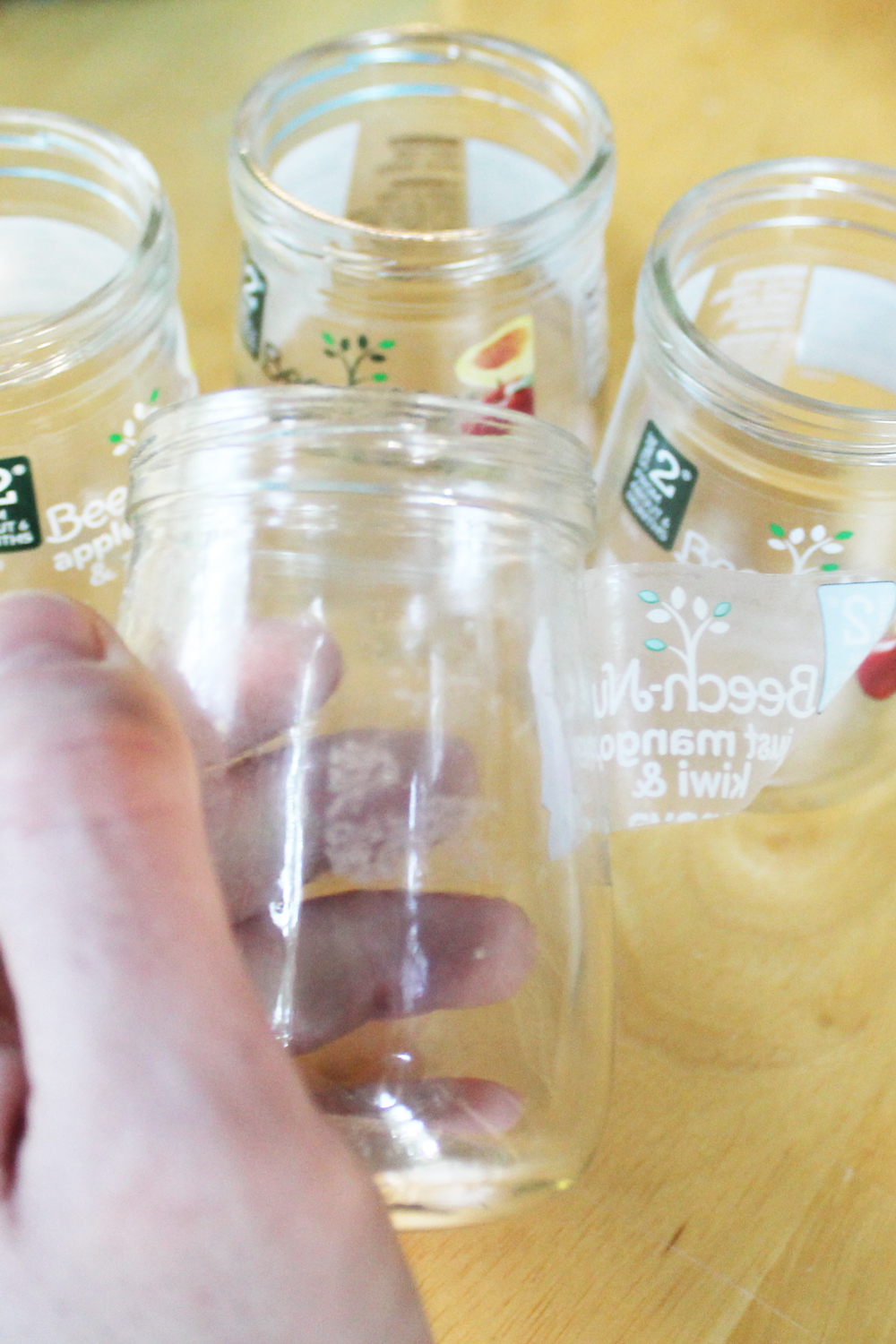
The only problem came later. The clear plastic labels peel off easily, but the glue they leave behind is incredibly stubborn. The jars stayed sticky even after a trip through the dishwasher. That sticky residue collected dust, hair, and crumbs, which made the jars look and feel messy. Since I wanted to use them for a craft project, I needed a way to remove the glue without harsh chemicals.

Remove Labels from Beechnut Baby Food Jars

After a bit of experimenting with what I already had in the kitchen, I found a simple solution that works beautifully. It is gentle, effective, and safe to use around kids.

The Best Way to Remove Glue from Beechnut Baby Food Jars

The best way I have found to remove labels from Beechnut baby food jars uses one simple ingredient: vegetable oil. No chemical cleaners, no strong smells, and no special products required.

Here is exactly how I clean the jars.

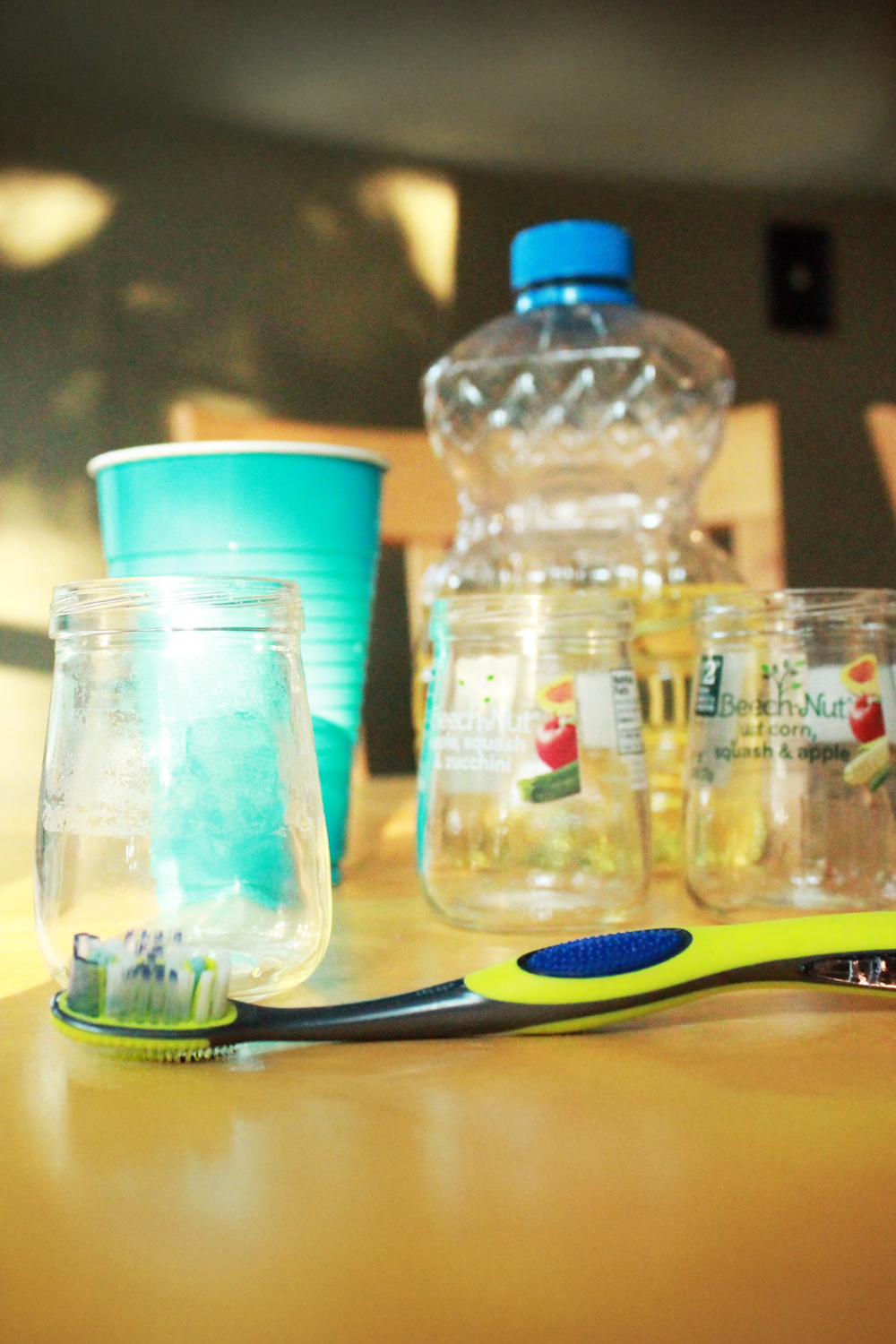
  • Peel off the plastic label and remove as much of the loose glue as you can with your fingers.
  • Dip an old toothbrush into vegetable oil.
  • Scrub the sticky residue with the oiled toothbrush until the glue begins to loosen.
  • Wipe away the glue and excess oil with a paper towel or soft cloth.
  • Run the jars through the dishwasher to remove the remaining oil and leave the glass sparkling clean.

It still takes a little elbow grease, but the vegetable oil breaks down the adhesive gently. Once the jars come out of the dishwasher, they are smooth, clear, and ready for your next Cozy DIY project.

Get baby food jar label glue off with just a toothbrush and some cooking oil. Get the guide from Liz Chandler @PurlsAndPixels.

What to Make with Beechnut Baby Food Jars

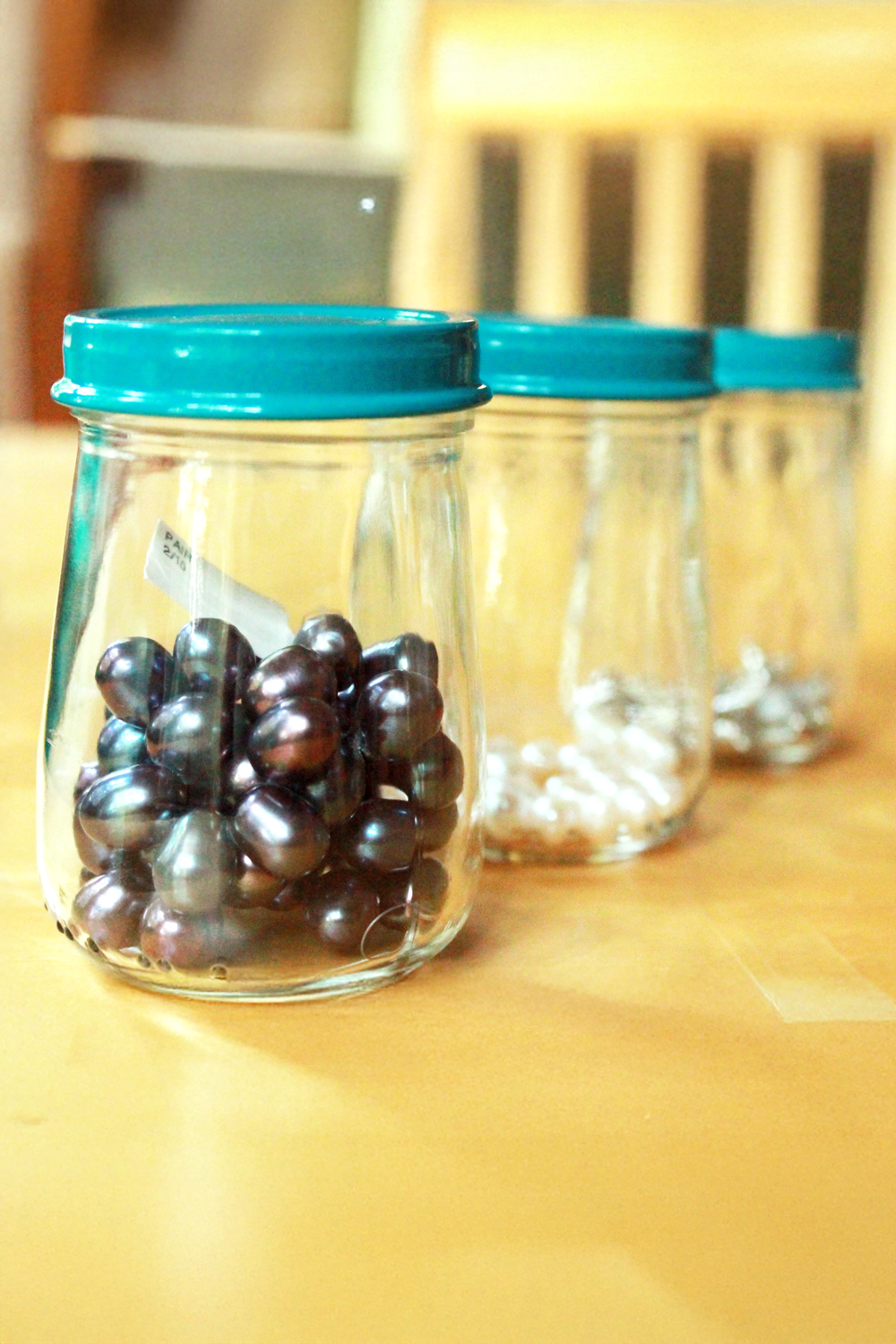
I originally cleaned these jars because I needed better storage for my jewelry making supplies. A few thin coats of teal spray paint on the lids made them look fresh and coordinated. Filled with beads and stones, the jars now line my shelf and add a little bit of color to the room.

Once they are clean, Beechnut jars are perfect for all sorts of small storage and quick craft projects. Here are a few ideas.

  • Organize small items, such as beads, buttons, or hardware.
  • Create containers for paperclips, tacks, or other desk supplies.
  • Turn them into pin cushion jars.
  • Pour your own mini candles.

If you like collecting ideas before you start, you can also visit my baby food jar crafts board on Pinterest for more inspiration.

Clean jars, fresh lids, and a little creativity can turn recycling into something both useful and beautiful.

Remove the labels, clean the jars, and store little things in upcycled Beechnut baby food jars. Find out how with Liz Chandler @PurlsAndPixels.

Read More: Cozy DIY Projects

If you enjoyed giving these jars a new life, you might like a few more simple Cozy DIY projects that make your home feel calmer and more capable.

🌲 Make No-Sew Cedar Sachets: Freshen drawers, closets, or storage bins with natural cedar, no sewing required.

Browse more Cozy DIY ideas at: Cozy DIY on PurlsAndPixels

Yard Sale Signs

Free printable yard sale sign. Download, edit, and print these yard sale signs for your next garage sale. From Liz Chandler at PurlsAndPixels.

If you have ever looked around your home and thought, “Something needs to leave this house,” it might be time for a yard sale. Or a garage sale. Or a driveway clean-out with coffee. The name does not matter. Selling what no longer serves you is one of the simplest ways to clear clutter, reclaim space, and bring in a little extra cash.

yard sale signs

When I hosted my first yard sale, I had more clothing than felt reasonable. Baby clothes, toddler outfits, and a very full adult closet. I knew I did not want to spend hours tagging every single item. That felt like a chore that would drain my motivation before the sale even started. Instead, I created clear printable yard sale signs that helped me organize everything quickly.

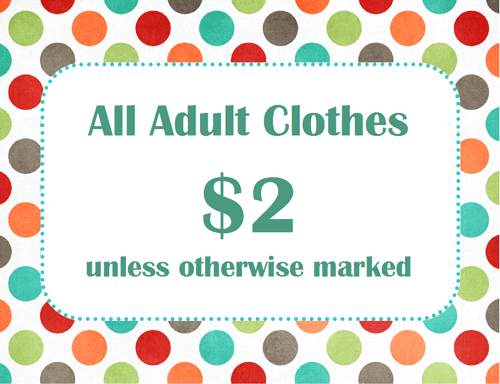
I sorted baby clothes by size and placed them in bins. Then I taped a sign to each bin so people could browse without digging. For adult clothing, one sign handled it all. It read, “All clothing two dollars unless marked.” This eliminated sticker issues, price confusion, and the awkward bargaining that sometimes happens at yard sales. The entire setup felt smoother and more welcoming.

People at the sale kept asking where I found my signs. That was my cue to turn them into editable templates for anyone who wants a low-stress setup. These files open in Microsoft Word. You can change prices, adjust wording, or personalize the signs for your own home. Once printed and taped in place, your sale looks organized and intentional.

Download free editable word documents with yard sale signs for your next rummage sale from PurlsAndPixels.

Free Printable Yard Sale Signs

When you click these three links, a word file will download. Find it in your downloads folder then, open it to start editing.

Baby boy clothes yard sale signs 

Adult clothes yard sale signs 

Yard sale signs: We can process credit cards 

If the text does not appear correctly in Word, click “Enable Editing.” That usually restores the full layout.

Hosting a yard sale can be a small reset that makes your home feel lighter and more manageable. Each step you take toward clearing space creates more room for comfort, calm, and projects you actually enjoy. Cozy independence comes from simple skills like these that help you shape a home that works for your real life.

Read More: Cozy DIY Projects

If you want to keep the momentum going and continue creating a calmer, more capable home, explore a few quick Cozy DIY projects. These are simple, satisfying tasks that make your space feel fresh and useful.

  • 👉 Remove Baby Food Jar Labels
    A practical method for getting jars perfectly clean so you can reuse them for pantry storage, crafts, or organizing small items. Find my trick to get the glue off here.
  • 🌲 Make No-Sew Cedar Sachets
    A natural way to freshen drawers, closets, or storage bins without any sewing. These sachets are fast to make and smell wonderful. Try it now!

Browse more Cozy DIY ideas at: Cozy DIY on PurlsAndPixels

How to Knit the Purl Stitch

Learn to knit the purl stitch in this easy knitting lesson from Liz Chandler @PurlsAndPixels.

Now that you understand the knit stitch, you are ready to move on to your next knitting challenge: learning to make the purl stitch.

Learn to make the purl stitch, a knitting lesson from Liz @PurlsAndPixels.

What is a Purl?

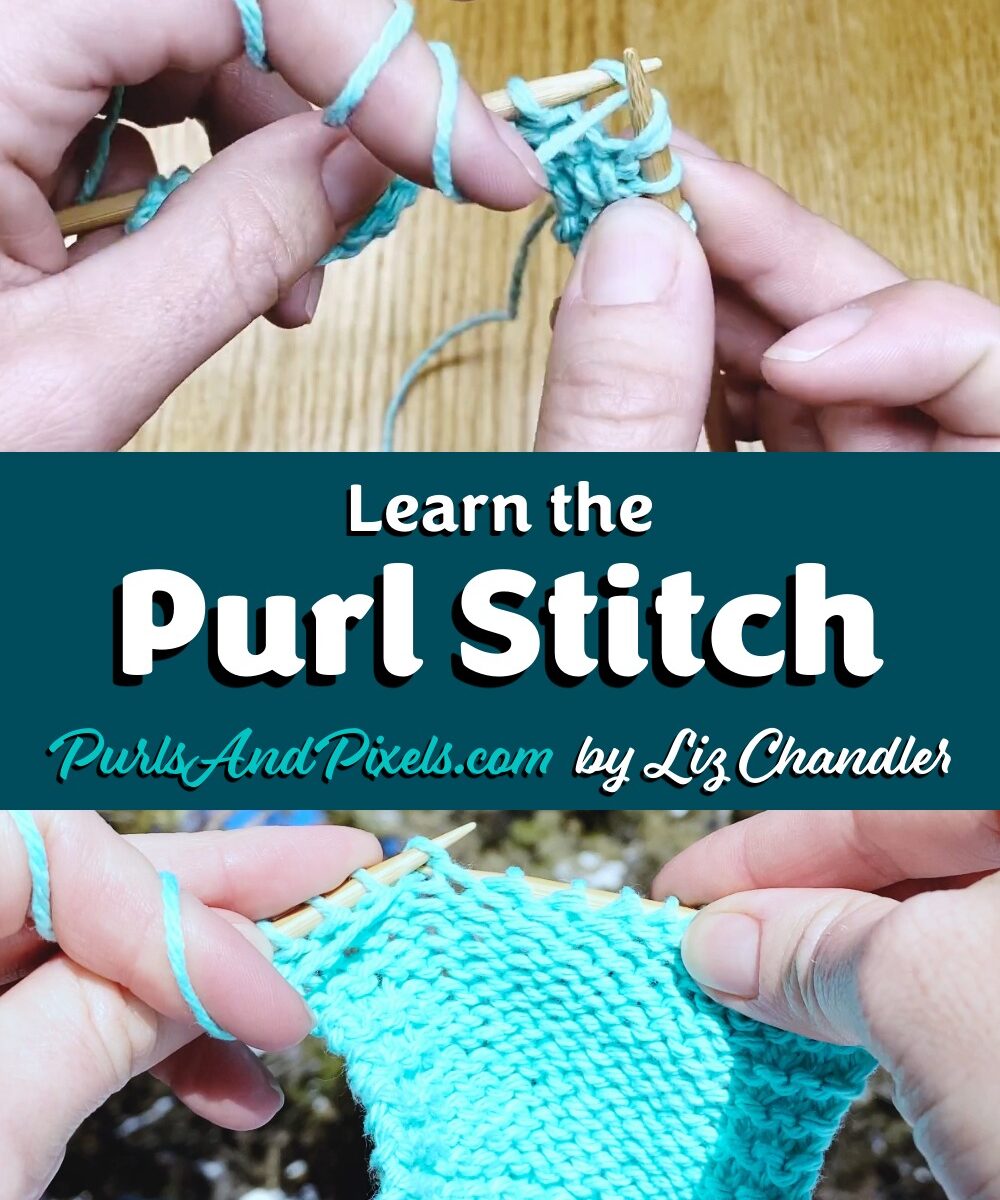
A purl stitch is essentially a backwards knit stitch. You will hold your yarn in front of your needles to create a “U” shaped stitch, which looks like a bump. If you make a knit stitch, turn it over: the back side of a knit stitch looks exactly like the front side of a purl stitch.

If you purl every stitch in every row of a flat knitted piece, you end up with a garter stitch pattern, just as you do when knitting with only the knit stitch.

Combining knits and purls can create all sorts of fun patterns and textures.

Two important things to remember when making the purl stitch:

  1. Hold the working yarn in front of your needles, and
  2. Insert your right needle into each stitch from back to front.

Below are both video and written tutorials to help you learn how to make a purl.

Video Guide: How to Make the Purl Stitch

Written Guide: How to Make the Purl Stitch

Purl, Step 1:

Hold your yarn and needles as if to knit, except place the working yarn in front of your left needle.

Step 1: Learn to make the purl stitch, with a knitting lesson from Liz @PurlsAndPixels.

Purl, Step 2:

Insert your right-hand needle tip into the front loop of the next stitch on your left needle from back to front.

Step 2: Learn to make the purl stitch, with a knitting lesson from Liz @PurlsAndPixels.

Purl, Step 3:

With your left pointer finger, bring the working yarn down, towards you, over then behind the right needle tip. This will form a loop on the right-hand needle tip.

Step 3: Learn to make the purl stitch, with a knitting lesson from Liz @PurlsAndPixels.

Purl, Step 4:

Pull the new loop of yarn on the right-hand needle through the first stitch on your left needle.

Purl, Step 5:

Slide the stitch you just worked into off the left needle, allowing the new stitch to remain on your right needle.

Purl, Step 6:

You have made your first purl stitch!

Repeat steps one through five each time a pattern asks you to purl a stitch. 

Practice With My Knitting Patterns

Free Beginner Face Scrubby knitting pattern by Liz @PurlsAndPixels.

If you purl an entire piece of knitting work, you end up with a garter stitch pattern, just as you do when knitting with only the knit stitch. Because of this, one way to learn and practice the purl stitch is to make a Face Scrubby with only purls. You can follow the free Beginner Face Scrubby Pattern, except replace all the knit stitches with purl stitches.

Basic Washcloth and Face Scrubby knitting pattern by Liz @PurlsAndPixels

When you are ready to start a new project, you can to learn to purl with the Basic Face Scrubby or Washcloth pattern found in my Simple Washcloth Knitting Pattern Collection. You will combine knits and purls in to create the traditional, smooth Stockinette stitch pattern that is commonly used in knitwear.

Learn to make the purl stitch, a knitting lesson from Liz @PurlsAndPixels.

Up Next

To help you “read” your knitting and make sure you are following patterns correctly, you can start to see the knit stitches as “V” shaped and the purl stitches as upside down “U” shapes. Learn to identify knits and purls next.

Go Back to the Learn to Knit Index

Frozen Snowflake Mittens

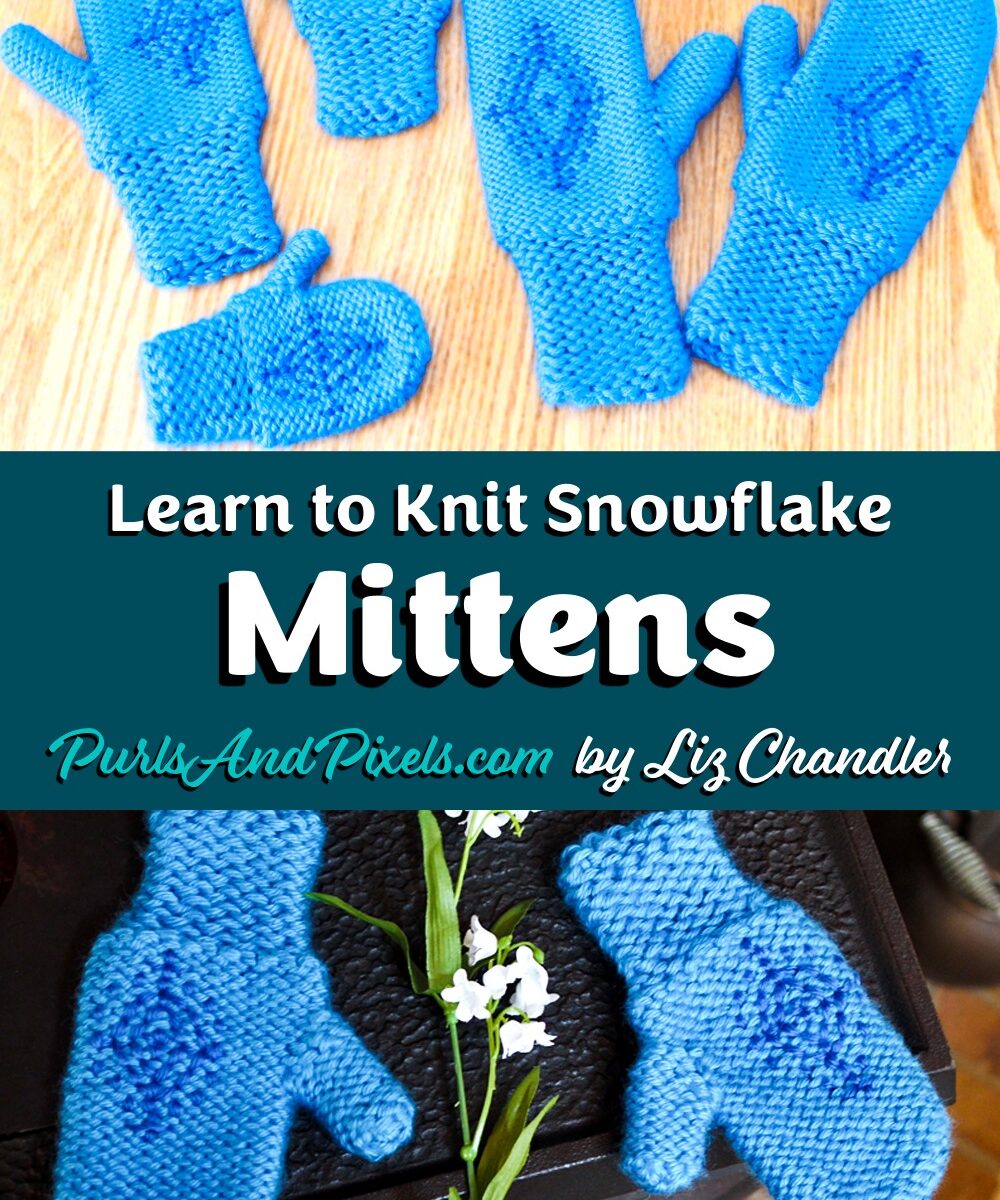
Free blue frozen snowflake mittens knitting pattern from Liz Chandler @PurlsAndPixels.

Frozen Snowflake Mittens: A Free Knitting Pattern by Liz Chandler

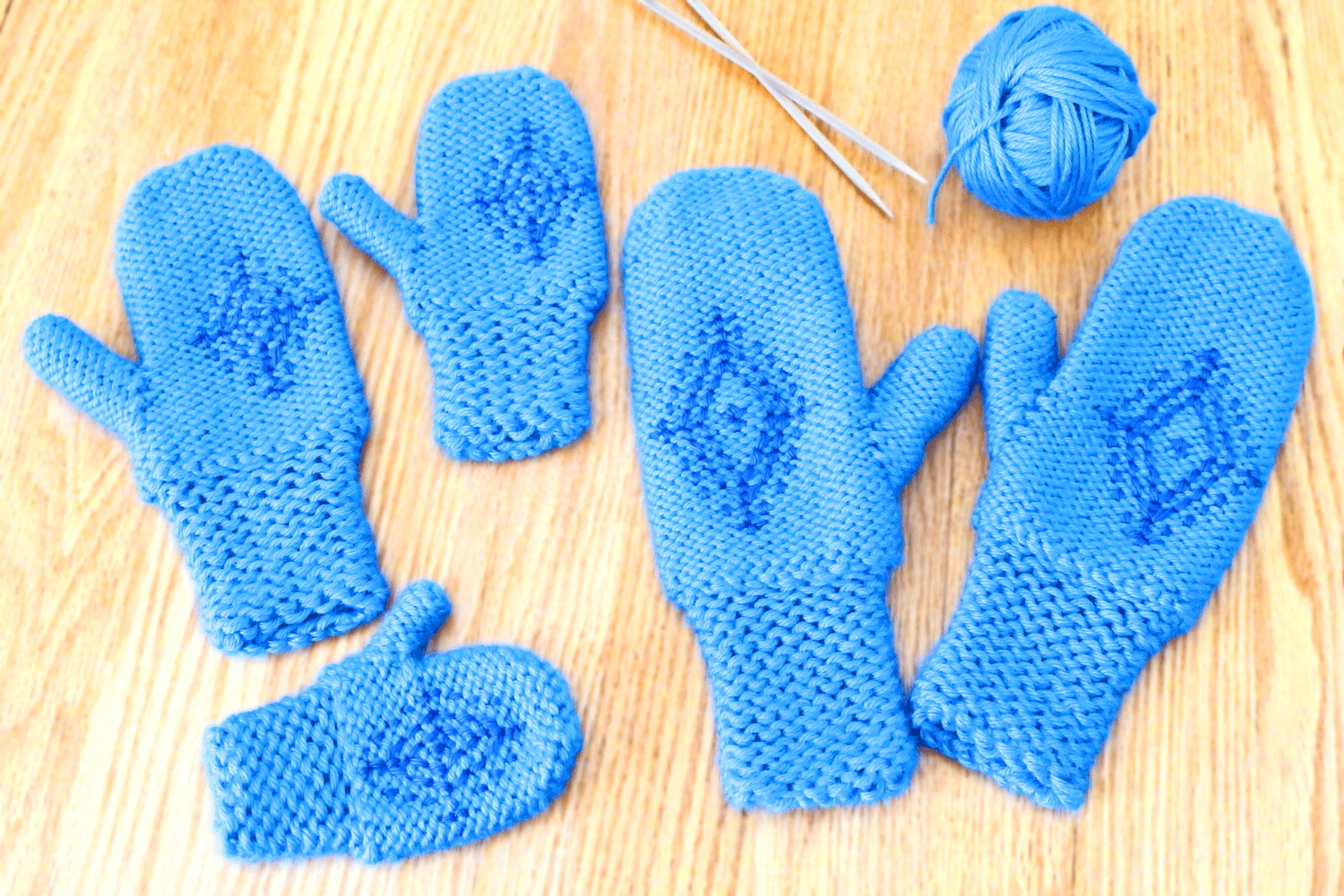
Are your hands a little chilly? Keep them warm with these mittens, embroidered with a subtle frozen snowflake. Get ready to embark on a new knitting adventure! Here is my free DIY pattern to knit these Frozen Snowflake Mittens yourself. Dive into the cozy world of crafting with step-by-step instructions to create three sizes of Frozen Snowflake Mittens: Women’s size, Girls’ Size, and Toddlers’ Size. Elevate your winter style with these charming mittens fit for royalty.

Anna's Anna's Snowflake Mittens Frozen Gloves

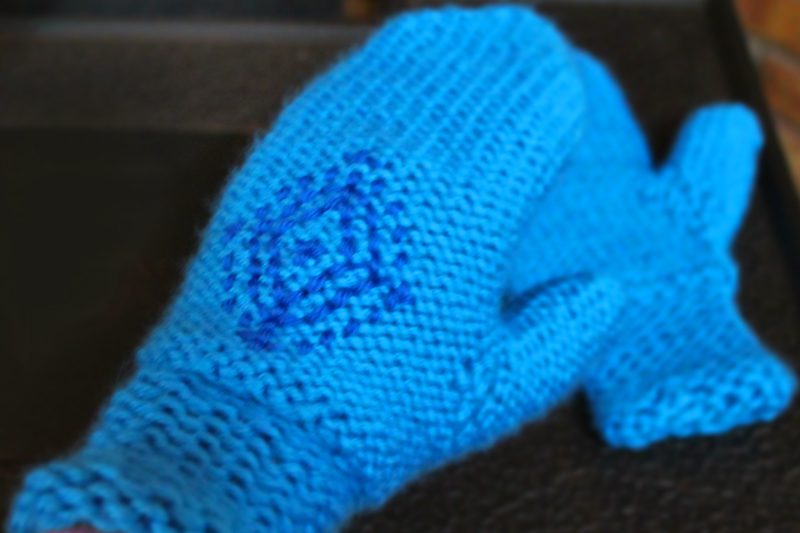
Crafted with care and warmth, these Frozen Snowflake Mittens are made using my favorite super-soft acrylic yarn – Caron Simply Soft. The choice of this yarn is intentional; it’s not only incredibly soft but also remarkably warm. Take them outside and build a snowman! What’s more, the practicality extends to easy maintenance – just toss these mittens into the washing machine when they need a refresh.

Designed with a touch of royal elegance, these mittens are perfect for princesses of all ages. The enchanting blue hue adds a regal charm, and to cater to diverse preferences, I’ve created these mittens in women’s, children’s, and toddlers’ sizes. Whether you’re gifting a pair to a little one or treating yourself to a new accessory, these mittens are a delightful addition to any winter wardrobe.

About This Free Frozen Snowflake Mittens Pattern

This simple ribbed hat is an easy-level knitting pattern. You will need to know how to make a long-tail cast on, knit, purl, decrease, and draw yarn thru the remaining stitches. If you are not familiar with these skills, find quick, free lessons in my Learn to Knit Guide.

Anna's blue snowflake mittens in the Disney move Frozen.

Materials

You will need the following materials, which you can purchase at your local yarn shop or on Amazon.com via the affiliate links below:

Knitting Needles:
Double Point Needles (DPNs)


Yarn:

*Weights estimated with Caron Simply Soft yarn; other yarn weights may vary. Weight does not include gauge swatch. A 4×4 inch gauge swatch with a 2 row by 3 stitch border uses an additional 21 yards (0.4 oz.).

Tools:

A stitch marker, a measuring tape and a darning needle.

Gauge

20 stitches x 28 rows = 4 x 4 inches in stockinette stitch on No. 5 (3.75 mm) needles. (Learn how to check your gauge here.)

Abbreviations

k = knit

Make 1 = with the left needle, pick up the strand between the stitch just worked and the next stitch from front to back and knit into the back of it.

k2tog = Knit two together.

ssk = Slip, slip, knit. Slip two stitches as if to knit. Insert left needle from left to right into the fronts of the two slipped stitches and knit together.

sl1pwyif = Slip one stitch purlwise, holding yarn in front of work.

Instructions: Frozen Snowflake Mittens

Instructions: Adult Women’s Size Frozen Snowflake Mittens

(Approx. 10.5 inches from top to bottom, 8 inches around hand, without thumb)
Use the Long-Tail Cast On method. Knit with 2 strands of yarn held together. Use stitch marker to keep track of the beginning/ends of your circular rows by placing it in the first stitch of each circular row (round). Remember: You will turn these gloves wrong-side-out (purl-side-out) when you are finished. Make two (2).
Row 1: With No. 13 DPNs, cast on 15 stitches. Divide evenly onto 3 No. 13 DPNs (5 stitches each).
Row 2: Join (taking care not to twist stitches) and knit 15 stitches.
Rows 3 thru 14: Knit 15 stitches.
Row 15: Switching to No.9 DPNs as you go, k1, make 1 repeat for one round. (30 stitches)
Rows 16 thru 21: Knit 30 stitches.
Row 22: Knit 14 stitches. Place stitch marker on the 14th knit stich. Make 1. Knit 2 stitches. Make 1. Place stitch marker on the newly made stitch. Knit 14 stitches. (32 stitches)
Row 23: Knit 32.
Row 24: Knit to marker. Slip marker purlwise with yarn in front. Make 1. Knit to second marker. Make 1. Slip second marker purlwise with yarn in front. Knit to end. (34 stitches)
Row 25: Knit 34 stitches.
Row 26: Knit to marker. Slip marker purlwise with yarn in front. Make 1. Knit to second marker. Make 1. Slip second marker purlwise with yarn in front. Knit to end. (36 stitches)
Row 27: Knit 36 stitches.
Row 28: Knit to marker. Slip marker purlwise with yarn in front. Make 1. Knit to second marker. Make 1. Slip second marker purlwise with yarn in front. Knit to end. (38 stitches)
Row 29: Knit 38 stitches.
Row 30: Knit to marker. Slip marker purlwise with yarn in front. Make 1. Knit to second marker. Make 1. Slip second marker purlwise with yarn in front. Knit to end. (40 stitches)
Row 31: Knit 40 stitches.
Row 32: Knit 14 stitches. Slip next 12 stitches, purlwise with yarn in front, onto stitch holder. Knit 14 stitches. (This will separate thumb stiches from hand stitches.)
Rows 33 thru 54: Knit 28 stitches.
Row 55: K2tog. Knit 10 stitches. SSK. K2tog. Knit 10 stitches. SSK. (24 stitches)
Row 56: Knit 24 stitches.
Row 57: K2tog. Knit 8 stitches. SSK. K2tog. Knit 8 stitches. SSK. (20 stitches)
Row 58: Knit 20 stitches.
Row 59: K2tog. Knit 6 stitches. SSK. K2tog. Knit 6 stitches. SSK. (16 stitches)
Cut yarn leaving a 12 inch tail. With tapestry needle, draw yarn tightly through remaining 16 stitches. Weave in end. You may wish to reinforce the “seam” created by the decreases at the fingertips; use duplicate stitch to tighten the seam as you weave in your tail. Keep in mind your “purl-side” or “wrong-side” will be the visible outside of your glove, so keep that side neat.

Thumb

Put 12 stitches from stitch holder onto three No. 9 DPNs (4 stitches per needle).
Thumb Row 1: Knit 12 stitches in the round.
Thumb Row 2: Join round (taking care not to twist stitches) and knit 12 stitches.
Thumb Rows 3 thru 10: Knit 12.
Thumb Row 11: K2tog x 6 (6 stitches).
Cut a 12 inch tail and draw tightly through remaining 6 stitches.
Use duplicate stitch to tighten any loose stitches around the “seams” as you weave in your tails. Keep in mind your “purl-side” or “wrong-side” will be the visible outside of your glove, so keep that side neat.
Turn mittens purl-side (wrong-side) out – this is now the “right-side” of your work. Embroider adult snowflake design.

Instructions: Child Size Frozen Snowflake Mittens

(Approx. 9 inches from top to bottom, 7 inches around hand without thumb)
Use the Long-Tail Cast On method. Knit with 2 strands of yarn held together. Use stitch marker to keep track of the beginning/ends of your circular rows by placing it in the first stitch of each circular row (round). Remember: You will turn these gloves wrong-side-out (purl-side-out) when you are finished. Make two (2).
Row 1: With No. 13 DPNs, cast on 14 stitches. Divide onto 3 No. 13 DPNs.
Row 2: Join (taking care not to twist stitches) and knit 14 stitches.
Rows 3 thru 12: Knit 14 stitches.
Row 15: Switching to No.9 DPNs as you go, k1, make 1 repeat for one round. (28 stitches)
Rows 16 thru 21: Knit 28 stitches.
Row 22: Knit 13 stitches. Place stitch marker on the 13th knit stich. Make 1. Knit 2 stitches. Make 1. Place stitch marker on the newly made stitch. Knit 13 stitches. (30 stitches)
Row 23: Knit 30.
Row 24: Knit to marker. Slip marker purlwise with yarn in front. Make 1. Knit to second marker. Make 1. Slip second marker purlwise with yarn in front. Knit to end. (32 stitches)
Row 25: Knit 32 stitches.
Row 26: Knit to marker. Slip marker purlwise with yarn in front. Make 1. Knit to second marker. Make 1. Slip second marker purlwise with yarn in front. Knit to end. (34 stitches)
Row 27: Knit 34 stitches.
Row 28: Knit 13 stitches. Slip next 8 stitches, purlwise with yarn in back, onto stitch holder. Knit 13 stitches. (This will separate thumb stiches from hand stitches.)
Rows 29 thru 44: Knit 26 stitches.
Row 45: K2tog. Knit 9 stitches. SSK. K2tog. Knit 9 stitches. SSK. (22 stitches)
Row 46: Knit 22 stitches.
Row 55: K2tog. Knit 7 stitches. SSK. K2tog. Knit 7 stitches. SSK. (18 stitches)
Row 56: Knit 18 stitches.
Row 57: K2tog. Knit 5 stitches. SSK. K2tog. Knit 5 stitches. SSK. (14 stitches)
Row 58: Knit 16 stitches.
Row 59: K2tog. Knit 3 stitches. SSK. K2tog. Knit 3 stitches. SSK. (10 stitches)
Cut yarn leaving a 12 inch tail. With tapestry needle, draw yarn tightly through remaining 10 stitches. Weave in end. You may wish to reinforce the “seam” created by the decreases at the fingertips; use duplicate stitch to tighten the seam as you weave in your tail. Keep in mind your “purl-side” or “wrong-side” will be the visible outside of your glove, so keep that side neat.

Thumb

Put 8 stitches from stitch holder onto two No. 9 DPNs (4 stitches per needle).
Thumb Row 1: Beginning with the first picked up stitch, knit 8 stitches in the round.
Thumb Row 2: Join (taking care not to twist stitches) and knit 8 stitches.
Thumb Rows 3 thru 11: Knit 8 stitches.
Thumb Row 12: K2tog x 4 (4 stitches).
Cut a 12 inch tail and draw tightly through remaining 4 stitches.
Use duplicate stitch to tighten any loose stitches around the “seams” as you weave in your tails. Keep in mind your “purl-side” or “wrong-side” will be the visible outside of your glove, so keep that side neat.
Turn mittens purl-side (wrong-side) out – this is now the “right-side” of your work. Embroider children’s snowflake design.

Instructions: Toddler Size Frozen Snowflake Mittens

(Approx. 6.5 inches from top to bottom, 6 in. around hand without thumb)
Use the Long-Tail Cast On method. Knit with 2 strands of yarn held together. Use stitch marker to keep track of the beginning/ends of your circular rows by placing it in the first stitch of each circular row (round). Remember: You will turn these gloves wrong-side-out (purl-side-out) when you are finished. Make two (2).
Row 1: With No. 13 DPNs, cast on 12 stitches. Divide onto 3 No. 13 DPNs.
Row 2: Join (taking care not to twist stitches) and knit 12 stitches.
Rows 3 thru 10: Knit 12 stitches.
Row 11: Switching to No.9 DPNs as you go, k1, make 1 repeat for one round. (24 stitches)
Rows 12 thru 16: Knit 24 stitches.
Row 17: Knit 11 stitches. Place stitch marker on the 11th knit stich. Make 1. Knit 2 stitches. Make 1. Place stitch marker on the newly made stitch. Knit 11 stitches. (26 stitches)
Row 18: Knit 26.
Row 19: Knit to marker. Slip marker purlwise with yarn in front. Make 1. Knit to second marker. Make 1. Slip second marker purlwise with yarn in front. Knit to end. (28 stitches)
Row 20: Knit 28 stitches.
Row 21: Knit 11 stitches. Slip next 6 stitches, purlwise with yarn in back, onto stitch holder. Knit 11 stitches. (This will separate thumb stiches from hand stitches)
Rows 22 thru 34: Knit 22 stitches.
Row 35: K2tog. Knit 7 stitches. SSK. K2tog. Knit 7 stitches. SSK. (18 stitches)
Row 36: Knit 18 stitches.
Row 37: K2tog. Knit 5 stitches. SSK. K2tog. Knit 5 stitches. SSK. (14 stitches)
Row 56: Knit 14 stitches.
Row 57: K2tog. Knit 3 stitches. SSK. K2tog. Knit 3 stitches. SSK. (10 stitches)
Cut yarn leaving a 12 inch tail. With tapestry needle, draw yarn tightly through remaining 10 stitches. Weave in end. You may wish to reinforce the “seam” created by the decreases at the fingertips; use duplicate stitch to tighten the seam as you weave in your tail. Keep in mind your “purl-side” or “wrong-side” will be the visible outside of your glove, so keep that side neat.

Thumb

Put 6 stitches from stitch holder onto two No. 9 DPNs (3 stitches per needle).
Thumb Row 1: Beginning with the first picked up stitch, knit 6 stitches in the round.
Thumb Row 2: Join (taking care not to twist stitches) and knit 6.
Thumb Rows 3 thru 6: Knit 6 stitches.
Thumb Row 7: K2tog x 3 (3 stitches).
Cut a 12 inch tail and draw tightly through remaining 3 stitches.
Use duplicate stitch to tighten any loose stitches around the “seams” as you weave in your tails. Keep in mind your “purl-side” or “wrong-side” will be the visible outside of your glove, so keep that side neat.
Turn mittens purl-side (wrong-side) out – this is now the “right-side” of your work. Embroider children’s snowflake design.

Snowflake Design

The snowflake design is made by embroidering the mitten using a tapestry needle and one strand of royal blue yarn. Tip: You may want to practice sewing the snowflake on your gauge swatch before you embroider your mittens.

Using the knitting’s natural holes as a guide, embroider the following charted design onto the back of the hand of each mitten. I found it easiest to begin with the center stitches and work my way out and around the snowflake. For all sizes, the center of snowflake should be placed about 1 inch in from thumb crease and 1.5 inches above where the rows made with No. 9 needles begin.

In the diagrams below, one line equals one stitch. The stitches shown in red should be embroidered in a continuous manner, sewing into the same hole as the previous stitch. The black stitches should not connect and should have gaps between them. Use the close-up photographs as a guide, as well as the diagrams below

Printable version of this free knitting pattern

Printable Frozen Snowflake Mitten Knitting Pattern PDF by Liz @PurlsAndPixels


Find More Knitting Patterns

If you like this, check out the other knitting patterns I’ve written. Visit my knitting patterns page to see my full collection.

Find all of the knitting patterns by Liz Chandler @PurlsAndPixels.

Anna's Snowflake Mittens

©2015, Liz Chandler of PurlsAndPixels. Revised 2024.

This pattern is for personal use, gifting, and charitable donation of completed items. You may also sell handmade items created using this pattern. Do not copy this pattern and distribute it. If you’d like to share the pattern, refer your friends to my website, purlsandpixels.com so they may obtain a copy.

If you find any errors or have any questions, email purlsandpixels@gmail.com and I will do my best to help.

I’d love to see your finished work! Tag your photos with @PurlsAndPixels on Twitter or Instagram.

LET’S KEEP IN TOUCH!

I’d love to keep you updated with the latest news and offers from PurlsAndPixels.🧶💕

We don’t spam! Read our privacy policy for more info.