Single-Row Striped Scarf Free Knitting Pattern

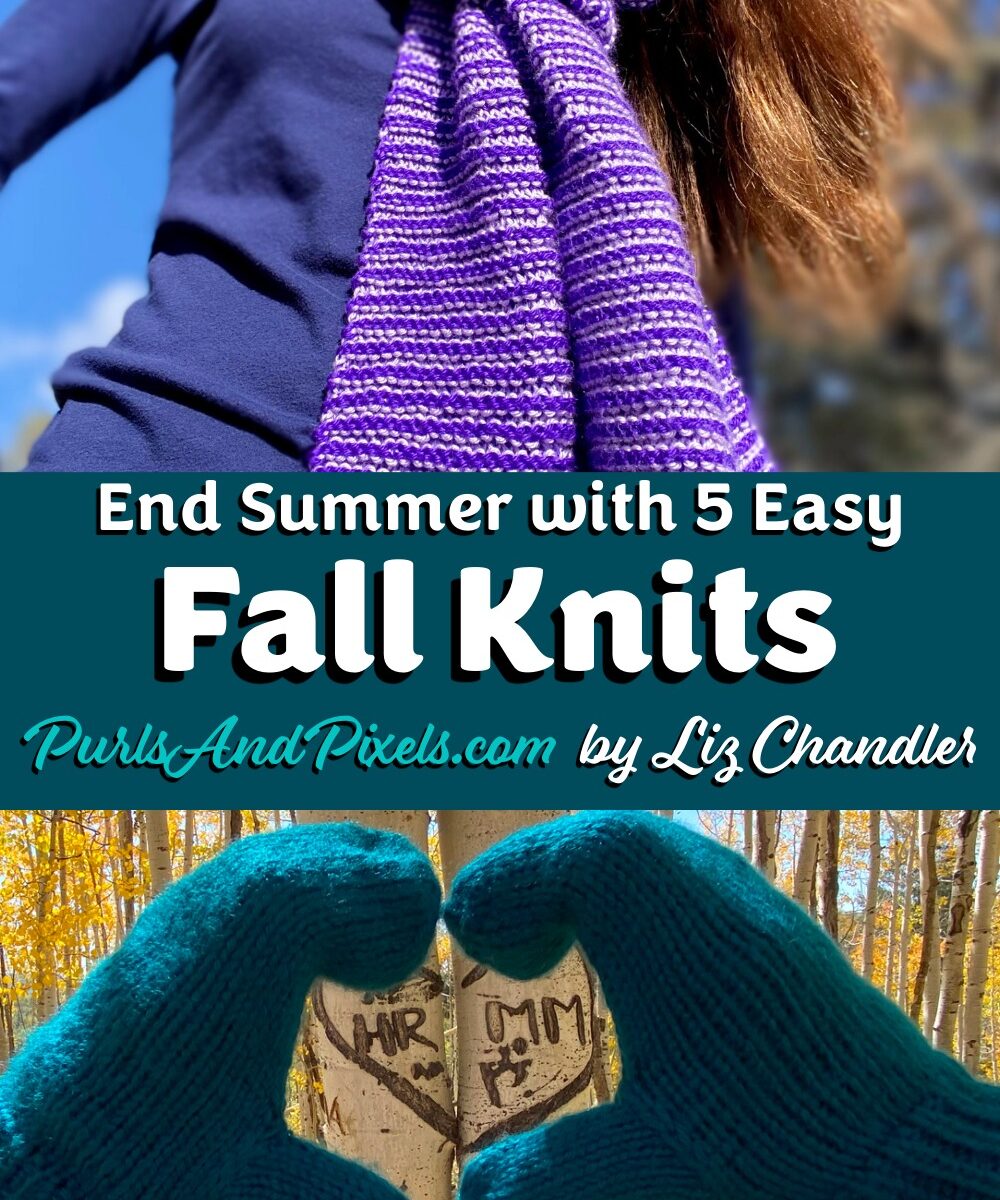
Learn to knit single-row striped scarves with two colors of yarn in this free knitting pattern by Liz Chandler @PurlsAndPixels.

by Liz Chandler @PurlsandPixels

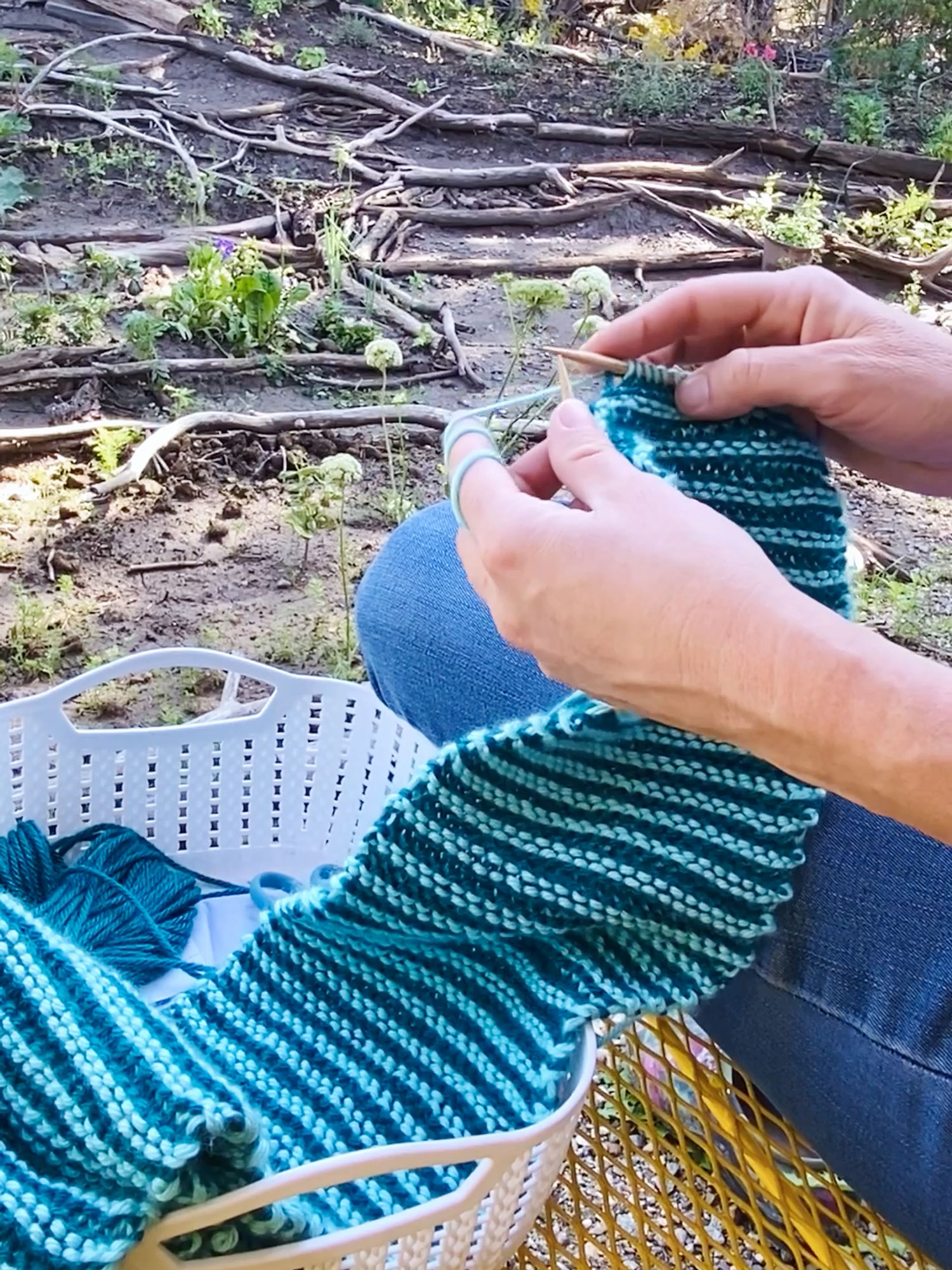
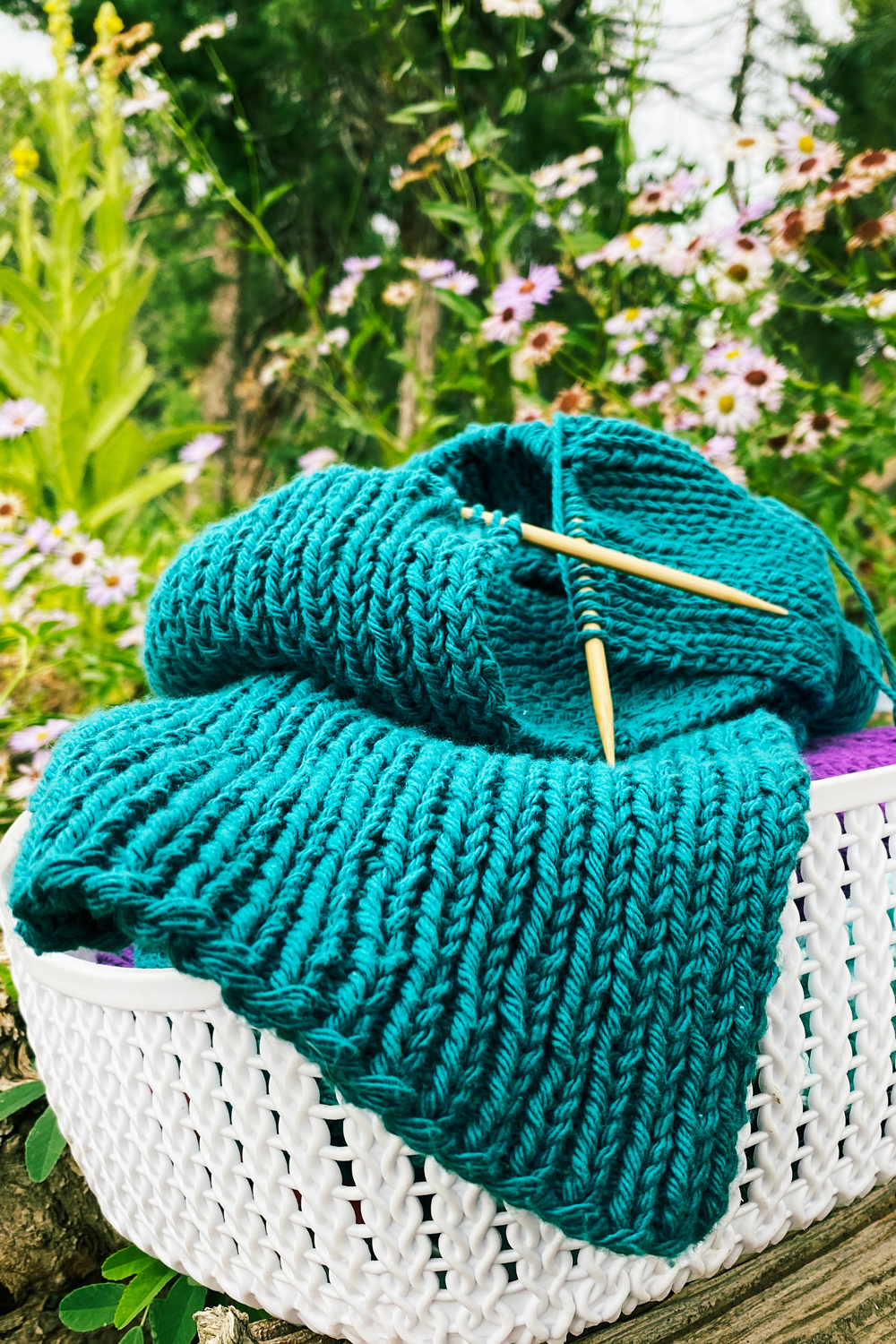
Most stripe patterns make you cut the yarn after each row, turning your scarf into a fringe-factory. But if you’re looking for a way to knit stripes without cutting yarn, here’s the secret: slide your stitches to the other end of your circular needles between rows. This simple trick lets you keep both yarns attached and alternate rows cleanly, with no snipping required.

This striped scarf is quick to knit, easy to memorize, and uses just two yarns to make a bold, modern accessory. It’s beginner-friendly but feels a bit magical when you get it right.

Single-Striped Scarf Knitting Pattern by Liz Chandler @PurlsAndPixels

Prefer to knit offline?

Download Printable Knitting Pattern

This pattern is free to read below, but if you’d rather print it or save it for later, I’ve created a clean, ad-free PDF version for you.

  • Includes complete, row-by-row instructions
  • Easy to print or use on your tablet
  • Supports my small business 💖

By using my color-changing trick and keeping it simple with garter stitch, this scarf ends up cozy, clever, and easy to finish. It’s the perfect project for gift knitting or stash-busting your favorite color combos.

How this Single-Row Striped Scarf Free Knitting Pattern is Made

This scarf is knit flat in rows, but the yarn is never cut. Instead, you slide your work to the other end of your circular needles to change colors every row.

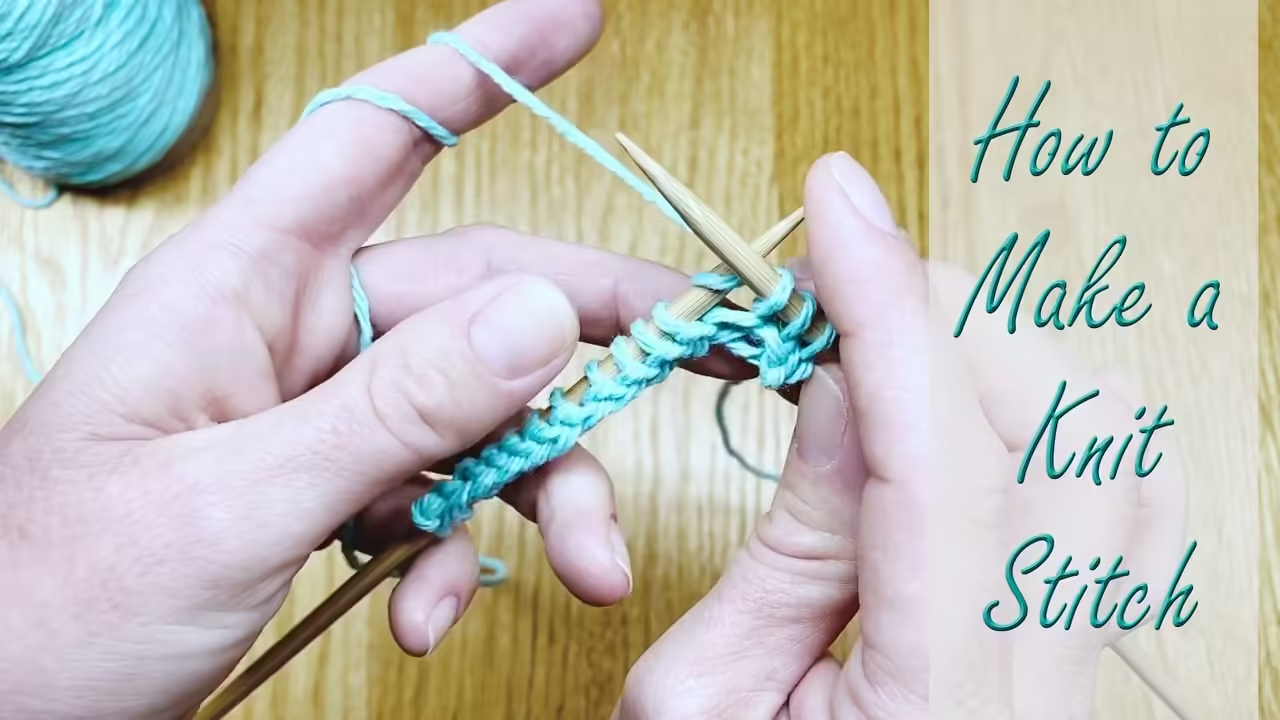
You will need to know how to:

Materials

You will need the following materials, which you can purchase at your local yarn shop or on Amazon.com via the affiliate links below:

Knitting Needles:
Long Circular Needles
36-inch (91 cm) long US No. 8 (5.0 mm) circular needle (or size needed to obtain gauge)

Yarn:

Two 315-yard (6 ounce) skeins of worsted weight yarn* (shown in Caron Simply Soft Yarn), in your choice of color.

  • one standard scarf uses about 514.5 yards (9.8 oz.)
  • one extra-wide scarf uses about 624.75 yards (11.9 oz.)

*Shown in Caron Simply Soft Yarn. Weights estimated with Caron Simply Soft yarn; other yarn weights may vary. Weight does not include gauge swatch. A 4×4 inch gauge swatch with a 2 row by 3 stitch border uses an additional 21 yards (0.4 oz.).

Tools:

A measuring tape and a darning needle.

Gauge

18 stitches x 24 rows = 4 x 4 inches in stockinette stitch on No. 8 (5.0 mm) needles. (Learn how to check your gauge here.)

Abbreviations

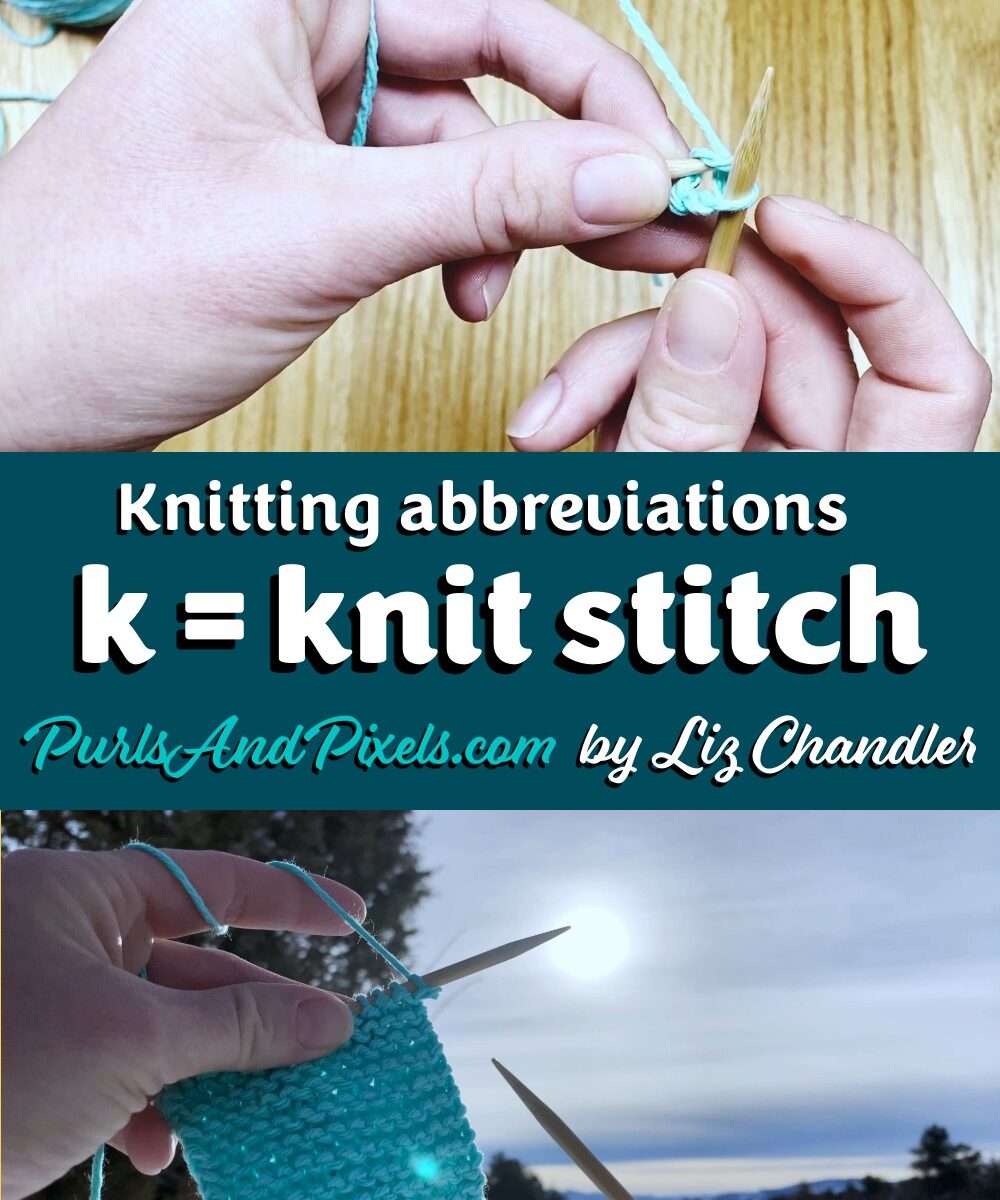
k = knit

Instructions: Narrow-Width Striped Scarf Free Knitting Pattern     

(5 inches x 6 feet [12.7 cm x 1.8288 m] or desired length)

Knit flat. To help avoid tangling the working yarn, turn your work counterclockwise when instructed to “turn.” Hold Color 1 in front of the work when switching to Color 2.

[With Color 1] Row 1: Cast on 24 stitches. Turn.

[With Color 2] Row 2: k 24. (24 stitches) Do not turn; slide all live stitches to the left-hand needle tip.

[With Color 1] Row 3: k 24. (24 stitches) Turn.

Repeat Rows 2 and 3 until scarf measures 6 feet or your desired length.

[With Color 2] Row 2: k 24. (24 stitches) Do not turn; slide all stitches to the left-hand needle tip.

[With Color 1] Bind off loosely. Cut yarn, leaving an 8-inch tail, and pull through.

Tie off or weave in ends.

Instructions: Standard-Width Striped Scarf Free Knitting Pattern

(7 inches x 6 feet [17.78 cm x 1.8288 m] or desired length)

Knit flat. To help avoid tangling the working yarn, turn your work counterclockwise when instructed to “turn.” Hold Color 1 in front of the work when switching to Color 2.

[With Color 1] Row 1: Cast on 32 stitches. Turn.

[With Color 2] Row 2: k 32. (32 stitches) Do not turn; slide all live stitches to the left-hand needle tip.

[With Color 1] Row 3: k 32. (32 stitches) Turn.

Repeat Rows 2 and 3 until scarf measures 6 feet or your desired length.

[With Color 2] Row 2: k 32. (32 stitches) Do not turn; slide all live stitches to the left-hand needle tip.

[With Color 1] Bind off loosely. Cut yarn, leaving an 8-inch tail, and pull through.

Tie off or weave in ends.

Instructions: Extra-Wide Striped Scarf Free Knitting Pattern

(9 inches x 6 feet [2.7432 cm x 1.8288 m] or desired length)

Knit flat. To help avoid tangling the working yarn, turn your work counterclockwise when instructed to “turn.” Hold Color 1 in front of the work when switching to Color 2.

[With Color 1] Row 1: Cast on 40 stitches. Turn.

[With Color 2] Row 2: k 40. (40 stitches) Do not turn; slide all live stitches to the left-hand needle tip.

[With Color 1] Row 3: k 40. (40 stitches) Turn.

Repeat Rows 2 and 3 until scarf measures 6 feet or your desired length.

[With Color 2] Row 2: k 40. (40 stitches) Do not turn; slide all live stitches to the left-hand needle tip.

[With Color 1] Bind off loosely. Cut yarn, leaving an 8-inch tail, and pull through.

Tie off or weave in ends.

Printable version of this free knitting pattern

Printable Striped Scarf PDF Knitting Pattern

Single stripe knitting pattern free from Liz Chandler @PurlsAndPixels.

Care

If you use the materials listed above, your scarf will be machine washable. For best results, hand wash or use a delicate cycle in cold water. Lay flat to dry or tumble dry low.

🛁 Read more Knitwear Care Tips

Knit a 2 color scarf without all the messy loose ends. Get the free striped scarf knitting pattern from Liz Chandler at PurlsndPixels.

© 2025, Liz Chandler of PurlsAndPixels.

This pattern is for personal use, gifting, and charitable donation of completed items. You may also sell handmade items created using this pattern. Do not copy this pattern and distribute it. If you’d like to share the pattern, refer your friends to my website, purlsandpixels.com so they may obtain a copy.

If you find any errors or have questions, email purlsandpixels@gmail.com and I’ll do my best to help.

Tag @PurlsAndPixels on Instagram or Twitter to show off your finished scarf!

More Patterns You’ll Love

🧣 Easy Chunky Knit Scarf Pattern: A Warm, Wearable Hug
🙏 Gratitude Blanket Pattern: When You Need Extra-Cozy Knitting Joy
🎉 Basic Slouch Hat Pattern: A Versatile Style Option
🔥 Basic Ear Warmer Pattern: Quick Gift-Ready Project
🧹 All Knitting Patterns by Liz: Learn to Knit All the Things

Read More

Don’t Miss a Stitch!

Love cozy knitting projects? Join me on YouTube, Pinterest, and Instagram! And don’t forget to sign up for my newsletter to get more free patterns, helpful tips, and updates straight to your inbox. 💌
My Accidental Wildflower Garden

Meadowscaping is allowing a native wildflower garden to grow from local plants. Join Liz Chandler and create your own pollinator haven at PurlsAndPixels.

A Busy Gardener’s Guide to Meadowscaping 🌻🐝

Have you heard of meadowscaping? If you haven’t, you’re not alone. Until I accidentally created a thriving native wildflower patch, I had no idea this would be the simplest and most satisfying corner of my garden.

Meadowscaping is allowing a wildflower garden to grow from native flowers and plants. Join Liz Chandler and create your own pollinator haven at PurlsAndPixels.

When I moved to my little patch of high-desert Colorado, I had big plans. Rows of squash. Seas of kale. Raised beds galore.

But while I was making lists, one quirky garden bed decided to write its own story. No irrigation. No mulch. Just a riot of wildflowers and what some might call “weeds.”

And smack in the middle? My pet dandelion.

Yes, I said pet dandelion 🌼

A healthy dandelion is the centerpiece of my meadowscape. Though people say these are weeds the butterflies love them and humans can eat them too. Read more from Liz Chandler @PurlsAndPixels.

It wasn’t planned. It kept popping up, year after year, like a little golden guest who refused to leave. Finally, I decided anything that strong deserved to survive. I let it stay. Then I let everything else around it stay.

And just like that, I had a meadowscape.

What Is Meadowscaping?

Meadowscaping is a cheerful rebellion against tidy, high-maintenance gardening. Instead of fighting nature, you team up with it:

  • Let native wildflowers and grasses do their thing
  • Skip the pesticides and the mower
  • Invite pollinators in and give them a place to stay

It’s sustainable. It’s hands-off. And it brings instant joy the moment you spot your first bee doing a happy little dance in your goldenrod.

Wild goldenrod fills out the meadowscape wildflower garden beautifully and makes the pollinators happy. Read more from Liz @PurlsAndPixels.

How to Start a Meadowscape Garden (and Still Look Like You Know What You’re Doing)

You don’t need a prairie. I started with one oddly shaped 4×8 bed and a willingness to stop yanking up every unfamiliar plant.

Step 1: Observe Before You Weed
Spend a few days just watching. If something’s blooming and buzzing, it might already be a pollinator hero in disguise.

Step 2: Give It a Frame
I edged my bed with chunky cedar branches from the yard. It says, “Yes, this is on purpose,” even when the asters go full sprawl-mode.

Step 3: Add a Little Structure
Stepping stones, a log pile, or a birdbath can give your bed a cozy focal point. It also tricks your brain into thinking the chaos is curated (because it is).

What’s Growing in My Wildflower Bed?

I’d love to add more to this little patch, like the wild Penstemon and Adam’s Needle that live peacefully among my trees. And these sunny wild sunflowers that grow carefree along my driveway? I’d move them too if they’d let me. But every time I try, they throw a fit and refuse to thrive. So I leave them be. This bed just has to be what it is: no forcing, no fussing, just admiration.

Bees love the pollen from local wild sunflowers. Read more from Liz Chandler @PurlsAndPixels.

These native (and native-ish) plants are thriving here in southwest Colorado, no watering required:

Rocky Mountain Aster
Gorgeous and a little dramatic. Sprawling, blooming, and stealing the spotlight like it’s their job.

Goldenrod
Non-stop bee party. Also: not the cause of your allergies. Just pretty. Let it live.

Common Yarrow
Delicate-looking, but tough as nails. Grows anywhere, asks for nothing, makes everything prettier.

Wild white yarrow has both beautiful flowers and serves as excellent groundcover. Read more from Liz Chandler @PurlsAndPixels.

Tools I Actually Use in My Meadowscape

Literally nothing.

I meant to cultivate the bed, truly. But as the wildflowers filled in and the bees moved in, I didn’t see the point in disturbing them. Nature was clearly doing just fine without my interference.

But, if you want to explore some fun and helpful garden tools for the other parts of your garden, find my favorites from my Amazon Garden Affiliate shop.

Shop Liz Chandler's garden tool recommendations like a kitchen top planter, seed kit, or digging tools with these affiliate links.

What Meadowscaping Taught Me

This little bed reminded me that sometimes, the best thing you can do is get out of the way.

  • Control isn’t the same as care
  • Wildflowers don’t need your approval to thrive
  • Weeds can be wildly charming
  • A little mess makes room for magic
A bouquet of wild aster flowers are cute little purple daisies with a yellow center. They make an hearty, drought tolerant, and adorable addition to your meadowscape. Read more from Liz Chandler @PurlsAndPixels.

Want to Start Your Own Wildflower Patch?

Start with one bed. Frame it gently. Watch what shows up. Let the bees do the teaching.

And if a pet dandelion moves in? Well, you know what to do.

Sometimes, the wildest parts of your garden turn out to be the most joyful.

🌻 Thriving with Native Plants: Pollinator-Friendly Gardening in the High Desert of Southwest Colorado

🥕 Harvesting Carrots: A Mystery Critter and a Happy Haul

🌱 Building Your Backyard Garden from Scratch: Essential Tips for Success

🌿 Defeating Bindweed: A Gardener’s Battle

🐥 When to Move Chicks Outside: A Guide to Transitioning Chicken Pullets from the Brooder

🪴 How to Grow a Small Indoor Herb Garden: Easy Tips for Fresh Herbs All Year

🧺 Shop My Favorite Gardening Tools and Decorations on Amazon (affiliate link)

✨ Never Miss a Garden Story 

Join my newsletter for exclusive patterns, homesteading tips, and wildlife updates! 💌

Two Color Garter Stitch Washcloth Free Knitting Pattern

Learn to knit two-tone garter stitch washcloths in three sizes with this free knitting pattern from Liz Chandler at PurlsAndPixels.

by Liz Chandler @PurlsandPixels

Give your everyday cloths a little something extra. The Two Color Garter Stitch Washcloth Free Knitting Pattern adds a playful twist to classic garter stitch with a simple color change that makes each piece pop. This free pattern includes three coordinating designs: a soft face scrubby, a standard 8″ x 8″ washcloth, and a full hand towel to round out your handmade set.

Knit your own 2-tone garter stitch washcloth in three sizes with this free knitting pattern from Liz Chandler at PurlsAndPixels.

You’ll knit each piece flat, using only the knit stitch to build bouncy garter ridges while your color combo does all the heavy lifting. It’s an easy, relaxing project with eye-catching results. They’re perfect for thoughtful gifts or adding a touch of handmade charm to your daily routine.

Prefer to knit offline?

This pattern is free to read below, but if you’d rather print it or save it for later, I’ve created a clean, ad-free PDF version for you.

  • Includes complete, row-by-row instructions
  • Easy to print or use on your tablet
  • Supports my small business 💖
Get Liz Chandler's Two Color Garter Stitch Washcloths Knitting Pattern PDF download at PurlsAndPixels.

How this Two Color Garter Stitch Washcloth Free Knitting Pattern is Made

Each piece in this set is worked flat, turning after each row and knitting every stitch. No purling, no shaping – just smooth, steady rows of garter stitch. A single color change adds visual interest without complicating the pattern, making it an easy way to keep things fun while keeping your hands relaxed. The face scrubby is a great standalone project, and the washcloth and hand towel follow the same simple rhythm, letting you build on the basics with confidence.

You will need to know how to:

If your are not familiar with any of these skills, you can find all of my free knitting lessons in my Learn to Knit Index.

Plus, you can watch a full video tutorial on how to knit this washcloth in my YouTube lesson here:

How to Knit a 2-Color Washcloth | Easy Garter Stitch Pattern for Beginners

Materials

Knitting Needles:
Long Circular Needles
36-inch (91 cm) long US No. 7 (4.5 mm) circular needle (or size needed to obtain gauge)

Yarn:
One 95-yard (2 ounce) skein of cotton worsted weight yarn* (shown in Lily Sugar ‘n Cream 100% Cotton Yarn), in your choice of two colors

  • one face scrubby uses about 4.75 yards (0.1 oz) of Color 1 and 14.25 yards (0.3 oz) of Color 2
  • one washcloth uses about 80.75 yards (0.5 oz) of Color 1 and 60.5 yards (1.275 oz) of Color 2
  • one hand towel uses about 475 yards (118.75 oz.) of Color 1 and yards (356.25 oz) of Color 2

* Weights estimated with Lily Sugar n’ Cream yarn; other yarn weights may vary. Weight does not include gauge swatch. A 4×4 inch gauge swatch with a 2 row by 3 stitch border uses an additional 19 yards (0.4 oz.).

Tools:

Gauge

19 stitches x 26 rows = 4 x 4 inches in stockinette stitch on No. 7 (4.5 mm) needles. (Learn how to check your gauge here.)

Abbreviations

k = knit

Instructions: Two Color Garter Face Scrubby

(3 inches x 3 inches [7.62 cm x 7.62 cm] after washing in cold water; 3.5 inches x 3.25 inches [8.89 cm x 8.225 cm] before washing)

Use the long-tail cast on method. Knit flat, turning after each row.

[With Color 1] Row 1: Cast on 14 stitches. Turn.

Rows 2 – 11: k 14. (14 stitches) Turn. [Measures 1.5 inches]

[With Color 2] Rows 12 – 27: k 14. (14 stitches) Turn.

Row 28: Bind off loosely in the pattern of Row 2. Cut yarn, leaving an 8-inch tail, and pull through. Weave in ends.

In cold water, hand wash or machine wash on delicate. Block while still wet, ensuring cloths are roughly 3 inches square, then allow to air dry.

Instructions: Two Color Garter Washcloth

(8 inches x 8 inches [20.32 cm x 20.32 cm] after washing in cold water; 8.5 inches x 9.25 inches [21.59 cm x 23.49 cm] before washing)

Use the long-tail cast on method. Knit flat, turning after each row.

[With Color 1] Row 1: Cast on 36 stitches. Turn.

Rows 2 – 20: k 36. (36 stitches) Turn. [Measures 2.5 inches]

[With Color 2] Rows 35 – 72: k 36. (36 stitches) Turn.

Row 73: Bind off loosely in the pattern of Row 2. Cut yarn, leaving an 8-inch tail, and pull through. Weave in ends.

In cold water, hand wash or machine wash on delicate. Block while still wet, ensuring cloths are roughly 8 inches square, then allow to air dry.

Instructions: Two Color Garter Hand Towel

(17 inches x 23 inches [43.18 cm x 58.42 cm] after washing in cold water; 17.5 inches x 24 inches [44.45 cm x 60.96 cm] before washing)

Use the long-tail cast on method. Knit flat, turning after each row.

[With Color 1] Row 1: Cast on 80 stitches. Turn.

Rows 2 – 46: k 80. (80 stitches) Turn. [Measures 6 inches]

[With Color 2] Rows 47 – 180: k 80. (80 stitches) Turn

Row 181: Bind off loosely in the pattern of Row 2. Cut yarn, leaving an 8-inch tail, and pull through. Weave in ends.

In cold water, hand wash or machine wash on delicate. Block while still wet, ensuring cloths are roughly 17 inches wide and 23 inches long, then allow to air dry.

Printable version of this free knitting pattern

Printable Two Color Garter Stitch Washcloth PDF Knitting Pattern

Knit easy, two-color garter stitch washcloths in three sizes with this free knitting pattern from Liz Chandler at PurlsAndPixels.

Care

If you use the materials called for in the Two Color Garter Stitch Washcloth Free Knitting Pattern, your final product will be machine washable. To keep your washcloth looking its best, hand wash or machine wash separately on delicate cycle in cold water. You may tumble dry on low heat or lay flat to dry.

🛁 Read more Knitwear Care Tips

Size & Use Notes

Each piece is designed for real-life utility:

  • Face scrubby for your nighttime skincare or baby bathtime
  • Washcloth for everyday dishes or self-care
  • Hand towel for drying hands in the kitchen or bathroom

These cloths make a thoughtful little set for gifting, especially when bundled with handmade soap or added to a basket of homegrown or homemade goodies.

Knit easy, two-color garter stitch washcloths in three sizes with this free knitting pattern from Liz Chandler at PurlsAndPixels.

©2025, Liz Chandler of PurlsAndPixels.

This pattern is for personal use, gifting, and charitable donation of completed items. You may also sell handmade items created using this pattern. Do not copy this pattern and distribute it. If you’d like to share the pattern, refer your friends to my website, purlsandpixels.com so they may obtain a copy.

If you find any errors or have any questions, email purlsandpixels@gmail.com and I will do my best to help.

I’d love to see your finished work! Tag your photos with @PurlsAndPixels on Twitter or Instagram.

More Patterns You’ll Love

🍽️ Beginner Garter Stitch Washcloth Free Knitting Pattern: A solid color towel pattern

🧶 Beginner Knit Scarf Easy Knitting Pattern: A light-weight garter stitch scarf

🧣 Easy Chunky Knit Scarf Pattern: A thick and quick garter stitch scarf

🙏 Gratitude Blanket Pattern: An extra-cozy garter stitch blanket

🛁 Knitted Dishcloth Patterns: More fun towel designs you can knit

🧺 All Knitting Patterns from Liz @PurlsAndPixels: Learn to Knit All the Things

Read More

Don’t Miss a Stitch! 🧶

Love cozy knitting projects? Join me on YouTube, Pinterest, and Instagram! And don’t forget to sign up for my newsletter to get more free patterns, helpful tips, and updates straight to your inbox. 💌
Shooting in Rural Neighborhoods

Is it normal to hear shooting rural neighborhoods? Find out with Liz Chandler @PurlsAndPixels.

When hearing gunshots from the neighbors property is normal 🎯

If you’ve ever lived in the country, you’ve probably heard it: BANG. Followed by another. And another. Sometimes it’s target practice. Sometimes it’s pest control. And sometimes it’s just someone blowing off steam.

In rural neighborhoods, hearing gunshots isn’t unusual. However, that does not mean it should be reckless. There is a difference between responsible firearm use and behavior that makes your neighbors feel unsafe.

When Is It Normal to Hear Gunshots in the Country?

In most rural areas:

  • Target practice on private land is common.
  • Pest control (like rock squirrels or prairie dogs) is a necessity.
  • Wildlife deterrence, because sometimes predators only respond to a warning bang.
  • Hunting season brings regular firearm use.

Many people move to the country specifically because they can legally shoot on their land. It is part of rural living. However, like all freedoms, it comes with responsibility.

Some visitors freak out when they hear the bang, and then are baffled when I am unbothered. I usually just say, “That’s not aimed at us,” and keep going. You learn to tell the difference between safe shooting and something that is off. It is not indifference (it is experience).

When one neighbor fires off a shot before 7 a.m. to annoy another neighbor, I just shout, “Good morning, Vietnam!” out the door like I am Robin Williams. It does not solve anything, but it rattles just enough cages to make me laugh.

You may want to holler “Good Morning, Vietnam!” when target practice start before 7 am every day.

When Gunfire Crosses the Line

Not every neighbor is a good shot (or a good person). You may need to speak up if someone:

  • Fires in the direction of homes or roads
  • Shoots recklessly without a proper backstop
  • Uses firearms to intimidate or provoke
  • Fires repeatedly at odd hours just to make noise

My neighbor thinks it is funny to do a wake-up shot or two at his homemade target range when the HOA gets on his nerves. That is a far cry from a gun rampage in the city, but it still gets people talking (and give me a giggle). 

This jackrabbit heard gunshots in the countryside and was frightened, but it's ok. Nobody was shooting at him! Read more from Liz Chandler @PurlsandPixels.

What to Do If Your Neighbor Is Shooting Too Much or Too Close

✅ Know Your Local Gun Laws for Rural Areas

County ordinances vary, and so do state laws. In many places, discharging a firearm near a home, school, or road is illegal, even on private land. Look up your local regulations on firearm discharge and noise complaints.

✅ Talk to Your Neighbors About Gunfire

Sometimes people just do not realize how far sound carries or how close they are to your home. A calm, respectful conversation often goes a long way. (But I would not recommend yelling at the person with a firearm, so be nice!)

✅ Document Unsafe Shooting

If someone is endangering others, document it. Record times, dates, videos if safe to do so, and call your local sheriff. In rural areas, it helps to be specific and clear about your concerns.

✅ Use Sound Barriers and Noise Buffers

You cannot stop all the noise, but planting trees, using sound barriers, and adding insulation to buildings can reduce the chaos a bit. These tips can also help when neighbors shoot guns often.

Rural Gun Safety Is Non-Negotiable

Firearm safety is not optional just because you live on acreage. That means:

  • Always shooting into a solid backstop
  • Keeping guns unloaded and locked up when not in use
  • Never mixing alcohol and firearms
  • Respecting the peace of the land and the people on it

Country living comes with space and freedom. However, it also includes a shared understanding that we look out for each other.

Hearing gunshots in rural country? It could be normal. Find out more from Liz Chandler @PurlsAndPixels.

Rural does not mean lawless. It means responsible people keeping things safe, so we can all enjoy the quiet we came here for.

🐻 Keeping Bears Out of the Chicken Coop

🦁 Living with Mountain Lions

🛣️ Country Road Courtesy

Concerned about rural safety or homestead peace?

Sign up for my email list to stay up do to date with practical rural living tips, cozy homemaking advice, and the occasional rant about early-morning gunfire. 💌

Beginner Garter Stitch Washcloth Free Knitting Pattern

Learn to knit simple garter stitch washcloths in three sizes with this free knitting pattern from Liz Chandler at PurlsAndPixels.

by Liz Chandler @PurlsandPixels

If you’re wondering what to knit first, this is your answer. A one-color garter stitch washcloth is the ultimate beginner project; it’s low-risk, fully useful, and incredibly relaxing. This free knitting pattern includes three beginner-friendly pieces: a face scrubby, a classic 8″ x 8″ washcloth, and a full hand towel. Together, they make a complete set that’s perfect for gifting or stocking your home with handmade, sustainable basics.

Learn to knit adorable but simple hand towels and washcloths with the Garter Stitch washcloth knitting pattern by Liz Chandler @PurlsAndPixels.

Each item is worked flat using only the knit stitch, so you can practice your tension, build muscle memory, and enjoy the rhythm of the needles without worrying about purling or shaping. Whether you’re settling in with a cup of tea or knitting in stolen moments throughout your day, this project helps you slow down while making something practical and beautiful.

Prefer to knit offline?

This pattern is free to read below, but if you’d rather print it or save it for later, I’ve created a clean, ad-free PDF version for you.

  • Includes complete, row-by-row instructions
  • Easy to print or use on your tablet
  • Supports my small business 💖
Get Liz Chandler's Garter Stitch Washcloths Knitting Pattern PDF download at PurlsAndPixels.

How this Beginner Garter Stitch Washcloth Free Knitting Pattern is Made

Each piece in this set is knit flat and turned after each row. All stitches are knit, with no purling, increasing, or decreasing needed. The face scrubby included in this set is a great first project on its own, and the washcloth and hand towel build on that same simple skill.

You will need to know how to:

If your are not familiar with any of these skills, you can find all of my free knitting lessons in my Learn to Knit Index.

Plus, you can watch a full video tutorial on how to knit this washcloth in my lesson here.

Materials

Knitting Needles:
Long Circular Needles
36-inch (91 cm) long US No. 7 (4.5 mm) circular needle (or size needed to obtain gauge)

Yarn:
One 95-yard (2 ounce) skein of cotton worsted weight yarn* (shown in Lily Sugar ‘n Cream 100% Cotton Yarn), in your choice of color

  • one face scrubby uses about 19 yards (.4 oz)
  • one washcloth uses about 71.25 yards (1.5 oz)
  • one hand towel uses about 475 yards (7.7 oz.)

* Weights estimated with Lily Sugar n’ Cream yarn; other yarn weights may vary. Weight does not include gauge swatch. A 4×4 inch gauge swatch with a 2 row by 3 stitch border uses an additional 19 yards (0.4 oz.).

Tools:

Gauge

19 stitches x 26 rows = 4 x 4 inches in stockinette stitch on No. 7 (4.5 mm) needles. (Learn how to check your gauge here.)

Abbreviations

k = knit

Instructions: Garter Stitch Face Scrubby

(3 inches x 3 inches [7.62 cm x 7.62 cm] after washing in cold water; 3.5 inches x 3.25 inches [8.89 cm x 8.225 cm] before washing)

Use the long-tail cast on method. Knit flat, turning after each row.

Row 1: Cast on 14 stitches. Turn.

Rows 2 – 27: k 14. (14 stitches) Turn

Row 28: Bind off loosely in the pattern of Row 2. Cut yarn, leaving an 8-inch tail, and pull through. Weave in ends.

In cold water, hand wash or machine wash on delicate. Block while still wet, ensuring cloths are roughly 3 inches square, then allow to air dry.

Instructions: Garter Stitch Washcloth

(8 inches x 8 inches [20.32 cm x 20.32 cm] after washing in cold water; 8.5 inches x 9.25 inches [21.59 cm x 23.49 cm] before washing)

Use the long-tail cast on method. Knit flat, turning after each row.

Row 1: Cast on 36 stitches. Turn.

Rows 2 – 72: k 36. (36 stitches) Turn.

Row 73: Bind off loosely in the pattern of Row 2. Cut yarn, leaving an 8-inch tail, and pull through. Weave in ends.

In cold water, hand wash or machine wash on delicate. Block while still wet, ensuring cloths are roughly 8 inches square, then allow to air dry.

Instructions: Garter Stitch Hand Towel

(17 inches x 23 inches [43.18 cm x 58.42 cm] after washing in cold water; 17.5 inches x 24 inches [44.45 cm x 60.96 cm] before washing)

Use the long-tail cast on method. Knit flat, turning after each row.

Row 1: Cast on 80 stitches. Turn.

Rows 2 – 180: k 80. (80 stitches) Turn.

Row 181: Bind off loosely in the pattern of Row 2. Cut yarn, leaving an 8-inch tail, and pull through. Weave in ends.

In cold water, hand wash or machine wash on delicate. Block while still wet, ensuring cloths are roughly 17 inches wide and 23 inches long, then allow to air dry.

Printable version of this free knitting pattern

Printable Beginner Garter Stitch Washcloth PDF Knitting Pattern

Knit easy garter stitch washcloths in three sizes with this free knitting pattern from Liz Chandler at PurlsAndPixels.

Care

If you use the materials called for in the Beginner Garter Stitch Washcloth Free Knitting Pattern, your final product will be machine washable. To keep your washcloth looking its best, hand wash or machine wash separately on delicate cycle in cold water. You may tumble dry on low heat or lay flat to dry.

🛁 Read more Knitwear Care Tips

Size & Use Notes

Each piece is designed for real-life utility:

  • Face scrubby for your nighttime skincare or baby bathtime
  • Washcloth for everyday dishes or self-care
  • Hand towel for drying hands in the kitchen or bathroom

They also make a cozy matched set for gifting, especially when bundled with a bar of handmade soap or tucked into a basket of homestead goods.

Knit your own DIY garter stitch washcloth in three sizes with this free knitting pattern from Liz Chandler at PurlsAndPixels.

©2025, Liz Chandler of PurlsAndPixels.

This pattern is for personal use, gifting, and charitable donation of completed items. You may also sell handmade items created using this pattern. Do not copy this pattern and distribute it. If you’d like to share the pattern, refer your friends to my website, purlsandpixels.com so they may obtain a copy.

If you find any errors or have any questions, email purlsandpixels@gmail.com and I will do my best to help.

I’d love to see your finished work! Tag your photos with @PurlsAndPixels on Twitter or Instagram.

More Patterns You’ll Love

🧶 Beginner Knit Scarf Easy Knitting Pattern: A light-weight garter stitch scarf

🧣 Easy Chunky Knit Scarf Pattern: A thick and quick garter stitch scarf

🙏 Gratitude Blanket Pattern: An extra-cozy garter stitch blanket

🛁 Knitted Dishcloth Patterns: More fun towel designs you can knit

🧺 All Knitting Patterns from Liz @PurlsAndPixels: Learn to Knit All the Things

Read More

Don’t Miss a Stitch! 🧶

Love cozy knitting projects? Join me on YouTube, Pinterest, and Instagram! And don’t forget to sign up for my newsletter to get more free patterns, helpful tips, and updates straight to your inbox. 💌
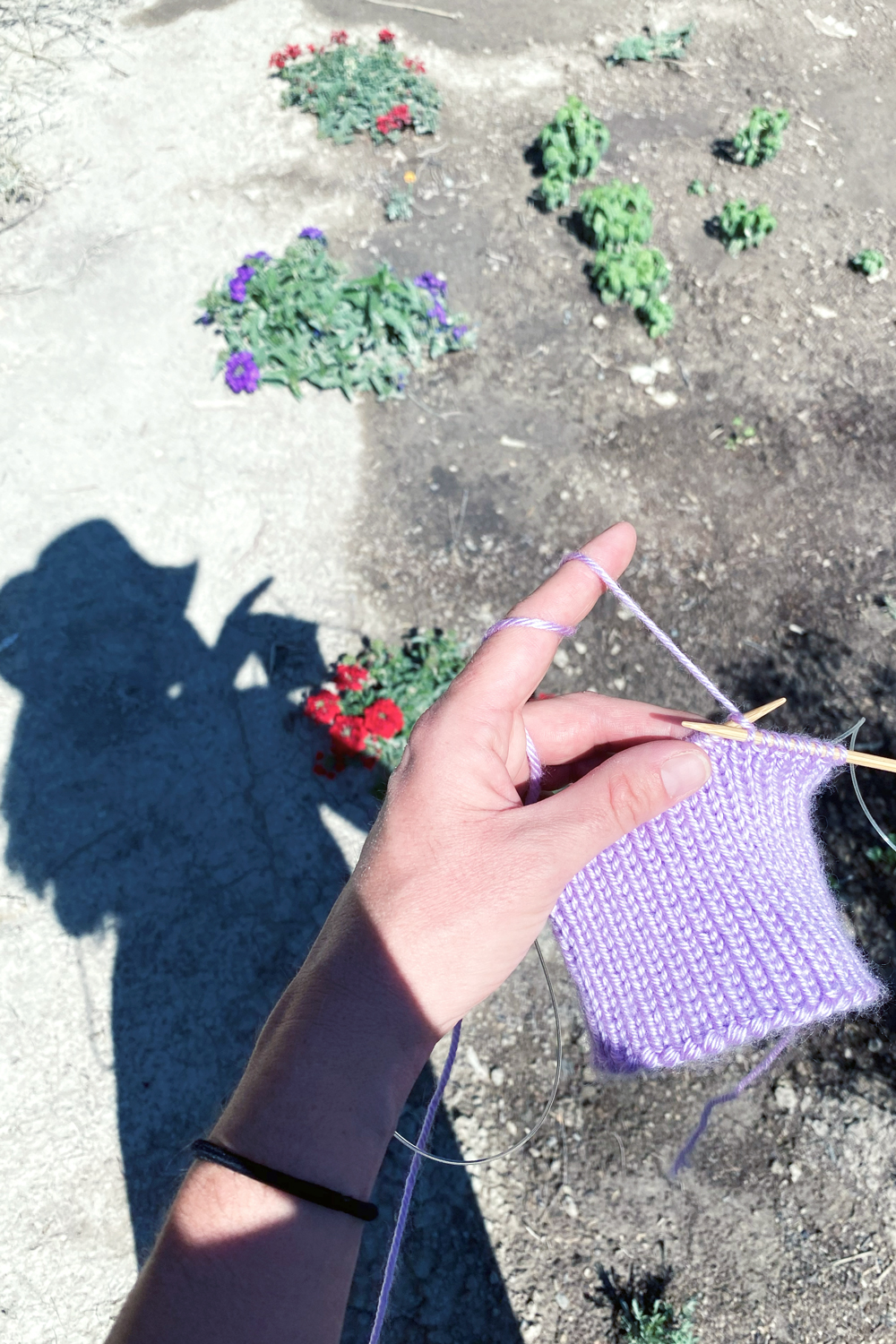
What is Yarn Chicken?

What is yarn chicken? Hint: it has everything to do with yarn and nothing to do with chickens. Find out with Liz Chandler @PurlsAndPixels.

The Bravery Test of the Crafting World 🧶

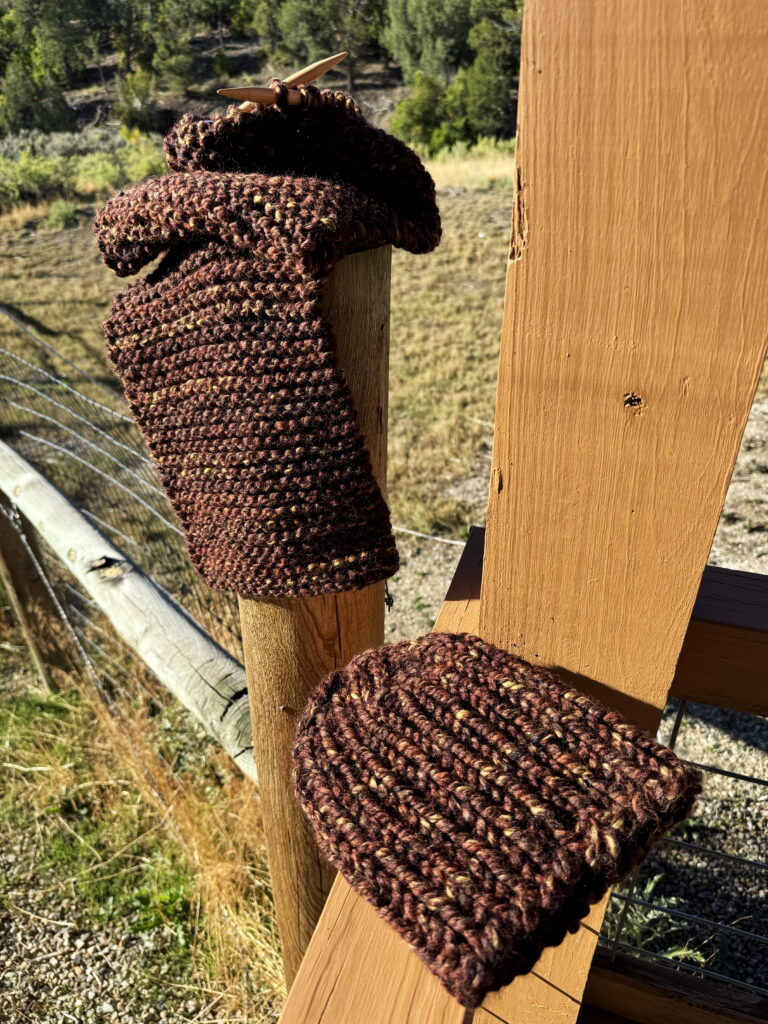
I just played a risky little game. I really wanted a new, quick hat. After rummaging through my yarn stash, I found just the skein I wanted. Instead of being a responsible knitter (weighing my yarn and checking my instructions) I decided to wing it and play yarn chicken. It looked like enough…

I started knitting my hat and it was looking great. I made it nearly to the top, the whole time feeling certain that this would be just enough yarn. But, sadly, I guessed wrong. I ran out just before the top of the hat. 😢

Ever guess you have enough yarn instead of making sure? Then you've played yarn chicken. Read more from Liz Chandler @PurlsAndPixels.

There wasn’t time to go to town for more yarn, and I didn’t want to scrap the hat. So I started digging through my project stash.

I found a rogue boot cuff with no match. But it was the same yarn. So I unraveled it and tied it into the hat project with a magic knot.

That little, lonely boot cuff, made of matching yarn gave me just enough to finish my hat. That is the heart of yarn chicken: it’s the most reckless game a knitter can play. Sometimes, it is a quiet little win and a happy dance. 💃 Other times, you’ll lose the round and have to pivot.

I had to sacrifice a little boot cuff to finish my hat because I played a game of yarn chicken. Read more from Liz Chandler @PurlsAndPixels.

What is Yarn Chicken?

Hint: it has everything to do with yarn and nothing to do with chickens.

What is yarn chicken? Hint: it has everything to do with yarn and nothing to do with chickens. Find out with Liz Chandler @PurlsAndPixels.

If you have ever heard of the old game of chicken, where teenagers would drive their cars straight at each other to see who would swerve first, then you already get the idea. Yarn chicken is the slower, quieter, far more practical version of that reckless dare. No engines. No headlights. It’s not life and death. It’s just you, your project, and a rapidly shrinking skein of yarn.

Yarn chicken is when you size up your skein with nothing but your gut and a hopeful squint. You skip the scale, bypass the calculator, and knit like you’ve got enough. Because maybe you do. Maybe you don’t. But you’re not stopping to find out. It is part grit, part gamble, and all heart.

Sometimes it works. Sometimes it doesn’t. That is the game.

Why Play Yarn Chicken?

Because you just want to see if you can pull it off. You’re in a groove, you’re not interested in stopping to do math, and that half-used skein looks promising enough. Yarn chicken gives you a chance to lean into instinct instead of spreadsheets.

It is not laziness or forgetfulness. It’s choosing motion over caution, momentum over planning. And yes, once in a while, it’s just more fun this way.

You learn a lot when you play yarn chicken: about yarn, about rhythm, and about how far a single stitch can stretch when it really matters.

Sometimes you win, sometimes you don't when you play a game of yarn chicken. If you lose, make sure you have a backup plan. Read more from Liz Chandler @PurlsAndPixels.

When You Lose

Losing at yarn chicken does not always mean starting over. It might mean improvising. You might unravel something else, work in a stripe, or change the ending of the pattern slightly to use what you have got.

It is not failure. It is flexibility.

I was sure I had enough yarn. I did not. So, I had to frog (unravel) to finish my hat. 🐸 #knitting

If You Want to Avoid It

You can avoid yarn chicken if you:

  • Weigh your yarn before you begin a section.
  • Compare the yardage used in earlier parts of the pattern.
  • Use patterns with detailed estimates (I include them in all my patterns).
  • Swatch and plan precisely.

All of that works. I even recommend it most of the time.

But every now and then, if it feels right, I still play.

To Play or Not to Play

Yarn chicken is not about being careless. It is about reading the yarn, trusting your gut, and being willing to shift gears when the skein runs short. It is about choosing progress over perfection and being bold enough to see how far one strand will take you.

I have lost my fair share. I have torn out rows, patched in stripes, and unraveled forgotten cuffs. But I have also finished with half an inch to spare and felt like a champion.

That’s why I still play.

If you dare to play, you can win yarn chicken. Learn more with Liz Chandler @PurlsAndPixels.

Looking for patterns you can finish without a gamble?

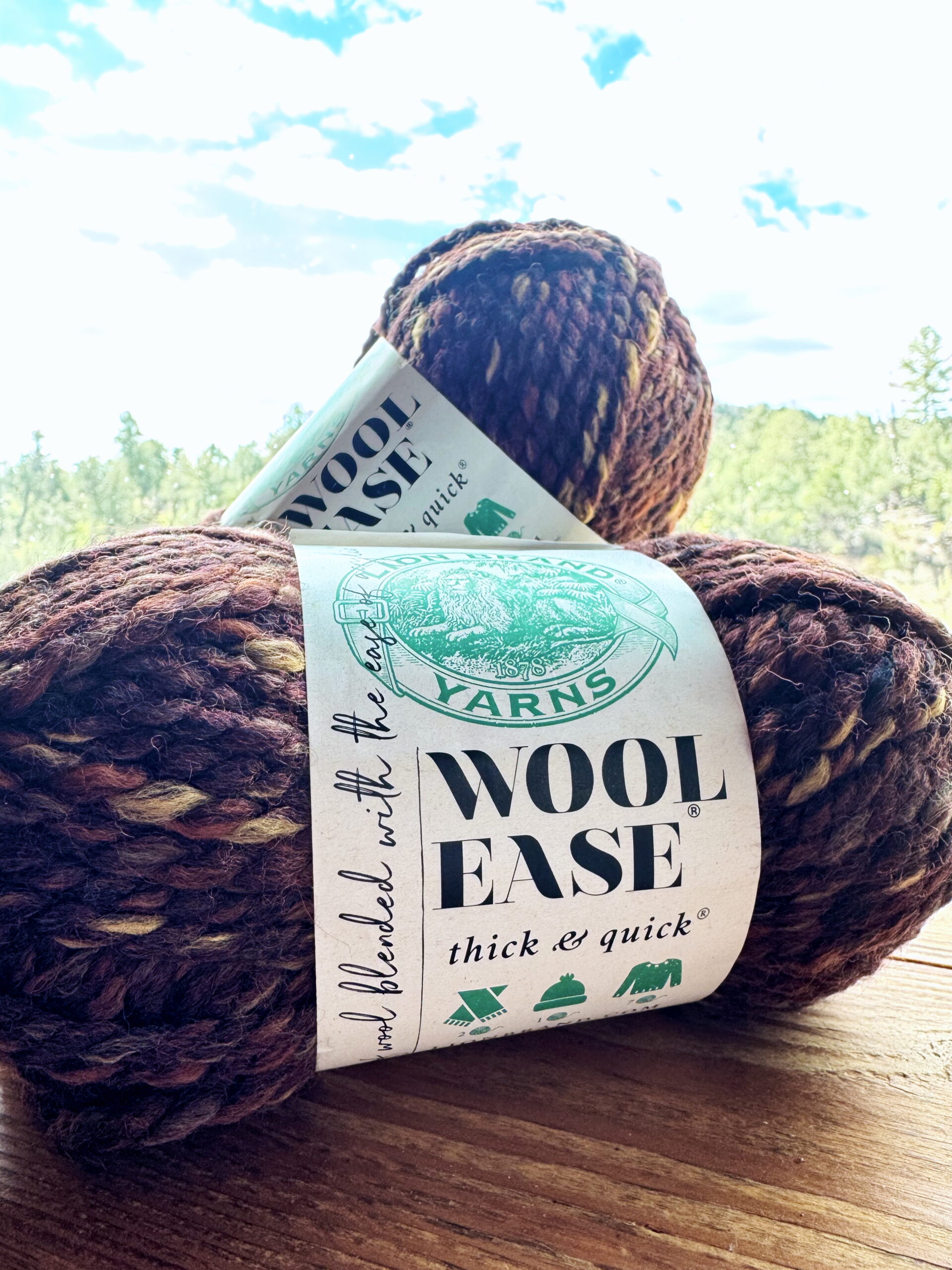
🥳 Ribbed Chunky Hat Free Knitting Pattern: Knit the Hat in this Post (substitute Wool Ease Thick & Quick by Lion Brand Yarn “Carousel” affiliate link)

🥾 Easy Chunky Knit Boot Cuffs Free Knitting Pattern: Make a set of adorable mini leg warmers.

🧶 Explore all the Knitting Patterns written by Liz Chandler: Find something you will love to make.

Don’t Miss a Stitch! 🧶

Love cozy knitting projects? Join me on YouTube, Pinterest, and Instagram! And don’t forget to sign up for my newsletter to get more free patterns, helpful tips, and updates straight to your inbox. 💌
Avocado Cowboy

What I learned from the Avocado Cowboy. With grocery prices soaring and fear rising, it's time to remember kindness. A moment from Liz Chandler @PurlsAndPixels.

How Two Pieces of Fruit Broke a Strong Man and Opened My Eyes 🥑

I scanned my items as quickly as I could, feeling the pressure of the self-check out line eyeing my machine.

We all wanted to get out of there as fast as possible. The grocery store is no longer a fun place to greet neighbors. It’s become a shared trauma zone, especially in small town America. We all think others are judging our purchases, but now they really are:

“She’s buying a lot of wine.”
“Why did that man need 6 cartons of eggs?”
“I wonder if they just live far from town or if they are hoarding because they know something I don’t.”

The things we think waiting in line have changed. “Am I in danger?” never once crossed my mind on a childhood grocery trip.

Now, I’m watching my six like a trained combat soldier while trying to hold in gasps of shock. It’s “Where would I hide?” combined with “I can’t afford that anymore?” And I know that I’m not alone in this feeling.

As I try to rush through my self-checkout I tell my son – loudly enough for the people in line to hear – “I wish the lady in the machine would be quiet.”

“$12.99. Savings 50¢,” the robot voice loudly mocks, screaming prices at the entire grocery store.

“It’s very distracting. It’s so hard to go quickly,” I say even more loudly.

The scowlers look away, but don’t stop scowling.

Behind us on the next self-checkout is an older, almost stereotypical rancher. Cowboy hat. Flannel shirt tucked neatly into his Levi jeans, clearly worn for decades, but clean and untattered.

After a hard morning's work moving cattle a cowboy needs a small break.

As I struggle with the robot voice in the self-checkout machine, I hear him exclaim, “$8 for 2 avocados? EIGHT DOLLARS?!”

The young check out attendant scurried over to help the gentleman. “Maybe it’s a mistake?” the cowboy said more quietly, trying to divert attention from his unfiltered outburst. “I just got two small avocados from your produce section. It says $8? That can’t be right.”

I resumed scanning my items. We are monthly shoppers with a full cart, so I also resumed my social anxiety about holding up others.

But then the Avocado Cowboy, made me jump. He was clearly the type to prefer “Yes,” “No,” or “Ma’am” to be his entire public vocabulary, as is the cowboy way. But he lost it. He just couldn’t take it.

“Really? They’re actually $8? TWO avocados?” He was stunned to silence for just a moment.

And in past years, under similar circumstances, a man of his background would leave it at that. Maybe feign ignorance at current grocery prices and ask the wife later.

But no. This Cowboy knew his avocados. It seemed like a gift he’d get his wife regularly. Like flowers, but practical.

The register wasn't wrong, but it is a shock when you'd think two avocados should cost about $3 and it rings up as $8.
Screenshot

He loudly told the attendant “I feel sorry for your generation, just getting started. I don’t know how they expect you to do it. Grocery prices are out of control.”

He turned red in the face, thanked the attendant, and hung his head as he left with his receipt and two sad avocados.

I’ll never forget the Avocado Cowboy. I wanted to hug him, or thank him, or comfort him in some way.

But I’m scared, too.

It has begun to feel like no good deed goes unpunished. So, I, like many these days, did not do the good deed. I did not thank the Avocado Cowboy.

But I’m saying it now. I see you. I am you. We are all confused. Disappointed. Sad. And resentful.

But I hope we all know…
Nobody knows the end of this story.
Let’s keep trying to make it good.

A boot on a fencepost can mean a number of things, none of which are easy or pleasant. But it is a sign we can get thru hard things together.

Feeling the Pressure, too?

Try what I do when I am feeling stressed:

Keep Your Homestead Running Smoothly (Even When Life Feels Chaotic)

Piñon Gnats in Southwest Colorado

Learn about biting Piñon Gnats in Southwest Colorado. Find out out what they are and how to deal with them with Liz Chandler @PurlsAndPixels.

Why I Wear a Mesh Hat and Smell Like Cookies in June 🍪

Deep in the piñon forests of Southwest Colorado, there is a short season when the sun shines, the garden blooms, and the air bites back. Each year, without fail, between Memorial Day and the Fourth of July, the piñon gnats arrive.

They are not just annoying. They are tiny vampires with wings. You will not hear them. You will barely see them. You will just feel the sting. Then the bruise.

And if you hold still for more than a few seconds, they start to swarm. It feels like a dark, buzzing cloud has gathered just for you, relentlessly divebombing your head.

Even local veterinarians and service providers avoid our neighborhood during gnat season. They know what is waiting.

In June, my neighborhood looks like a beekeeping convention. Everyone wears mesh veils, wide-brimmed hats, and long sleeves. Not because we are tending hives, but because the bugs are tending to us.

Last summer, I made it worse. I painted the barn red. I am not a tidy painter. So when I go outside in full mesh bug gear, I do not look like a gardener. I look like someone with something to hide. It gives CSI: Homestead Edition.

Painting in a mesh hat can be a little awkward. But it is better than being eaten up by a swarm of biting bugs! Read more from Liz Chandler @PurlsAndPixels.

Gnat Behavior: When Are Piñon Gnats Active?

Textbooks say most biting midges are active at dawn and dusk, but not here. Piñon gnats prefer the full sun and dry heat of the day.

If I am quick, I can water the garden before 9 a.m. After that, it is over. They are awake, aggressive, and waiting.

And if you hold still for more than two seconds? Forget it. They swarm. You can feel them gathering in a black cloud around your face, ready to bite. That is when you stop watering and start running.

Quick Facts: What Are Piñon Gnats?

You may have heard them called "no-see-ums," "biting midges," "punkies," or even "five-o'clock gnats," depending on where you live.

Quick Facts: What Are Piñon Gnats?

You may have heard them called “no-see-ums,” “biting midges,” “punkies,” or even “five-o’clock gnats,” depending on where you live. The name “no-see-um” is no joke. These biting midges are so small you often do not see them at all. By the time you realize they are there, they have already bitten you and vanished like tiny flying phantoms. And the vicious little beasts don’t even spare the dogs; if you’ve got blood, they’re all over you.

No-See-Ums love to nibble at dog's ears. Best to keep them inside as much as you can during the season.  Read more from Liz Chandler @PurlsAndPixels
This dog’s ears are covered in no-see-ums. Back inside we go!

What makes their bite so sneaky is how they do it. Piñon gnats do not pierce the skin like mosquitoes. Instead, they use tiny scissor-like mouthparts to slice into your skin. Then they lap up the blood. It is a brutal method for something so small, and you feel it almost instantly.

  • Piñon gnats are tiny biting midges (1 to 3 millimeters long).
  • Female gnats bite to draw blood for egg production.
  • The bite feels like a quick sting, not a poke.
  • The mark left is flat and bruised, not swollen or itchy.
  • They thrive in piñon-juniper woodlands.
  • They are most active in the heat of the day.

The Favorite Target: Why They Bite Eyelids

Some people get bites around their ankles. Not me. These bugs go straight for my eyelids. The thinnest, most sensitive skin on my body, and apparently their favorite. One even let me catch her in the act. I got a picture. Just a tiny black dot with bad intentions.

Piñon Gnats love to bite eyelids. These tiny little flies leave bruised  spots behind. Read how to stop them with Liz Chandler @PurlsAndPixels.

Piñon gnat bites do not swell. They do not itch. They leave small, dark bruises that sting briefly and hang around for days. It looks like I lost a fight with my eyeliner.

A Piñon Gnat bit my eyelid. See the purple bruising? Much different than a mosquito bite. Learn more from Liz Chandler @PurlsAndPixels

Piñon Gnat Survival Strategies: What Helps (Sort Of)

Let me be honest: nothing works perfectly against these bugs. I have tried everything I can think of, and most of it barely makes a difference.

I have tried it all.

  • Mosquito repellents (candles, sprays, and salves): Nothing works. Not against piñon gnats.
  • Vanilla extract: Smells like cookies and seems to repel the smaller ones. I dab it under my eyes, but be careful. Real vanilla contains alcohol and will burn if it gets too close to your eyes. I keep McCormick Vanilla Extract on hand for both baking and gnats. (Amazon Affiliate Link)
  • Sunglasses and wide-brimmed hat: These tiny biters have no problem getting under sunglasses and they enjoy biting up your hairline, too.
  • Mesh bug hat: The only thing that truly works. It is not stylish, but it gets the job done. Here is the mesh bug hat I use, and it comes in different colors! (Amazon Affiliate Link)

July 5: My Real Independence Day

I love the outdoors, my garden, and my chickens. But during piñon gnat season, I become an anxious houseplant.

I stay inside. I blink through mesh. I smell like a cookie. And I wait.

Because every year, like clockwork, they disappear the day after the fireworks fade. July 5 is my real Independence Day. That is when I can walk outside barefaced and finally feel free. 🎆

Until then, I will be under the silly hat or hiding inside.

Piñon Gnats are mean little bugs that love to bite your face. Wearing a mesh hat is the only way I've found to stop them. Read more from Liz Chandler @PurlsAndPixels.

Now, It’s Time to Relax 📺🧶💞

If you are stuck inside like me, it might be the perfect moment to pick up a new cozy skill. These are some of my favorite indoor knitting and craft projects. No mesh hat required.

🧶 Learn to Knit: Free Beginner Lessons: This step-by-step knitting course was made for true beginners. Each lesson includes photos and explanations so you can learn to knit with confidence.

🧣 Beginner Scarf Knitting Pattern: Practice your first stitches while making something useful. This garter stitch scarf pattern is relaxing and includes printable instructions in three sizes.

🛏️ Rice Stitch Blanket Pattern: Knit a textured afghan using simple knit and purl stitches. This blanket pattern includes two stitch variations, both with cozy results.

🌲 Cozy Lifestyle Inspiration: Warm up your home life with recipes, simple living ideas, and peaceful routines that bring calm to your day.

🎨 Cabin Crafts: Explore cozy crafts to keep you busy and entertained.

📍 Social Media: Find lots of inspiration collected in one place. Let’s connect!

LET’S KEEP IN TOUCH!

I’d love to keep you updated with the latest news and offers from PurlsAndPixels.🧶💕

We don’t spam! Read our privacy policy for more info.