Weave in Cast-on Tail

Learn to weave in loose ends and and tie up excess yarn tails - the bind off edge - a knitting lesson from Liz @PurlsAndPixels.

A long-tail cast on, like most other cast ons, will always leave a tail. Learn how I weave in then tie off this loose end on flat knitting projects.

Below are both video and written tutorials to help you learn how to weave in your first tail.

Video Guide: How to Weave in the Cast-on Tail

Written Guide: How to Weave in the Cast-on Tail

To weave in your end, you will use a darning needle to help you sew the tail into your work.

Weave in Cast-on Tail, Step 1:

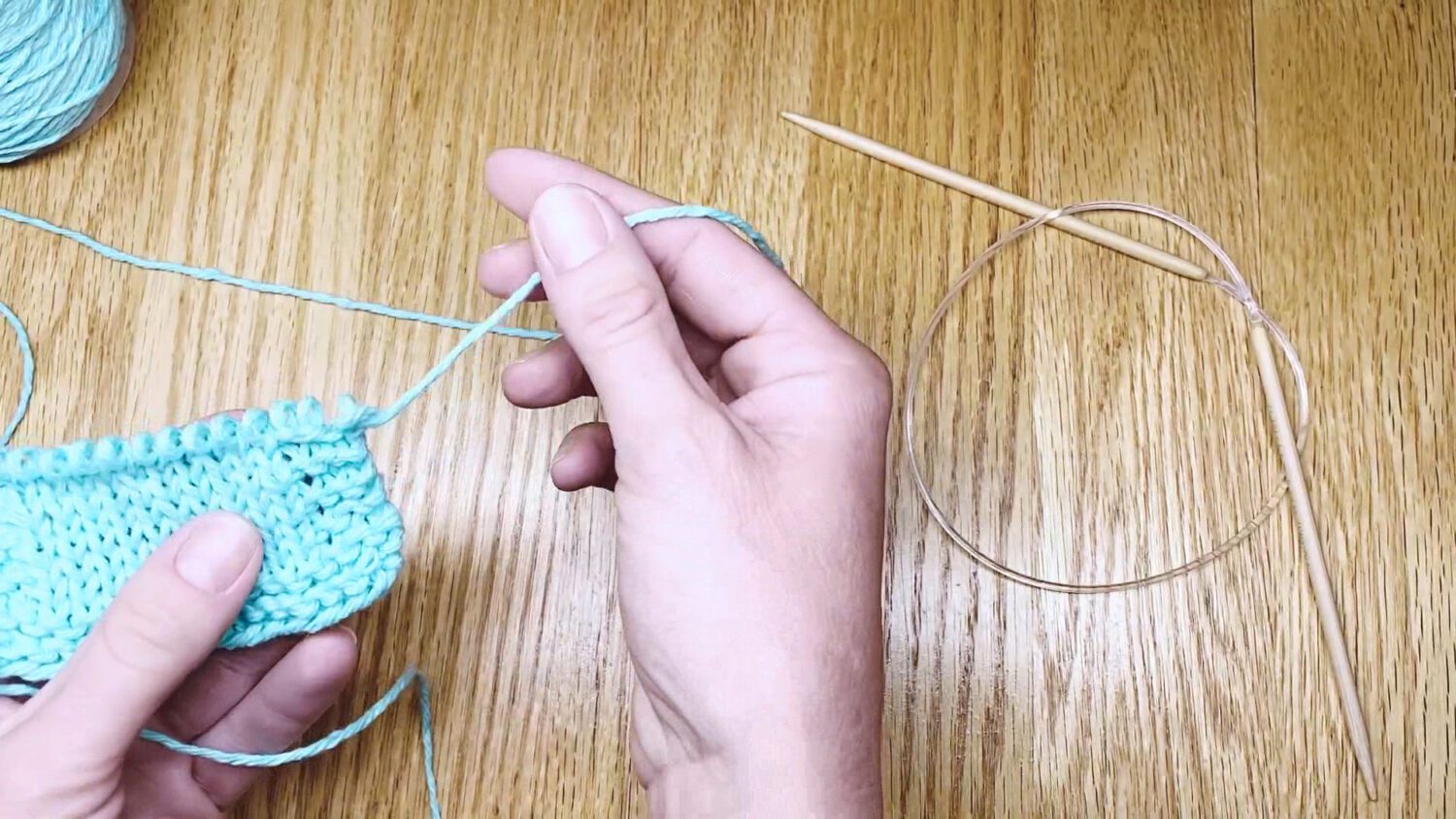
Pick up the loose end you would like to weave in; here we will start with the loose end from the cast-on edge (located at the bottom of the work).

Step 1: Learn to weave in loose ends and and tie up excess yarn tails - the cast on edge - a knitting lesson from Liz @PurlsAndPixels.

Weave in Cast-on Tail, Step 2:

Thread the loose end through the eye of a darning needle.

Step 2: Learn to weave in loose ends and and tie up excess yarn tails - the cast on edge - a knitting lesson from Liz @PurlsAndPixels.

Weave in Cast-on Tail, Step 3:

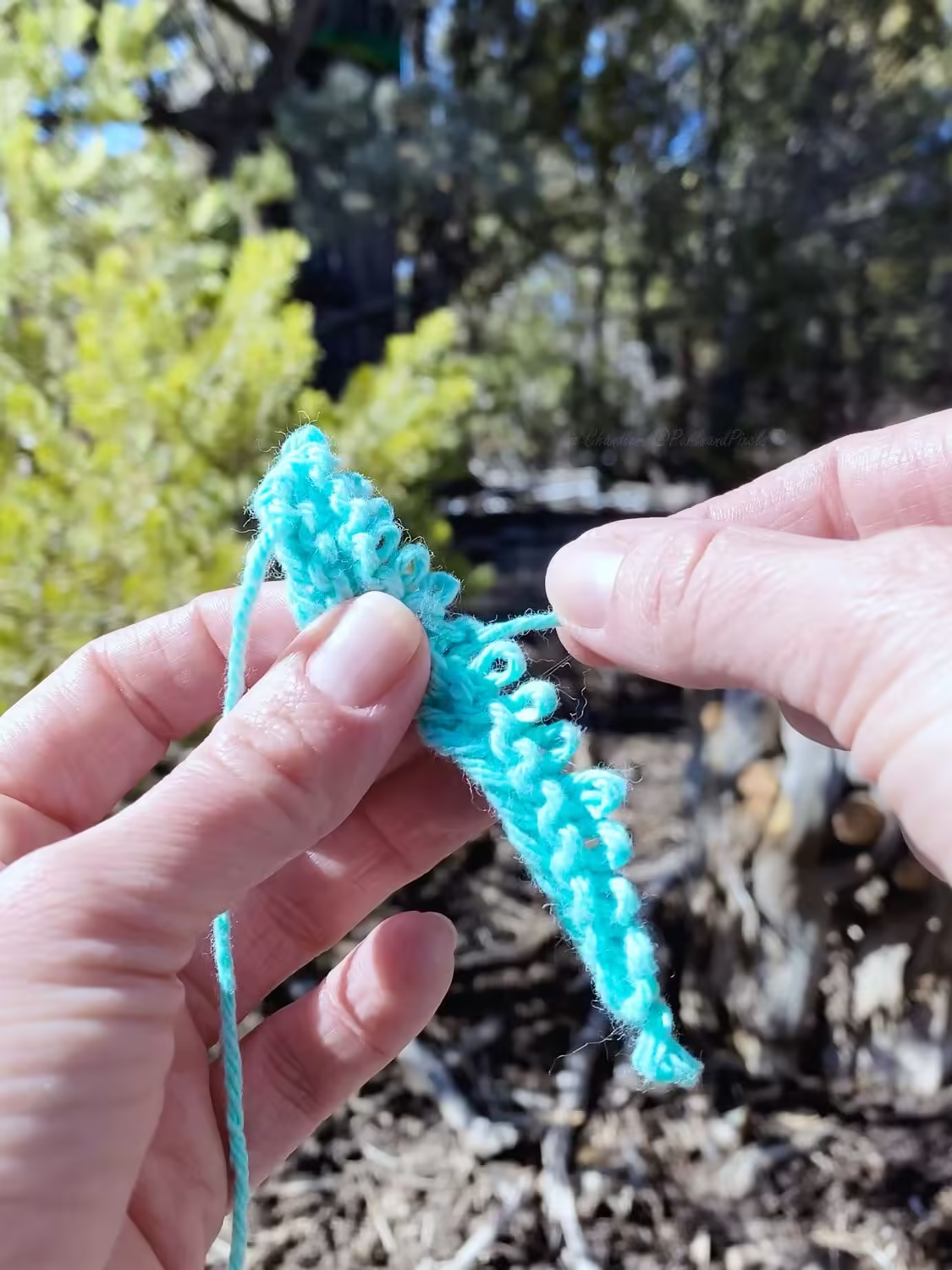
Examine the edge of your work and try to identify any unfinished parts of the pattern. On the cast on edge, as show here, you will be missing one leg of an imaginary > shape.

Step 3: Learn to weave in loose ends and and tie up excess yarn tails - the cast on edge - a knitting lesson from Liz @PurlsAndPixels.

Weave in Cast-on Tail, Step 4:

Using the natural holes in your knitting as a guide, insert the darning needle through the edge stitch, which would form the point of the > shaped stitch.

Step 4: Learn to weave in loose ends and and tie up excess yarn tails - the cast on edge - a knitting lesson from Liz @PurlsAndPixels.

Weave in Cast-on Tail, Step 5:

Pull the tail through, only tightly enough to match the pattern of your knitting. Do not pull too tightly.  

Step 5: Learn to weave in loose ends and and tie up excess yarn tails - the cast on edge - a knitting lesson from Liz @PurlsAndPixels.

Weave in Cast-on Tail, Step 6:

Remembering that you are trying to trace around the knit stitches with the tail, bring the darning needle up and under the loop at the edge in the next row up. 

Step 6: Learn to weave in loose ends and and tie up excess yarn tails - the cast on edge - a knitting lesson from Liz @PurlsAndPixels.

Weave in Cast-on Tail, Step 7:

Pull the tail through with the darning needle, and once again, pull only as tightly as needed to match the knitting work. 

Step 7: Learn to weave in loose ends and and tie up excess yarn tails - the cast on edge - a knitting lesson from Liz @PurlsAndPixels.

Weave in Cast-on Tail, Step 8:

Sew the darning needle tip down and under the next stitch, moving from the edge of the work into the project. 

Weave in Cast-on Tail, Step 9:

Pull the tail through, again ensuring you are neither pulling too tightly nor leaving the thread too loose.

Step 9: Learn to weave in loose ends and and tie up excess yarn tails - the cast on edge - a knitting lesson from Liz @PurlsAndPixels.

Weave in Cast-on Tail, Step 10:

Sew the needle tip up and through the next stitch, doing your best to follow the winding pattern of the knitting.

Step 10: Learn to weave in loose ends and and tie up excess yarn tails - the cast on edge - a knitting lesson from Liz @PurlsAndPixels.

Weave in Cast-on Tail, Step 11:

Bring your needle down and under the third stitch bump in the second row.

Step 11: Learn to weave in loose ends and and tie up excess yarn tails - the cast on edge - a knitting lesson from Liz @PurlsAndPixels.

Weave in Cast-on Tail, Step 12:

Pull through, but not too tightly.

Step 12: Learn to weave in loose ends and and tie up excess yarn tails - the cast on edge - a knitting lesson from Liz @PurlsAndPixels.

Weave in Cast-on Tail, Step 13a:

Remove the tail from the darning needle. Do not cut your tail at this point if you want to secure it with a knot. Move on to the instructions for “How to Tie Off Loose Ends” that follow this section.

Step 13a: Learn to weave in loose ends and and tie up excess yarn tails - the cast on edge - a knitting lesson from Liz @PurlsAndPixels.

OR Weave in Cast-on Tail, Step 13b:

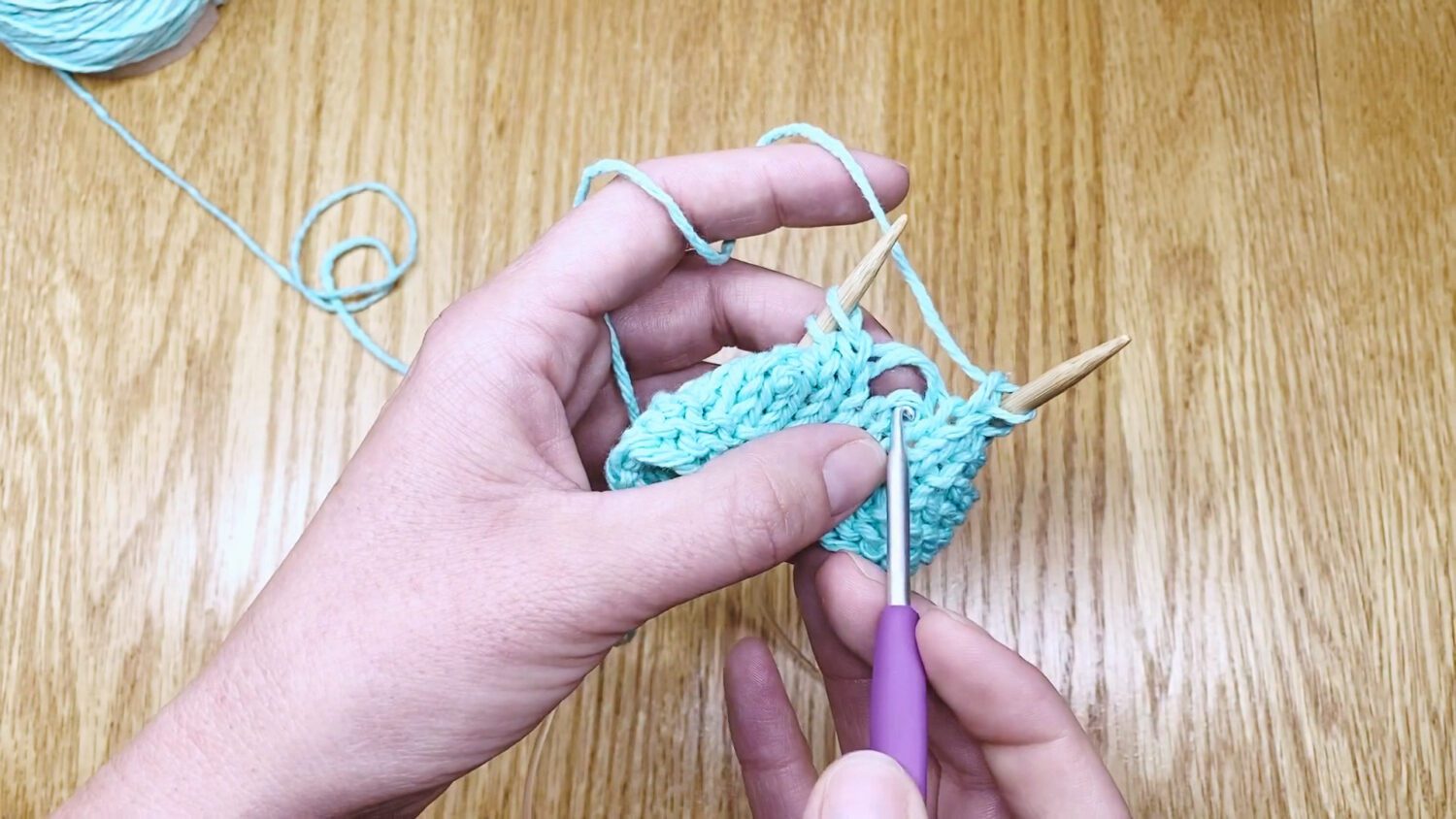
Or, if you do not wish to tie a knot in your work, weave in the tail for several rows. Angle diagonally toward the center of your project, as illustrated by the purple line. After weaving two to three inches of tail into your project, remove the tail from the darning needle. With scissors, clip the excess loose end away. You are now ready to weave in the bind-off tail.

Step 13b: Learn to weave in loose ends and and tie up excess yarn tails - the cast on edge - a knitting lesson from Liz @PurlsAndPixels.

Practice With My Knitting Pattern

Free Beginner Face Scrubby knitting pattern by Liz @PurlsAndPixels.

You can learn to knit along with me using my Free Beginner Face Scrubby Pattern.

Up Next

Knot in Yarn Tails:

I always tie my yarn tail onto one of my knit stitches with a tiny, strong, and almost invisible knot. Learn how to knot in your yarn ends before you trim them away. Go to full tutorial.

Step 1: Learn to make a tiny knot to tie up excess yarn tails - a knitting lesson from Liz @PurlsAndPixels.

Go Back to the Learn to Knit Index

Weave in Loose Ends on Flat Knits

Learn how to tie up loose ends on flat knitting projects in this lesson from Liz Chandler @ PurlsAndPixels.

After you bind off a piece of knitting, you will almost always have one or more yarn tails to weave into your piece. There are two schools of thought on how to get rid of those loose yarn ends on knitting. Knitting purists say you should weave in your ends so there are no knots in your knitting. I say, go ahead and knot if that will anchor your yarn better. Here, I will show you a standard way to weave in your loose ends using a “duplicate stitch” pattern. Then, you can learn how to make a tiny knot, which will tie your loose end into the fabric.

Learn how to tie up loose ends on flat knitting projects in this lesson from Liz @ PurlsAndPixels.

Below are both video and written tutorials to help you learn how to weave in your ends.

Video Guide: How to Weave in Loose Ends on Flat Knitting

Written Guide: How to Weave in Loose Ends on Flat Knitting

To be rid of your loose ends without ruining your work, you cannot just cut them off with scissors. Before snipping your ends off, you will need to sew or “weave” them into your project.  Anchoring your tails to the knitting by weaving them into the fabric in prevents your stitches from coming unraveled.

How to weave in loose ends a knitting lesson from Liz @PurlsAndPixels

You will thread the loose end through a darning needle, which you can weave through your work to duplicate the pattern you have knit. This generally is referred to as “duplicate stitch” in knitting. The curving purple lines below represent possible routes you might follow when trying to replicate the snake-like weave of a knitting project.

The purple line shows the path to weave in your loose ends at the end of a knitting project. Get the free lesson from Liz Chandler @PurlsAndPixels.

Those who weave in their tails without tying a knot must sew the tail into the work for several rows before trimming it off; this ensures that if the tail comes loose, you will have enough yarn to weave it back in again.

If you plan to tie off your loose ends with a tiny knot, you do not need to weave them in as far as usual. The purple line shows the path to weave in your loose ends if you're tying a knot.

If you choose to tie in your loose end with a knot, you will only need to duplicate a few stitches when you weave in. Then, you can tie a tiny knot to hold your tail in place before trimming away the extra yarn.

I have divided this lesson into three more parts, to make it easier for you to read (and for your computer to load). Choose the lesson you’d like to learn below, to be directed to more specific written instructions for each part.

How to Weave in the Tail on the Cast On Edge

Weave in the Cast-on Tail:

A long-tail cast on, like most other cast ons, will always leave a tail. Learn how I weave in then tie off this loose end on flat knitting projects.

Go to full tutorial.

Step 1: Learn to weave in loose ends and and tie up excess yarn tails - the cast on edge - a knitting lesson from Liz @PurlsAndPixels.

How to Weave in the Tail on the Bind Off Edge

Weave in the Bind-off Tail:

The standard bind off will also leave a tail. This tail can be used to fix odd edges at the same time they are being woven in. Find out how to finish off your bind off edge with the loose end.

Go to full tutorial.

Step 1: Learn to weave in loose ends and and tie up excess yarn tails - the bind off edge - a knitting lesson from Liz @PurlsAndPixels.

How to Tie In a Loose End with a Knot

Knot in Yarn Tails:

I always tie my yarn tail onto one of my knit stitches with a tiny, strong, and almost invisible knot. Learn how to knot in your yarn ends before you trim them away.

Go to full tutorial.

Step 1: Learn to make a tiny knot to tie up excess yarn tails - a knitting lesson from Liz @PurlsAndPixels.

Practice With My Knitting Pattern

Free Beginner Face Scrubby knitting pattern by Liz @PurlsAndPixels.

You can learn to knit along with me using my Free Beginner Face Scrubby Pattern.

Learn how to tie up loose ends on flat knitting projects in this lesson from Liz @ PurlsAndPixels.

Up Next

The next step in learning to knit is to make the purl stitch to start adding texture and patterns to your knitting projects.

Learn how to make the purl stitch, a knitting lesson from Liz @PurlsAndPixels.

Go Back to the Learn to Knit Index

How to Hold Yarn When Knitting

Learn three ways to hold your yarn when knitting to help you when you are learning to knit. Get the free lesson from Liz Chandler @PurlsAndPixels.

Before you start learning the knit stitch, you’ll need to know how to hold your yarn. Getting a good grip on the working yarn creates tension in the string that will allow you to knit more evenly.

How to hold yarn knitting tutorial from Liz @PurlsAndPixels

There are a number of ways to hold your yarn when you knit. In this post, I’ll shown you my favorite yarn hold, plus two alternate ways to hold your yarn when knitting. These are three ways you can work with the yarn held in your left hand (this is known as “Continental Style Knitting“).

Video Guide: How to Hold Yarn When Knitting

Written Guide: How to Hold Yarn When Knitting

Option 1:

Wrap a loop around your pointer finger using the working yarn that is coming from the needles.

Liz's favorite way to hold yarn when knitting in Continental style. Read more in this free knitting lesson at PurlsAndPixels.

Option 2:

Wrap the yarn coming from the needles around your last three fingers and then up and over your pointer finger.

A second way to hold yarn when knitting in Continental Style.

Option 3:

Wrap the yarn coming from the needles around your last three fingers and then up and over your pointer finger.

A third way to hold yarn when knitting in Continental Style.

Practice With My Free Knitting Pattern

Free Beginner Face Scrubby knitting pattern by Liz @PurlsAndPixels.

If you want to follow along with me while I show you how to knit, use my Free Beginner Face Scrubby Pattern.

How to hold yarn knitting tutorial from Liz @PurlsAndPixels

Up Next

After you’ve chosen a comfortable way to hold your yarn, you will be ready to make the knit stitch.

Go Back to the Learn to Knit Index

Turn Your Work When Knitting

Learn to turn your work a the end of your rows in this free online knitting lesson from Liz Chandler @PurlsAndPixels.

After you have cast on all your stitches (or finished a row) in a flat knitting project, your pattern will ask you to “turn your work.” This instruction is asking you to flip your needle over so that you can prepare to work the next row.

How to turn your work, a knitting lesson from Liz Chandler @PurlsAndPixels.

Whether you are working on circular needles or straight needles, turning your work is the same; the tip of the needle that is full of stitches will need to be turned 180 degrees and moved from your right hand into your left hand.

Below are both video and written tutorials to help you learn how turn your knitting and prepare to start the next row.

Video Guide: How to Turn Your Work When Knitting

Written Guide: How to Turn Your Work When Knitting

Turn Your Work, Step 1:

After you have cast on (or finished working a row), your stitches will be on the needle held in your right hand. The tip of the needle will be pointing toward the left.

Turn Your Work, Step 2:

To turn your work, flip your knitting needle over, so the tip points  toward the right, then place it in your left hand.

Practice With My Free Knitting Pattern

Free Beginner Face Scrubby knitting pattern by Liz @PurlsAndPixels.

If you want to follow along with me while I show you how to knit, use my Free Beginner Face Scrubby Pattern.

How to turn your work when knitting, a lesson from Liz @PurlsAndPixels.

Up Next

After you’ve learned to turn your work when knitting, you will be ready to learn how to hold your yarn to make the knit stitch.

How to hold your yarn when knitting, a lesson from Liz @PurlsAndPixels

Go Back to the Learn to Knit Index

Beginner Face Scrubby Free Knitting Pattern

Ready to learn to knit? Start here: Free Beginner Face Scrubby knitting pattern by Liz Chandler @PurlsAndPixels.

To learn the knit stitch, start with this simple Beginner Face Scrubby pattern. Practice your long-tail cast on, then use just knit stitches to make the entire scrubby. Take your work off your needles with a standard bind off, and you have made a practical and useful item. Because these 3-inch squares are small, they are a satisfying way to learn to knit; you will get a finished object much more quickly than larger projects.

Free Beginner Face Scrubby knitting pattern by Liz @PurlsAndPixels.

Aside from being a wonderful way to practice the knit stitch, these scrubbies are especially functional. Face scrubbies are perfect for use as reusable makeup removing pads.

Prefer to knit offline?

This pattern is free to read below, but if you’d rather print it or save it for later, I’ve created a clean, ad-free PDF version for you.

  • Three towel sizes to knit
  • Includes complete, row-by-row instructions
  • Easy to print or use on your tablet
  • Supports my small business 💖
Get Liz Chandler's Garter Stitch Washcloths Knitting Pattern PDF download at PurlsAndPixels.

About this Free Beginner Face Scrubby Knitting Pattern

This face scrubby is one of the easiest knit pieces you can make, so the pattern is perfect for beginners. You will need to know how to make a long-tail cast on, knit, and bind off.

If you’re learning to knit with the free knitting lessons in my Learn to Knit Guide, you’ll start with this face scrubby.

Free Beginner Face Scrubby knitting pattern by Liz @PurlsAndPixels.

Materials

Yarn

One 95-yard (2 ounce) skein of cotton worsted weight yarn* (shown in), in your choice of color

  • one face scrubby uses about 19 yards (.4 oz)

*Shown in Lily Sugar ‘n Cream 100% Cotton Yarn in “Robins Egg” and “White” (#AffiliateLinks). Weights estimated with Lily Sugar n’ Cream yarn; other yarn weights may vary. Weight does not include gauge swatch. A 4×4 inch gauge swatch with a 2 row by 3 stitch border uses an additional 19 yards (0.4 oz.).

Knitting Needles

Long Circular Needles
36-inch (91 cm) long US No. 7 (4.5 mm) circular needle (or size needed to obtain gauge)

Or Straight Needles
9-inch (23 cm) long US No. 7 (4.5 mm) straight needles (or size needed to obtain gauge)

Notions

Gauge

19 stitches x 26 rows = 4 x 4 inches in stockinette stitch on No. 7 (4.5 mm) needles. (Learn how to check your gauge here.)

Abbreviations

k = knit

Instructions: Beginner Face Scrubby in Garter Stitch

(measures 3 inches x 3 inches after washing in cold water; 3.5 inches x 3.25 inches before washing)

Use the long-tail cast on method. Knit flat, turning after each row.

Row 1: Cast on 14 stitches. Turn.

Rows 2 – 27: k 14. (14 stitches) Turn.

Row 28: Bind off loosely in knit stitch pattern. Cut yarn, leaving an 8-inch tail, and pull through. Weave in ends.

In cold water, hand wash or machine wash on delicate. Block while still wet, ensuring cloths are roughly 3 inches square, then allow to air dry.

Printable version of this free knitting pattern

Printable Beginner Face Scrubby pattern PDF by Liz @PurlsAndPixels

Care

If you use the materials called for in the Beginner Garter Stitch Washcloth Free Knitting Pattern, your final product will be machine washable. To keep your washcloth looking its best, hand wash or machine wash separately on delicate cycle in cold water. You may tumble dry on low heat or lay flat to dry.

🛁 Read more Knitwear Care Tips

Size & Use Notes

Each piece is designed for real-life utility:

  • Face scrubby for your nighttime skincare or baby bath time

They also make a cozy bundled set for gifting, especially when bundled with a bar of handmade soap or tucked into a basket of homestead goods.

Get Three Washcloth Pattern Sizes

The Premium PDF knitting pattern comes with face scrubby, washcloth, and hand towel sizes. Get all the sizes with the Garter Stitch Washcloth Knitting Pattern PDF Download.

Free Beginner Face Scrubby knitting pattern by Liz @PurlsAndPixels.

©2021, Liz Chandler of PurlsAndPixels, LLC. Revised 2025.

This pattern is for personal use, gifting, and charitable donation of completed items. You may also sell handmade items created using this pattern. Do not copy this pattern and distribute it. If you’d like to share the pattern, refer your friends to my website, purlsandpixels.com so they may obtain a copy.

If you find any errors or have any questions, email purlsandpixels@gmail.com and I will do my best to help.

I’d love to see your finished work! Tag your photos with @PurlsAndPixels on Twitter or Instagram.

More Patterns You’ll Love

🧼 All Dishcloth and Washcloth Knitting Patterns

🧶 Beginner Knit Scarf Pattern

🧣 Easy Chunky Knit Scarf Pattern

🙏 Gratitude Blanket Pattern

🧺 All Knitting Patterns

Read More

Don’t Miss a Stitch! 🧶

Love cozy knitting projects? Join me on YouTube, Pinterest, and Instagram! And don’t forget to sign up for my newsletter to get more free patterns, helpful tips, and updates straight to your inbox. 💌

How to Make a Slipknot

Learn how to make a slipknot so you can start knitting with this free online lesson by Liz Chandler @PurlsAndPixels.

In knitting, a slipknot is used as the first step of a long tail cast on; it will create the first loop on your knitting needles. You will be able to adjust the size of your first loop by pulling on either tail of the slipknot. This helps your yarn loop fit onto your knitting needle with the correct “tension” or tightness. Your slipknot will always count as the first stitch in your knitting cast on.

Learn to make a slipknot for knitting with Liz Chandler @PurlsAndPixels.

Below are both video and written tutorials to help you learn how to make a slipknot and place it onto your knitting needles.

Video Guide: How to Make a Slipknot

Written Guide: How to Make a Slipknot

Slipknot, Step 1:

Hold the yarn with the tail end in your right hand. Drape the working yarn over the palm of your left hand, from your pinkie up toward your pointer finger. Wrap the yarn up and over your left pointer finger, then bring the yarn down behind your left hand.

Learn to make a slip knot step one.

Slipknot, Step 2:

Loop the yarn around all four fingers by bringing it around your pinkie and up to your pointer finger.

Slipknot, Step 3:

Bring the tail of the yarn behind the loop you created on your left hand. Pinch the part of the yarn that is laying across your knuckles and lift it just slightly.

Learn to make a slip knot step three.

Slipknot, Step 4:

Begin to push the tail side of the yarn through the loop on the back of your left hand, but do not pull the tail completely through.

Learn to make a slip knot step four

Slipknot, Step 5:

Form a loop around your right pointer finger with the part of the yarn you have just pushed through the loop on the back of your hand.

Learn to make a slip knot step five

Slipknot, Step 6:

Gently remove your left hand from the loop.

Learn to make a slip knot step six.

Slipknot, Step 7:

Pinch both the working yarn and the yarn tail with your left hand and pull to begin tightening the slipknot around your right pointer finger.

Learn to make a slip knot step seven

Slipknot, Step 8:

Once the slipknot has formed, remove it from your finger and hold it in your left hand.

Learn to make a slip knot step eight.

Slipknot, Step 9:

Pick up a knitting needle with your right hand. Move the slipknot onto your knitting needle, positioning it in the same way it came off your finger.

Learn to make a slip knot step nine

Slipknot, Step 10:

Pull the tail-side of the slipknot to gently tighten it onto your knitting needle.

Learn to make a slip knot step ten

Knitting a slipknot at sunset. Learn to make a slipknot for knitting with Liz @PurlsAndPixels.

Up Next

After you’ve mastered making a slipknot, you will be ready to learn the long tail cast on and start your first knitting project.

Learn how to cast on knit stitches using the long tail cast on with Liz @PurlsAndPixels.

Go Back to the Learn to Knit Index

Heart Face Scrubby Free Knitting Pattern

Heart face scrubby free knitting pattern from Liz Chandler @PurlsAndPixels.
Heart face scrubby free knitting pattern from Liz @PurlsAndPixels

I love to use little handmade cotton squares to use with makeup remover and micellar water. Rather repeatedly throwing away disposable cotton pads, I make my own little face scrubbies with cotton yarn. After I use one, I put it in a Mason Jar, then when my collection is dirty I wash them up. A little OxyClean in the wash really helps to get them clean of makeup residue and then they’re ready to use again.

Prefer to knit offline?

This pattern is free to read below, but if you’d rather print it or save it for later, I’ve created a clean, ad-free PDF version for you.

  • Includes row-by-row instructions and a knitting chart.
  • Easy to print or use on your tablet.
  • Supports my small business. 💖
Get Liz Chandler's Heart Face Scrubby Knitting Pattern PDF download at PurlsAndPixels.

These little heart scrubbies are super quick to make. The simple pattern also makes them easy to knit. They don’t use much yarn either, so they’re great for using up leftover scrap yarn.

Make a bunch for your own facial care routine. Or create a little gift basket for Valentines Day or other holidays. Add several scrubbies, a wide-mouth mason jar (for storing used scrubbies that need to be washed), and makeup remover or micellar water to a cute basket and you’ve got a beautiful handmade spa basket. You could even throw in some nice soap and a few full-sized washcloths to make it extra-special (find my seed stitch washcloth pattern here).

Heart face scrubby handmade gift basket free knitting pattern from Liz @PurlsAndPixels

About this Knitting Pattern

This heart face scrubby pattern is a beginner to easy level knitting pattern and is great for knitters who have an understanding of knits and purls.

Materials

Yarn

One 95-yard (2 ounce) skein of cotton worsted weight yarn (shown in Lily Sugar ‘n Cream 100% Cotton Yarn), in your choice of color

  • one heart face scrubby uses about 9.5 yards (0.2 oz.)*

*Weight estimated with Lily Sugar n’ Cream yarn; other yarn weights may vary.

Knitting Needles

36-inch (91 cm) long US No. 7 (4.5 mm) circular needle or 9-inch (23 cm) long US No. 7 (4.55 mm) straight needles (or size needed to obtain gauge)

Notions

Measuring tape

Tapestry needle

Gauge

19 stitches x 26 rows = 4 x 4 inches in stockinette stitch on No. 7 (4.5 mm) needles. (Learn how to check your gauge here.)

Abbreviations

k = knit

p = purl

Instructions: Heart Face Scrubby

(3 inches x 3.5 inches (unwashed) & shrinks to 3 inches x 3 inches after machine washing in cold water )

Knit flat, turning after each row.

Row 1: Cast on 17 stitches. Turn.

Rows 2 – 5: k 17. (17 stitches) Turn.

Row 6: k 3, p 11, k 3. (17stitches) Turn.

Row 7: k 17. (17 stitches) Turn.

Row 8: k 3, p 5, k 1, p 5, k 3. (17 stitches) Turn.

Row 9: k 7, p 3, k 7. (17 stitches) Turn.

Row 10: k 3, p 3, k 5, p 3, k 3. (17 stitches) Turn.

Row 11: k 5, p 7, k 5. (17 stitches) Turn.

Row 12: k 3, p 1, k 9, p 1, k 3. (17 stitches) Turn.

Row 13: k 4, p 9, k 4. (17 stitches) Turn.

Row 14: k 3, p 1, k 4, p 1, k 4, p1, k 3. (17 stitches) Turn.

Row 15: k 4, p 4, k 1, p 4, k 4. (17 stitches) Turn.

Row 16: k 3, p 2, k 2, p 3, k 2, p 2, k 3. (17 stitches) Turn.

 Row 17: k 17. (17 stitches) Turn.

Row 18: k 3, p 11, k 3. (17 stitches) Turn.

Rows 19 – 22: k 17. (17 stitches) Turn.

Row 23: Bind off in knit stitches. Cut yarn, leaving an 8-inch tail, and pull through.

Weave in ends. Block if desired.

Knitting Chart

For this simple pattern you may or may not find a chart helpful. It’s included in case you’d like it.

Heart face scrubby free knitting pattern chart from Liz @PurlsAndPixels

Print the Heart Face Scrubby Free Knitting Pattern

Printable version of this free knitting pattern

Printable Heart Face Scrubby Free Knitting Pattern PDF by Liz @PurlsAndPixels

Care

If you use the materials called for in the pattern, your final product will be machine washable. To keep your heart face scrubbies looking their best, hand wash or machine wash separately on delicate cycle in cold water. A scoop of OxiClean can be added to the wash to help remove makeup residue. You may tumble dry on low heat or lay flat to dry.

Note: these scrubbies will shrink from 3 x 3.5 inches to 3 x 3 inches after washing as directed above.

Heart face scrubby free knitting pattern from Liz @PurlsAndPixels

©2019, Liz Chandler of PurlsAndPixels. Revised 2025.

This pattern is for personal use, gifting, and charitable donation of completed items. You may also sell handmade items created using this pattern. Do not copy this pattern and distribute it. If you’d like to share the pattern, refer your friends to my website, purlsandpixels.com so they may obtain a copy.
If you find any errors or have any questions, email purlsandpixels@gmail.com and I will do my best to help.

I’d love to see your finished work! Tag your photos with @PurlsAndPixels on Twitter or Instagram.

More Patterns You’ll Love

🧼 All My Dishcloth Patterns

❤️ Purl Hearts Hat Knitting Pattern

💞 Colorful Hearts Hats Knitting Pattern

🧣 Beginner Knit Scarf Free Knitting Pattern

🙏 Gratitude Blanket Free Knitting Pattern

🧶 All PurlsAndPixels Knitting Patterns

Darn Cute Ear Warmer Headband

Darn Cute Ear Warmer headband knitting pattern by Liz Chandler.

A knitting pattern by Liz @PurlsAndPixels,
Written for Darn Good Yarn

Darn Cute Ear Warmer headband/messy bun hat knitting pattern

I am so excited to announce that my Darn Cute Ear Warmer headband knitting pattern has been published by Darn Good Yarn! Find it here.

About the Yarn

What to make with Darn Good Yarn Punky Chunky super bulky yarn

I used Darn Good Yarn’s chunky up-cycled yarn to knit this quick and easy headband. The yarn is called “Punky Chunky” and is made with hand-spun recycled silk. As soon as I saw it, I knew this happy, sparkly rainbow yarn would make a perfect messy bun hat. It is warm, cozy, and colorful: the perfect combination to keep the winter blues at bay. I knit one in white, purple, and turquoise; all three colors are bright, cheerful, and vibrant. The super-bulky weight yarn lets you create a finished project really quickly. Check out all the available colors of Darn Good Yarn’s Punky Chunky here at my affiliate link and enter “Punky Chunky” in the Darn Good Yarn search bar.

About the Pattern

Darn Cute Ear Warmer headband/messy bun hat knitting pattern

Because Punky Chunky is super-bulky, it makes this Darn Cute Ear Warmer knitting pattern work up in a flash. If you’re an experienced knitter, it can be crafted in just a few hours. And if you are new to knitting, you can make this Darn Cute Ear Warmer too; you’ll only need to know the basic knit and purl stitches to create this headband. This pattern is knit seamlessly in the round. Need help? Learn all the techniques necessary for this pattern here on PurlsAndPixels.com:

Darn Good Yarn has published the pattern here, where you can download and print it for your collection. You can also order the kit, which comes with the pattern and one ball of yarn. You can make this headband with just one full ball of yarn, but do keep in mind the headband uses the entire ball of yarn. Depending on your preferences, you might want to order an extra ball of yarn; if you don’t like to unravel and reuse your gauge swatches, you’ll need the extra ball of yarn to make up the difference.  

Darn Cute Ear Warmer headband/messy bun hat knitting pattern

I had a lot of fun crafting this hat and pattern, and I hope you love it, too. Don’t forget share pics of your finished work. Make sure to tag @darngoodyarn and @purlsandpixels in your Instagram photos so we can see how it comes out!

Happy knitting!

Read More

LET’S KEEP IN TOUCH!

I’d love to keep you updated with the latest news and offers from PurlsAndPixels.🧶💕

We don’t spam! Read our privacy policy for more info.