How to Knit a Kids’ Coaster

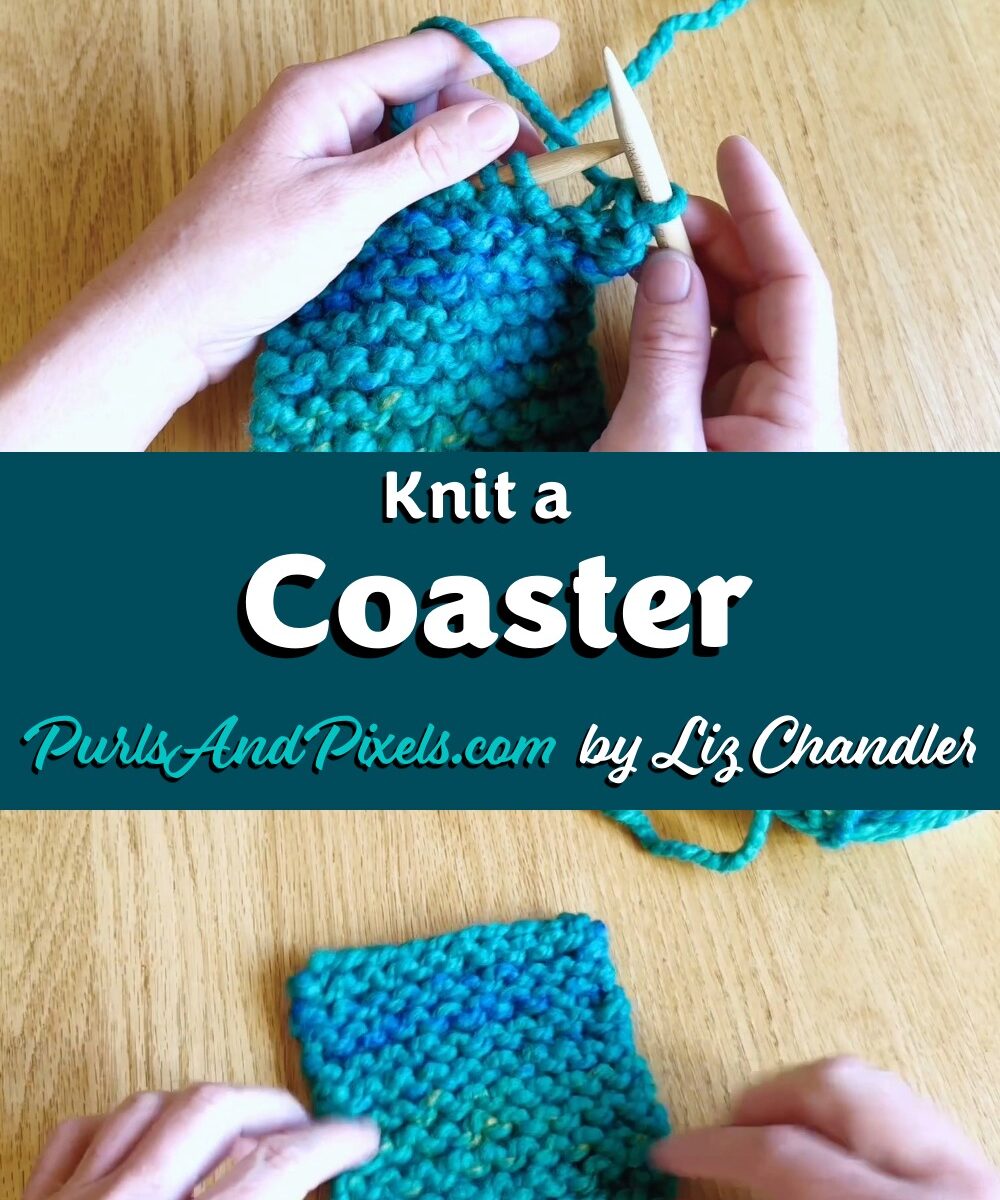
Learn to knit a coaster from start to finish in Liz Chandler's knitting lesson.

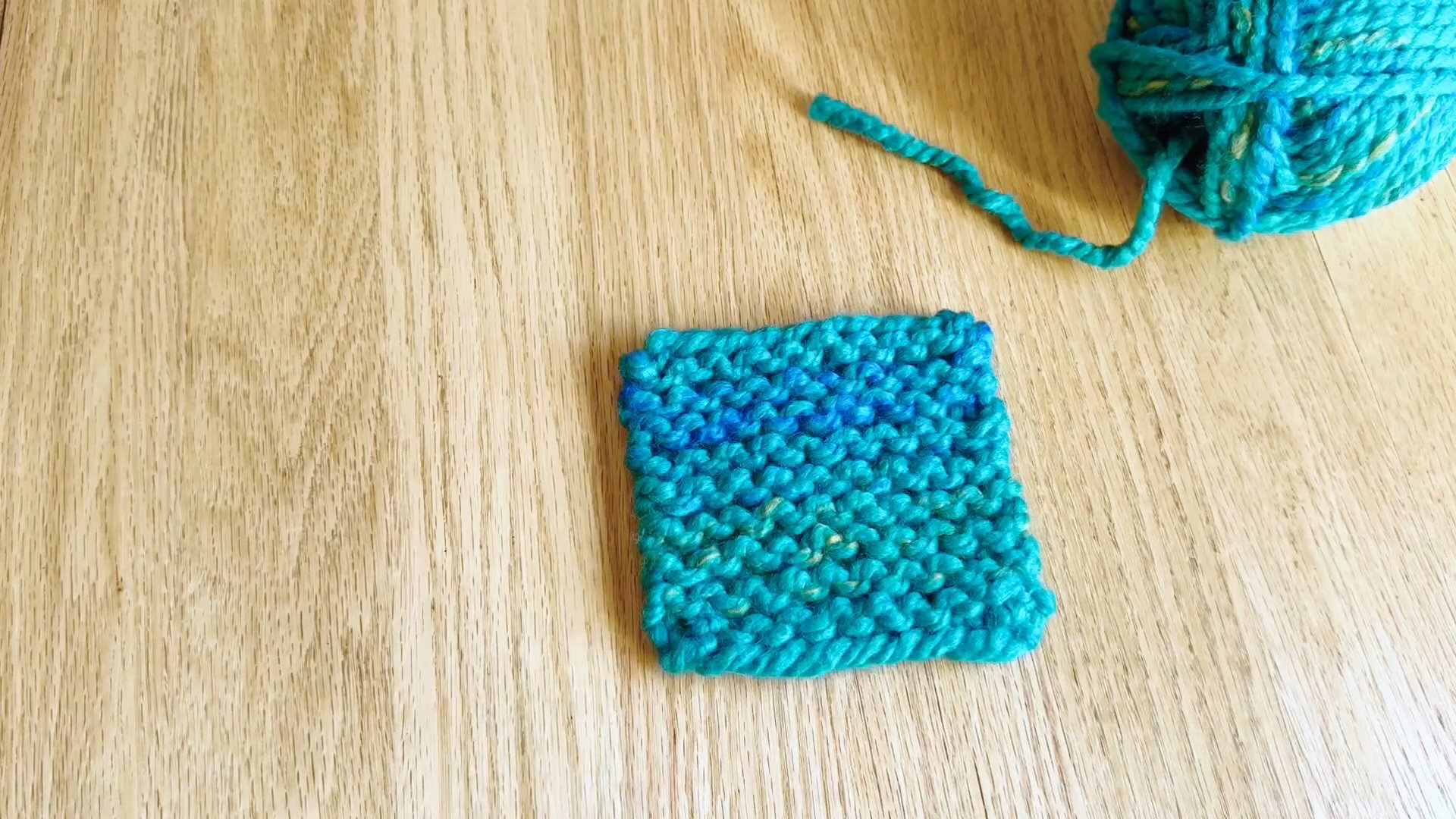
Knitting a kids’ coaster is a beginner-friendly knitting skill. In this knitting lesson you will learn how to make a slip knot, cast on, knit every row in garter stitch, and bind off so you can finish your first coaster and feel ready to knit the placemat next.
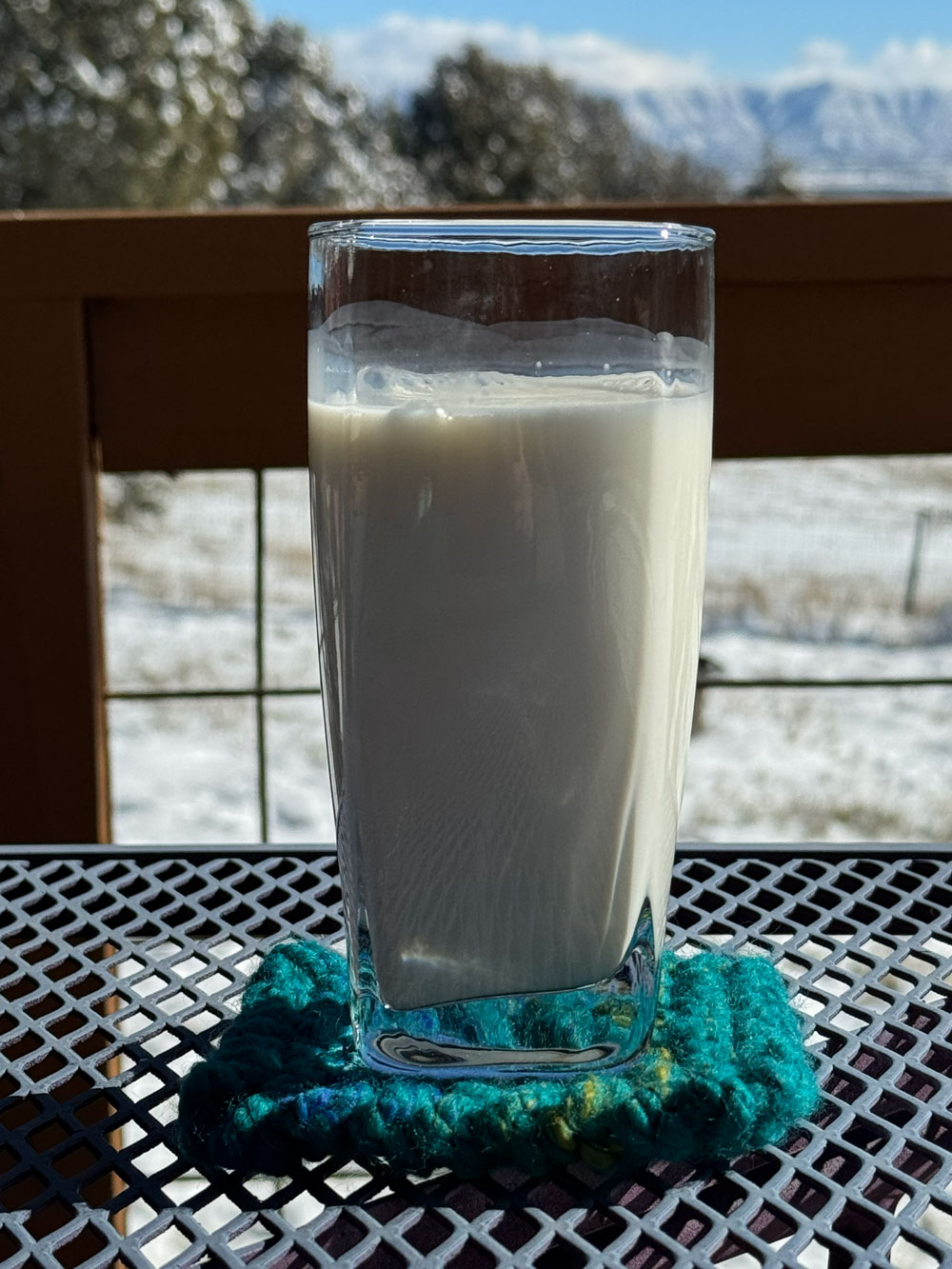
A completed blue Beginner Super Bulky Knit Coaster made from the Free Knitting Pattern by Liz Chandler resting atop a purple outdoor table with a winter mountain scene and a glass of milk on the coaster.

Knit with Liz Chandler @PurlsAndPixels 🧶

This coaster is Project 1 in the Kids’ Knitting Guide. It is intentionally small, calm, and repetitive, so you can practice one motion until it feels steady.

Video Tutorial

How to Knit a Super Bulky Coaster (Beginner Project)

Before You Start

  • Skill level: Beginner (kid-friendly)
  • Time needed: One short knitting session (or two)
  • What to expect: Your first rows may look uneven. That is normal and improves with practice.
  • Goal: Finish your first square project from cast on to bind off.

Skills Used in This Lesson

If any of these skills are new, review those lessons first. Each one is quick to learn and makes this project much easier.

Make a slip knot (the first loop)

Put stitches on the needles (cast on)

Turn your work (to knit flat rows)

Knit stitch (the stitch you will do most)

Take your project off the needles (bind off)

Weave in loose ends on flat knits

Materials Needed to Knit a Kids’ Coaster

Yarn

One 106-yard (6-ounce) skein of super-bulky (No. 6) yarn (shown in Wool-Ease Thick and Quick by Lion Brand Yarn “Bluegrass”), in your choice of color.

  • One coaster uses approximately 10.6 yards (0.6 oz.)

*Weights estimated with Wool Ease Thick & Quick by Lion Brand Yarn; other yarn weights may vary.

Knitting Needles

16-inch (41 cm) long US No. 13 (9 mm) circular needle (or size needed to obtain gauge)

Notions

Kids’ Knitting Materials (Everything Needed for All Lessons)

How to Knit a Kids’ Coaster

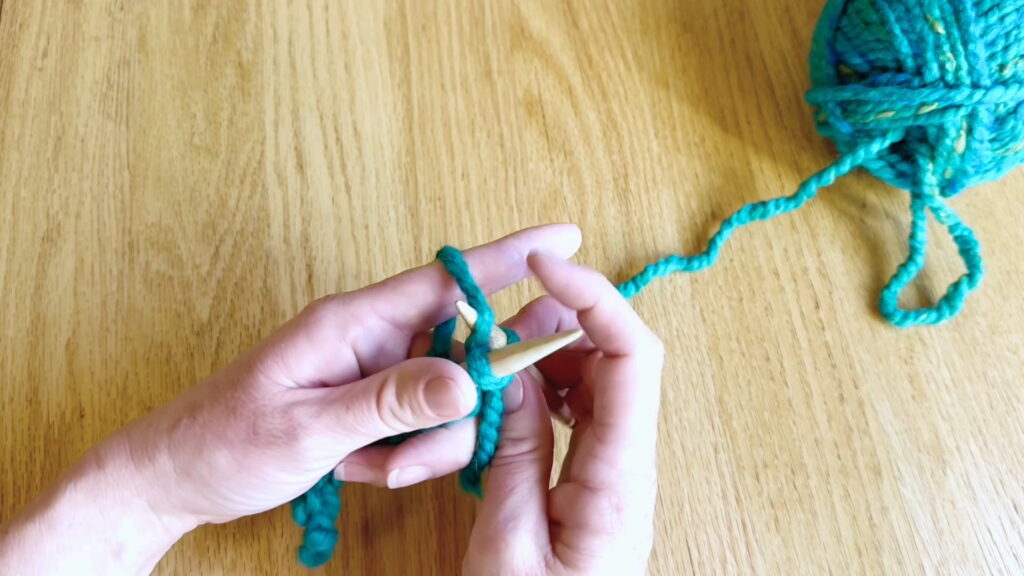
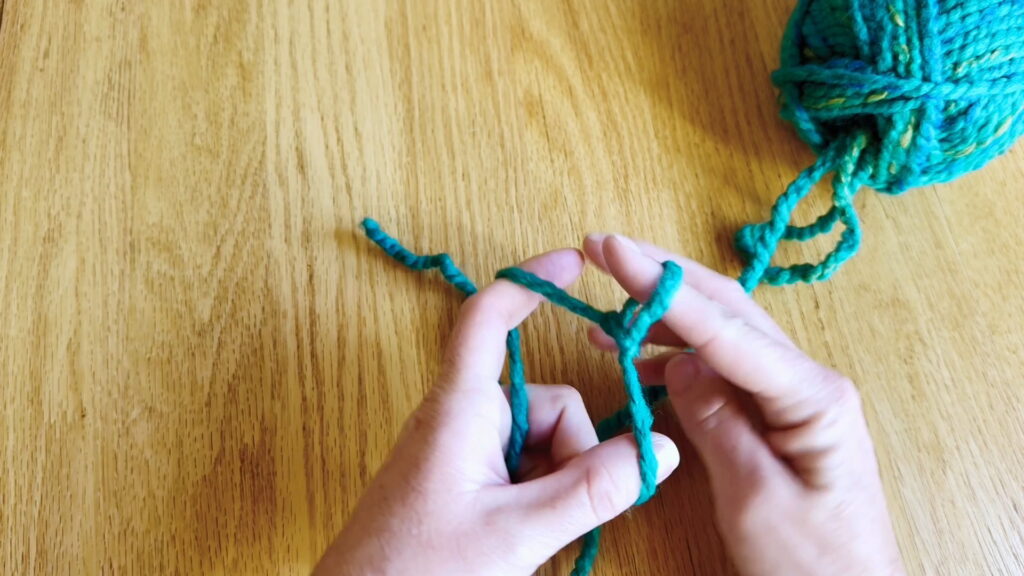
Step 1: Make a Slip Knot

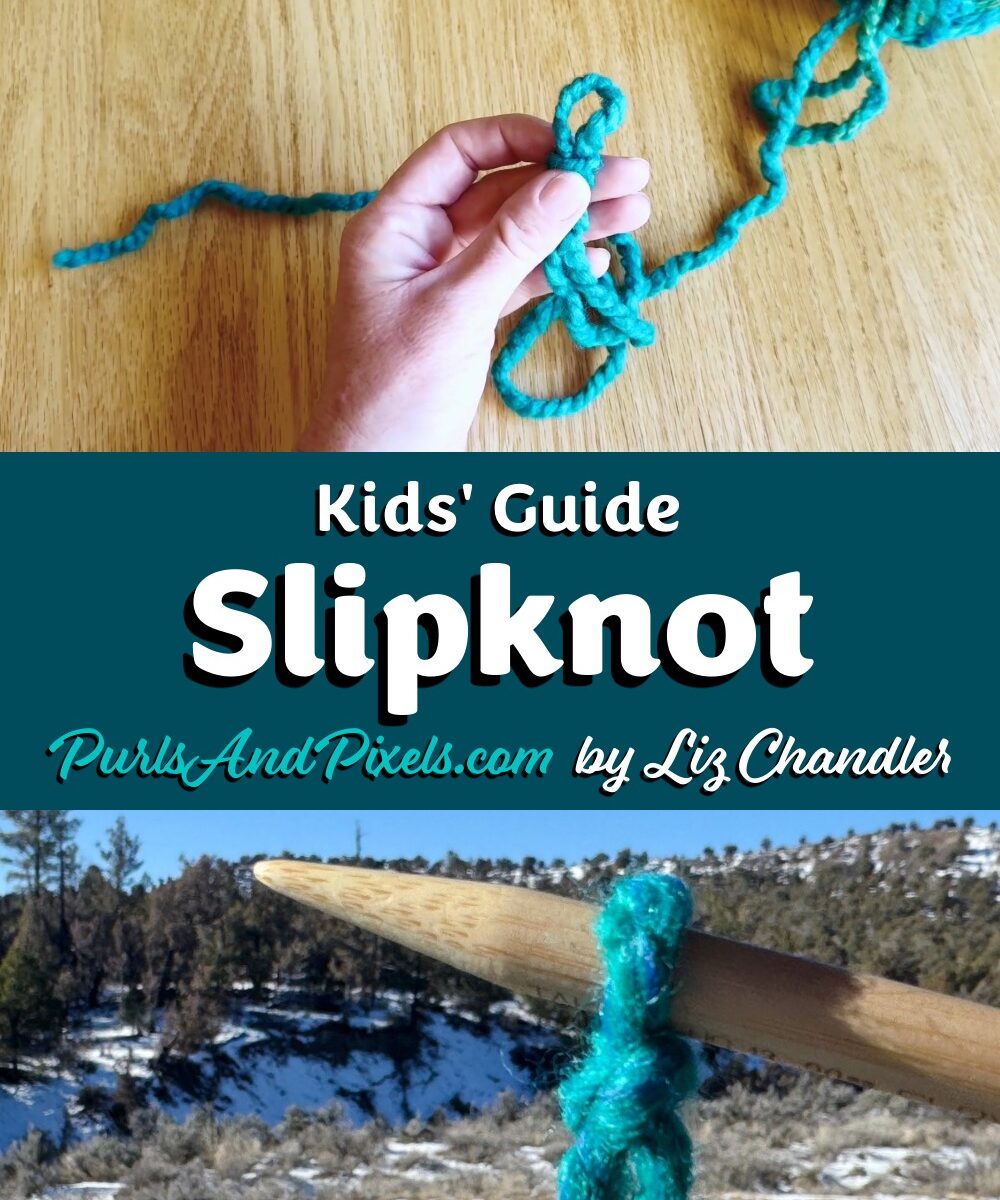
A slip knot is the first loop that goes on your needle. Make one slip knot and place it on your needle.

Slipknot for Kids (First Knitting Lesson)

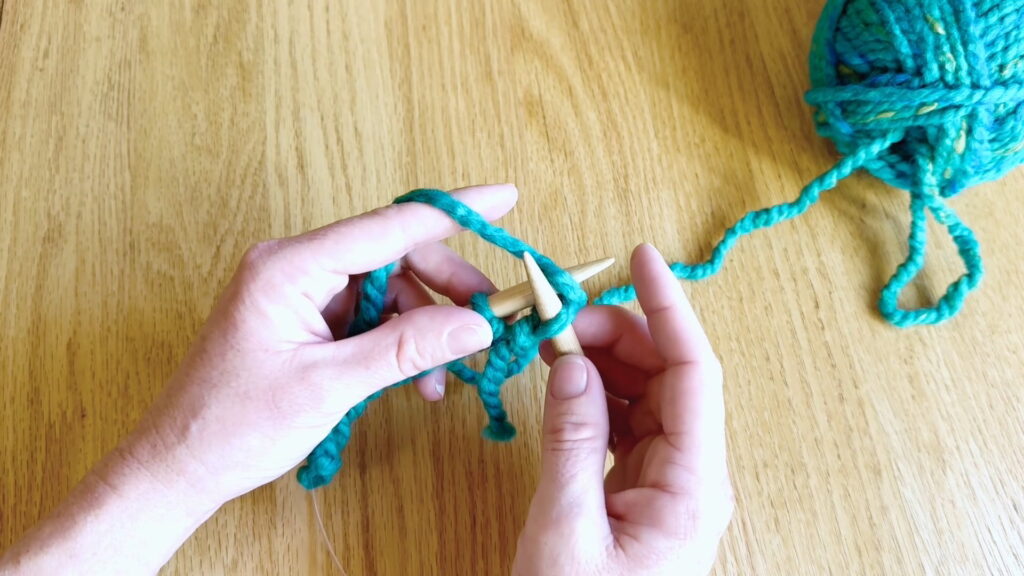
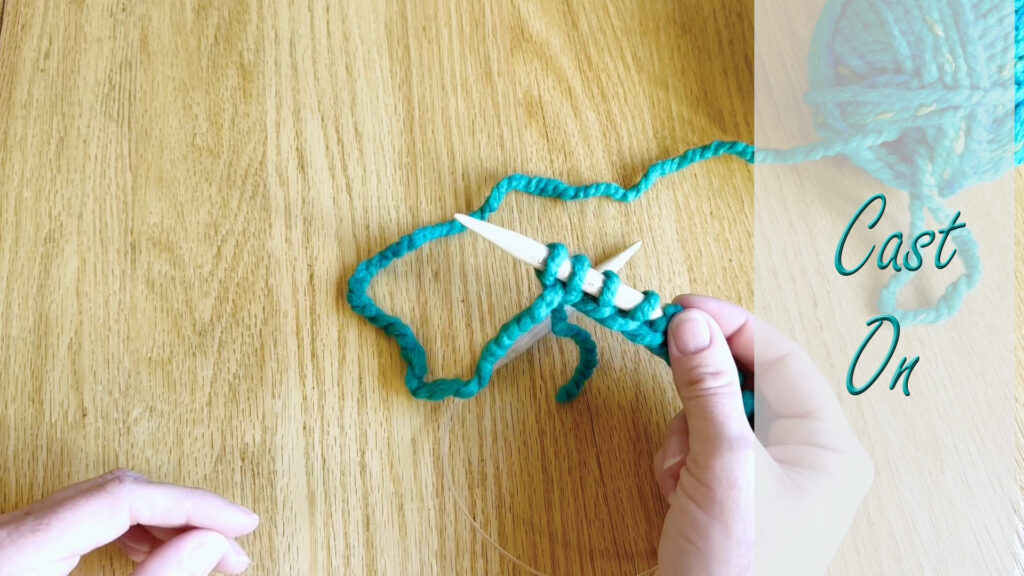
Step 2: Cast On

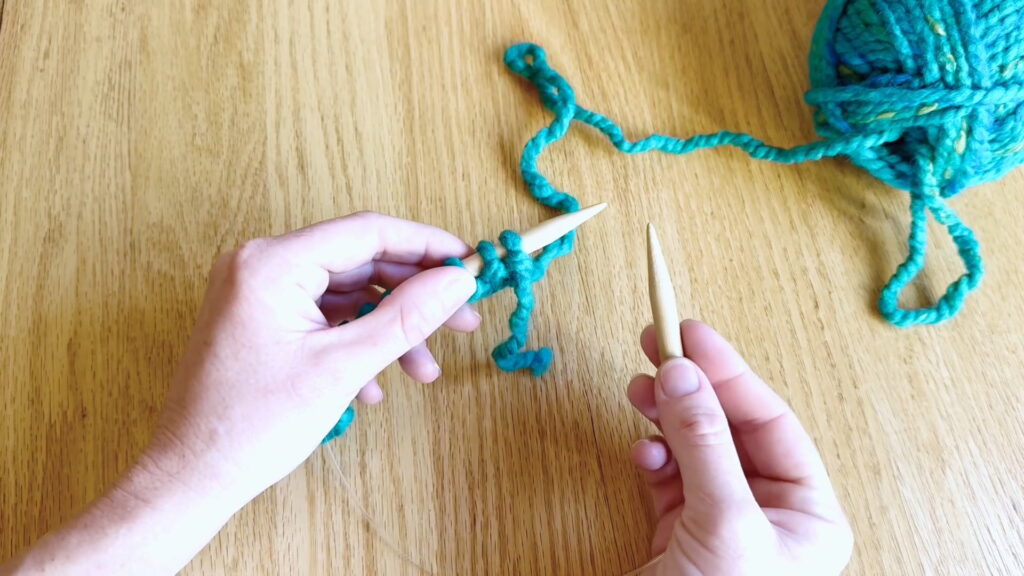
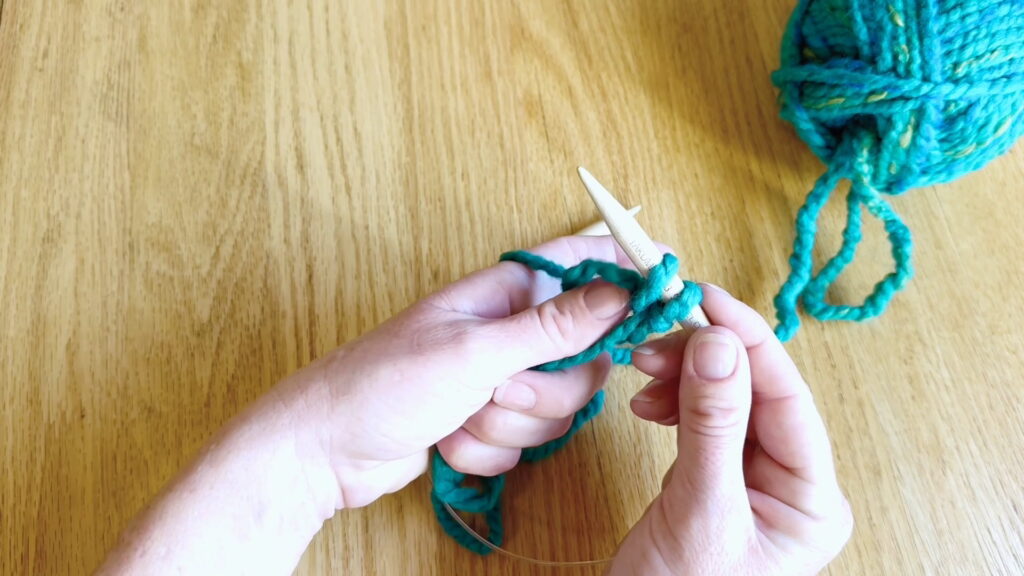
Cast on until you have 10 stitches on your needle (including the slip knot stitch).

Cast On for Kids (Beginner Knitting Lesson)

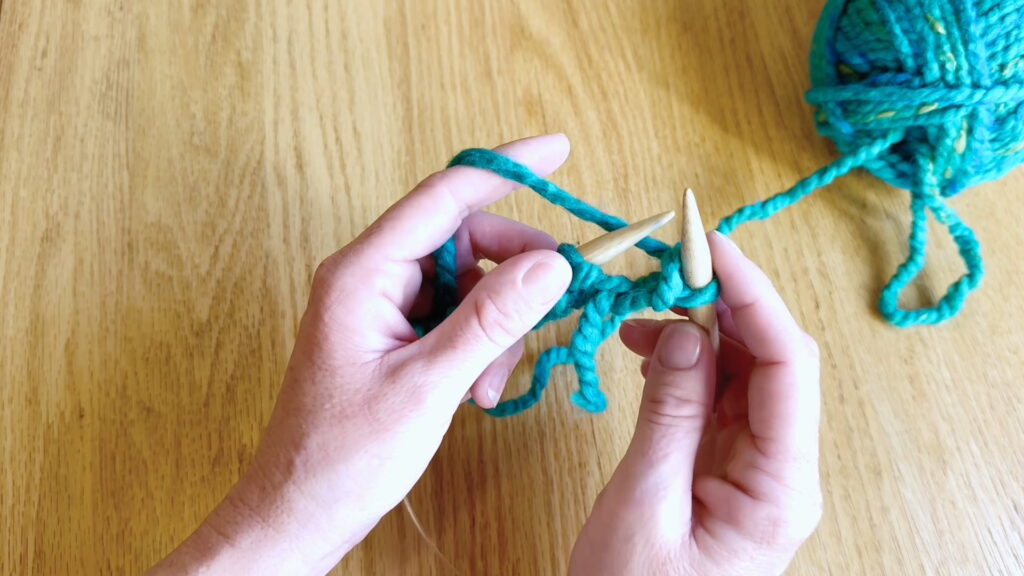
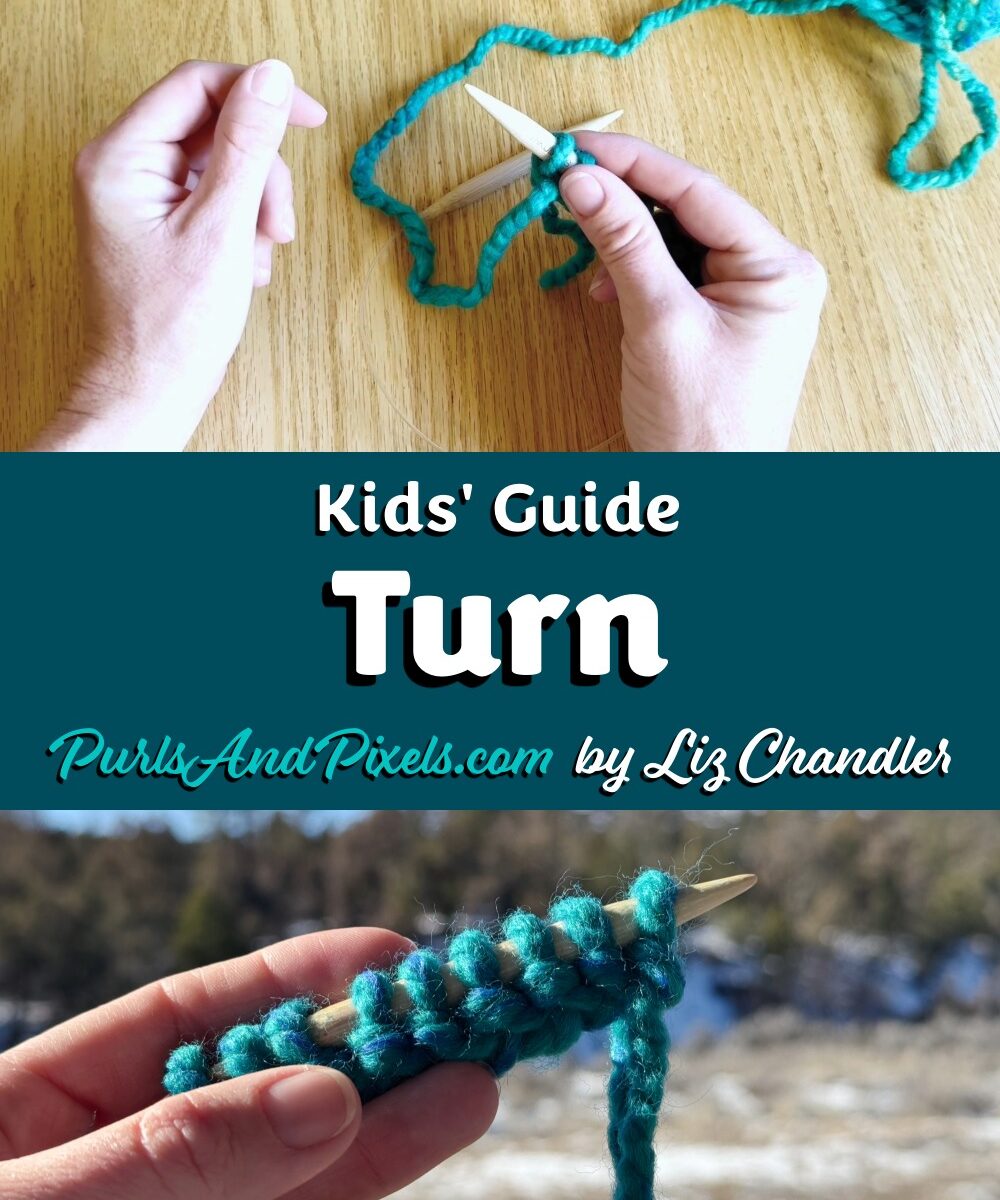
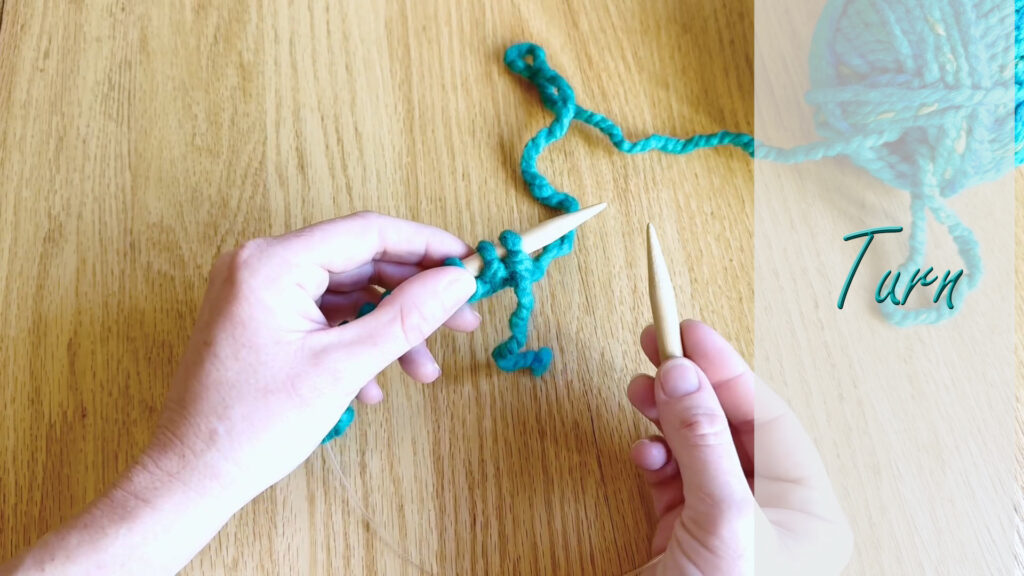
Step 3: Turn Your Work

When you reach the end of your row, turn your work so the needle with stitches is back in your left hand and you are ready to knit.

Turn Your Work (Kids’ Knitting Lesson)

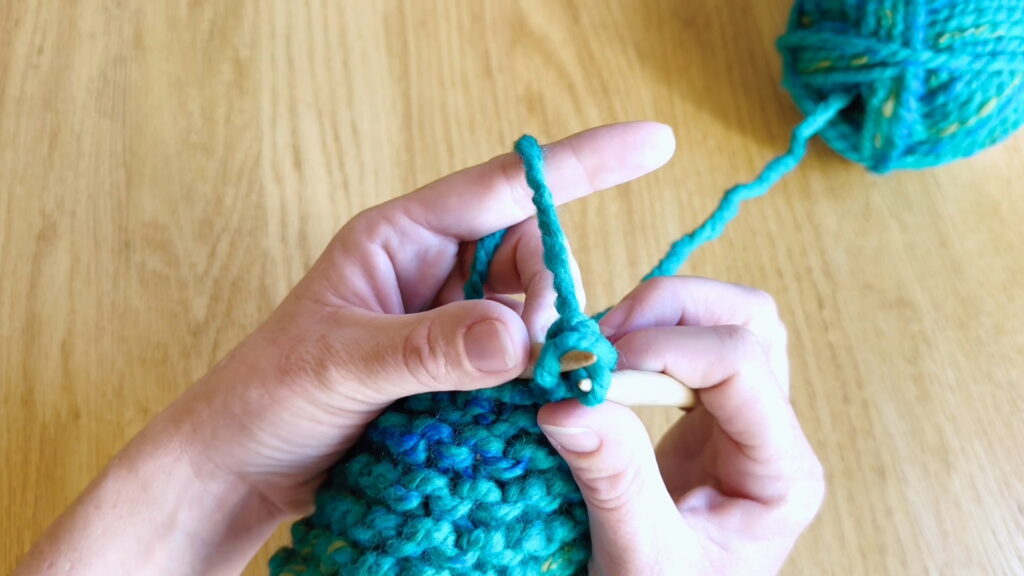
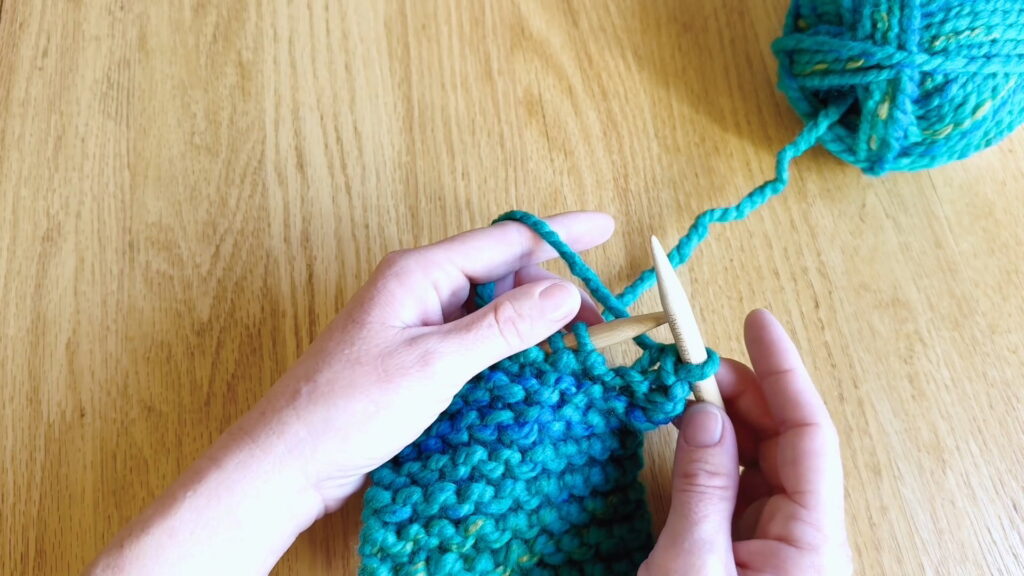
Step 4: Knit Every Row (Garter Stitch)

This coaster uses the garter stitch, which means knitting every stitch in every row.

  • Rows 1–18: Knit across all 10 stitches, then turn your work.
  • Keep going until your coaster looks like a square.
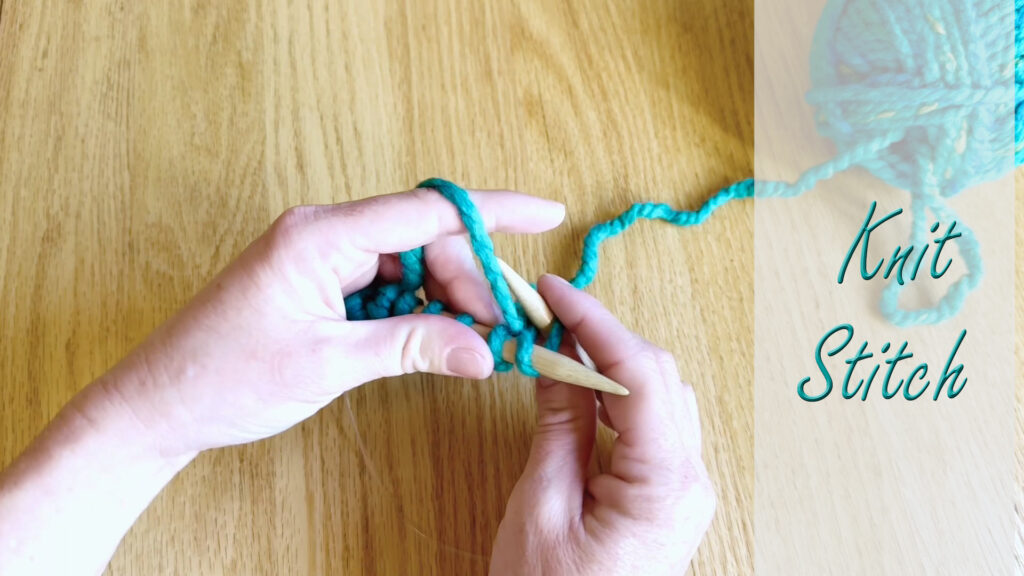
Knit Stitch (Kids’ Knitting Lesson)

If your stitches look uneven, keep knitting. That repetition is how your hands learn the motion. If something looks wrong, start here: When Something Looks Wrong in Your Knitting.

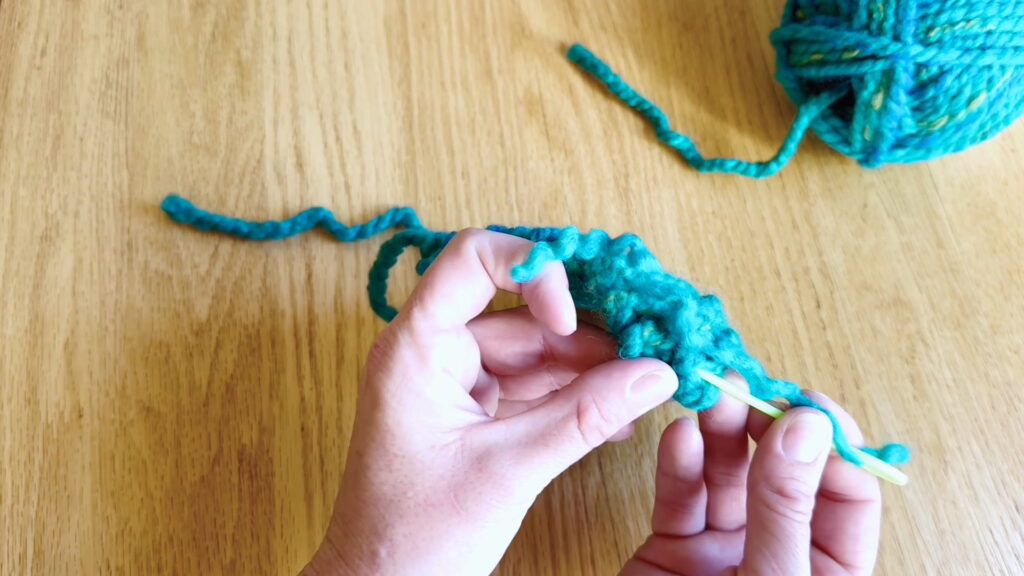
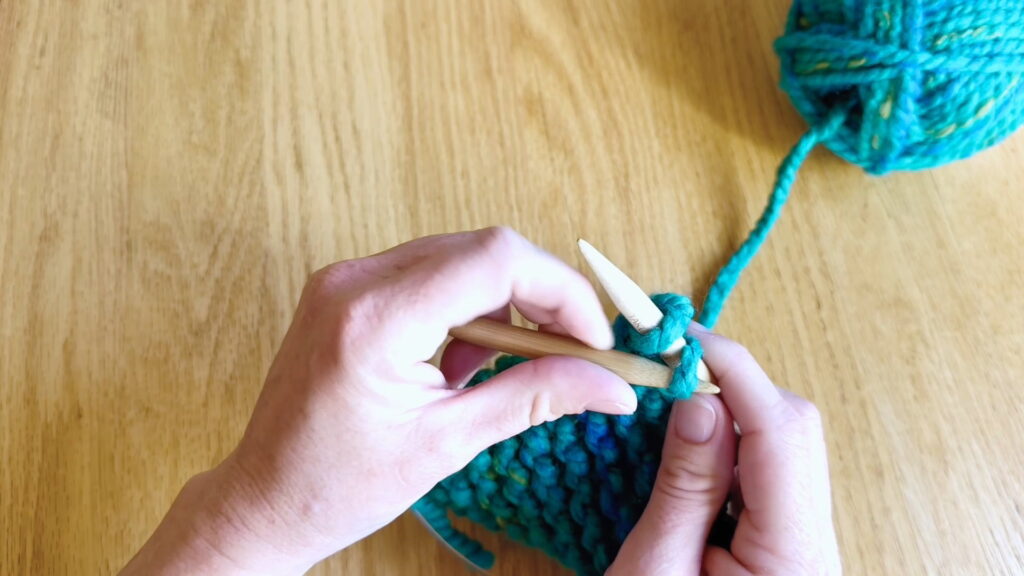
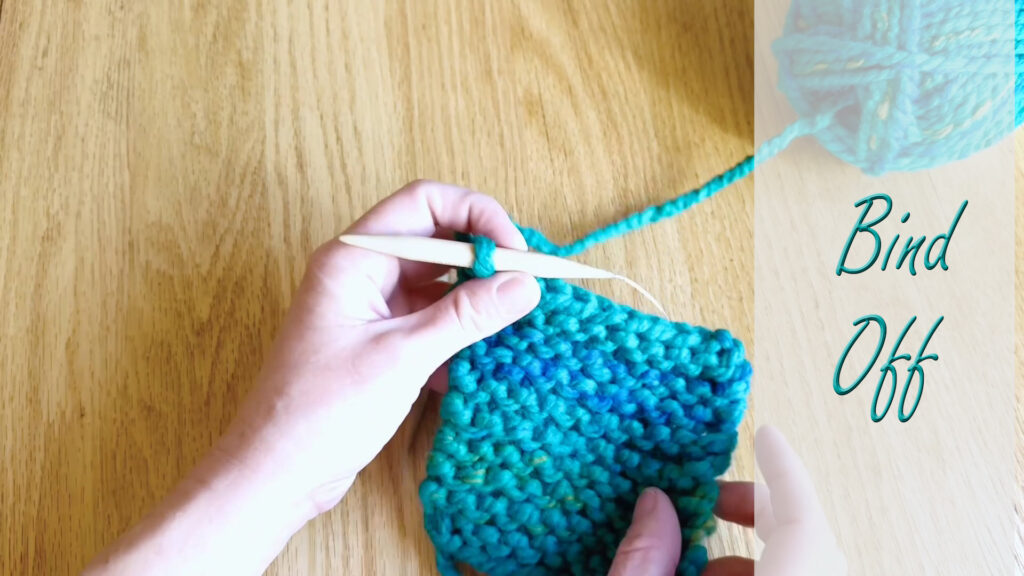
Step 5: Bind Off

When your coaster is square, bind off loosely so the edge does not pull tight.

Bind Off (Kids’ Knitting Lesson)

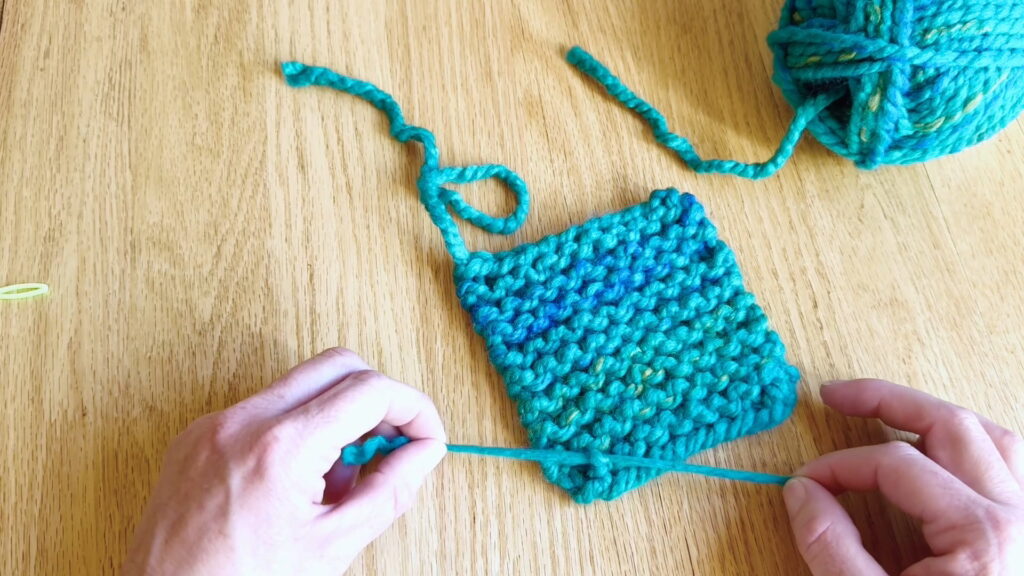
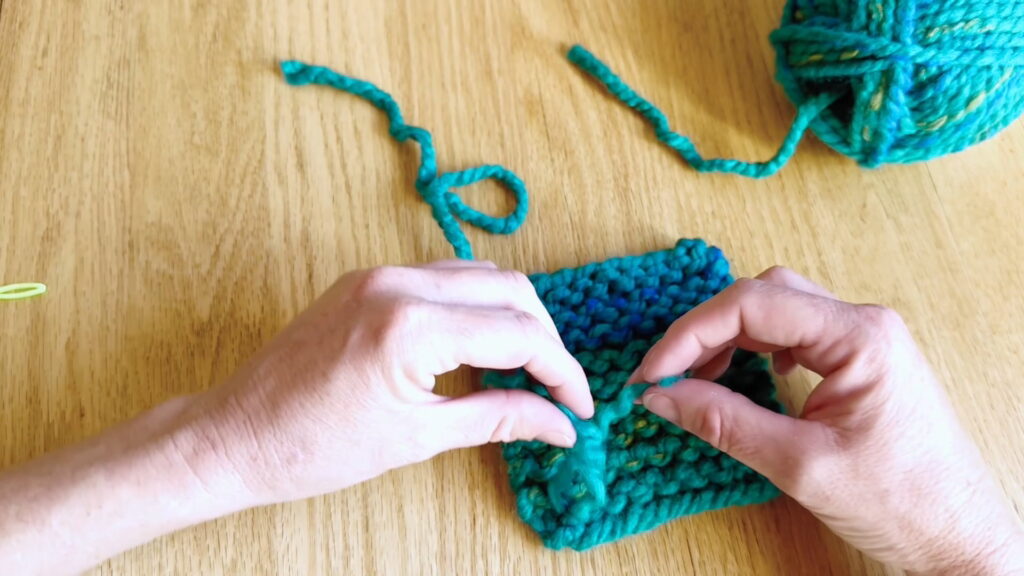
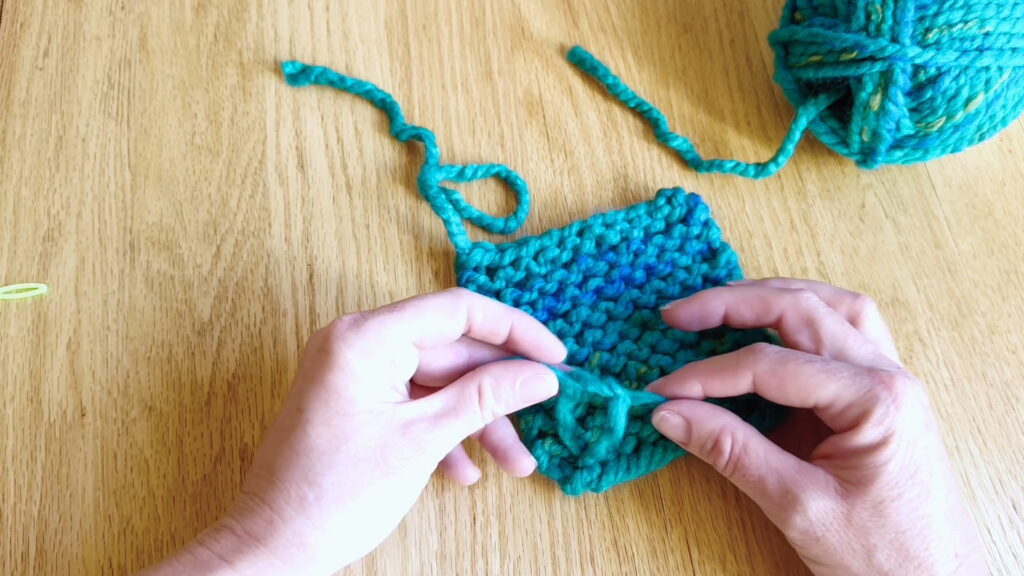
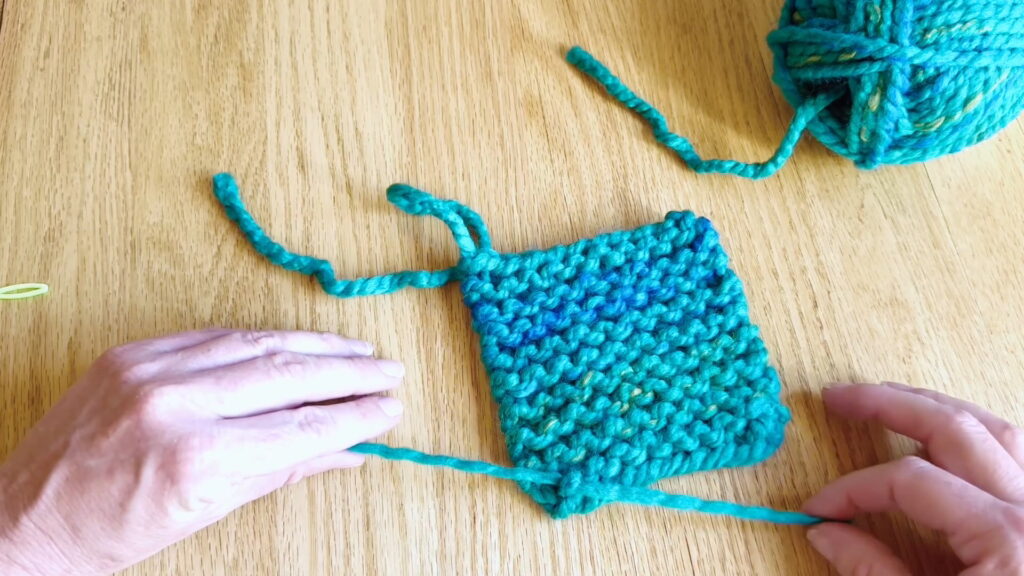
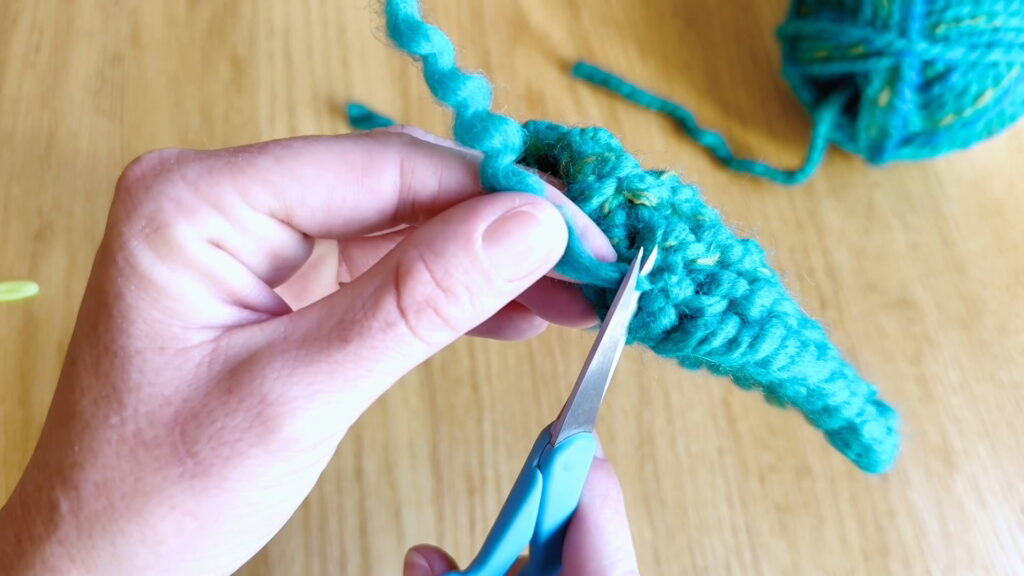
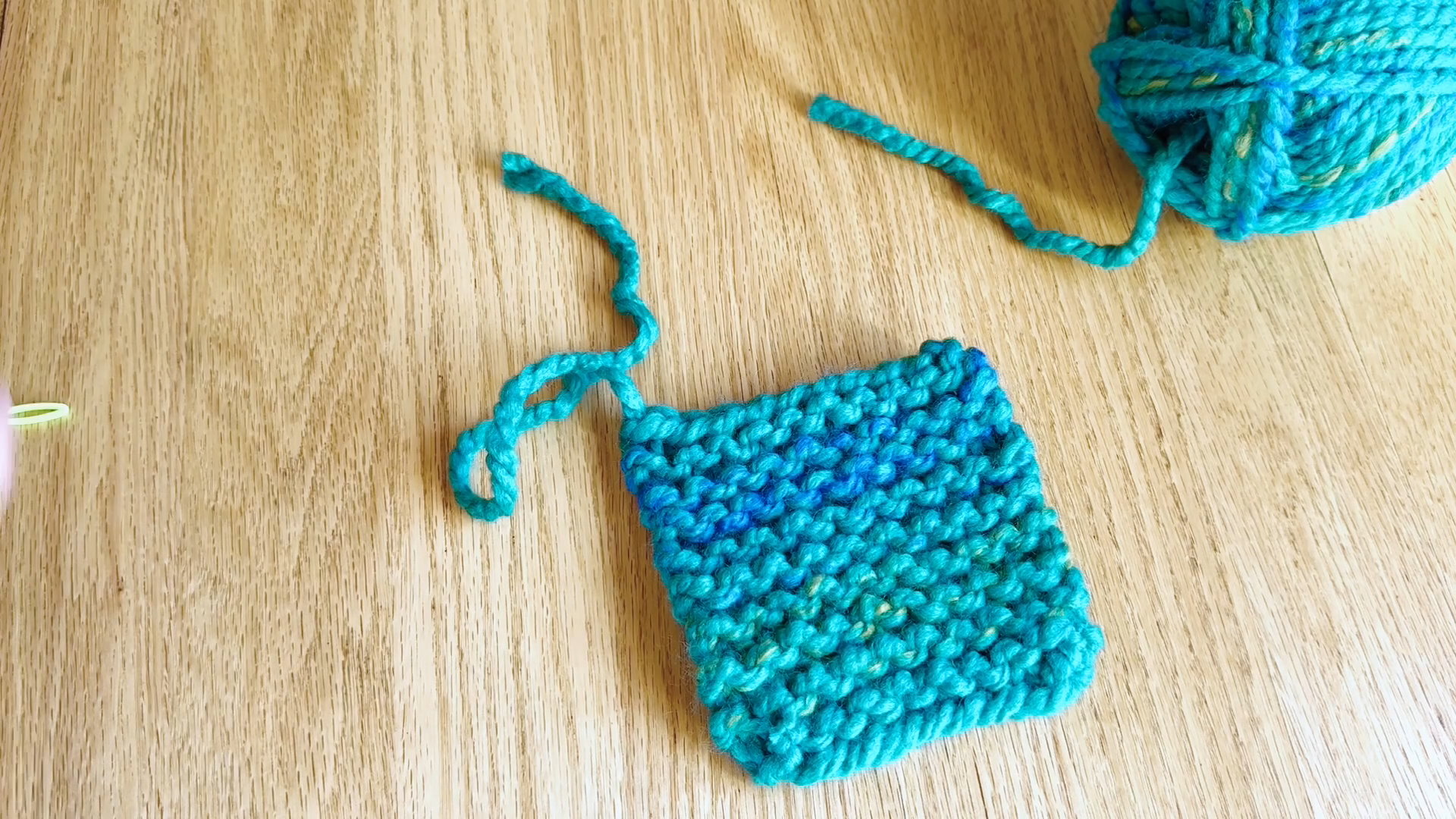
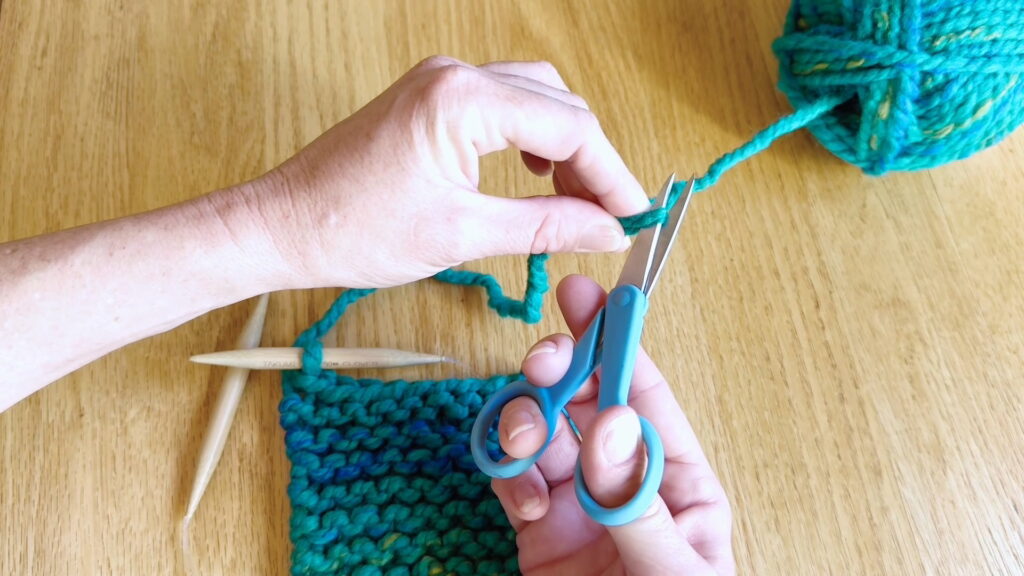
Step 6: Finish Loose Ends

Cut yarn, leaving an 8-inch (20 cm) tail. Pull the tail through, then weave in loose ends with a darning needle.

Weave in Ends (Kids’ Knitting Lesson)

You Completed a Kids’ Coaster 🎉

You finished your first project. Next, you will knit the same calm stitch into a bigger project, so your hands get steadier and your knitting feels easier.
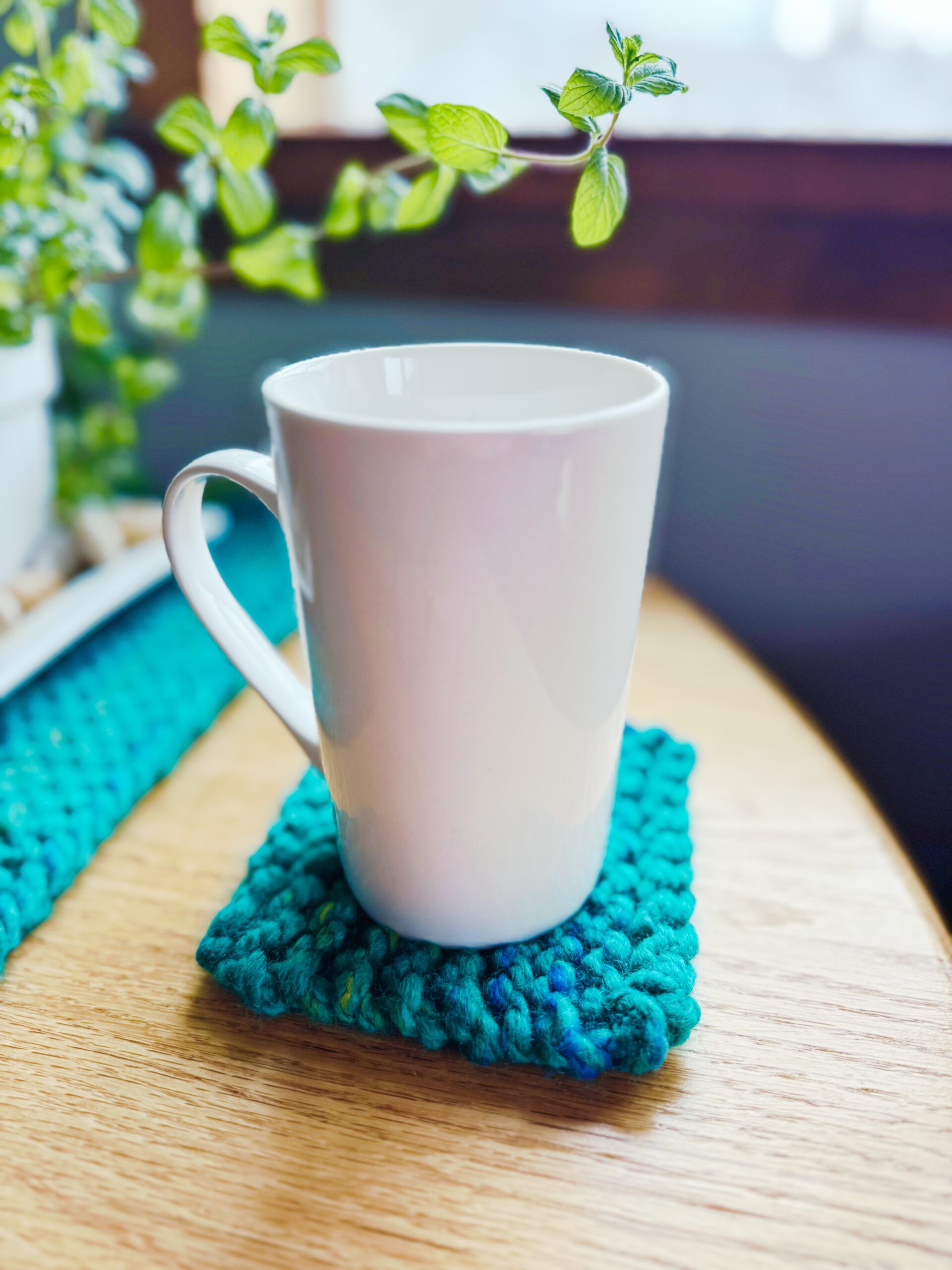
A white coffee cup sits on top of a beginner knit coaster knit with blue super-bulky yarn on a wooden table near a window and potted plant.

Continue Learning: Your Next Projects

Learn the full kids’ path: Start at the beginning on my Kids’ Knitting Guide, and follow the lessons in order.

Don’t Miss a Stitch! 🧶

Want more free beginner lessons, patterns, and practical tips? Sign up for my newsletter to get updates straight to your inbox. 💌
Kids’ Knitting – Loose Ends

Lesson 7 in the Kids’ Knitting Guide showing how to weave in loose yarn ends to finish a beginner knitting project.

Lesson 7: Tie Up Loose Ends (On Flat Knits)

Weaving in loose ends is a way of tucking your ends into the knitted fabric before trimming the yarn so the ends do not show. In this kids’ knitting lesson, you will learn to weave in your loose ends so you can finish your first knitting project.

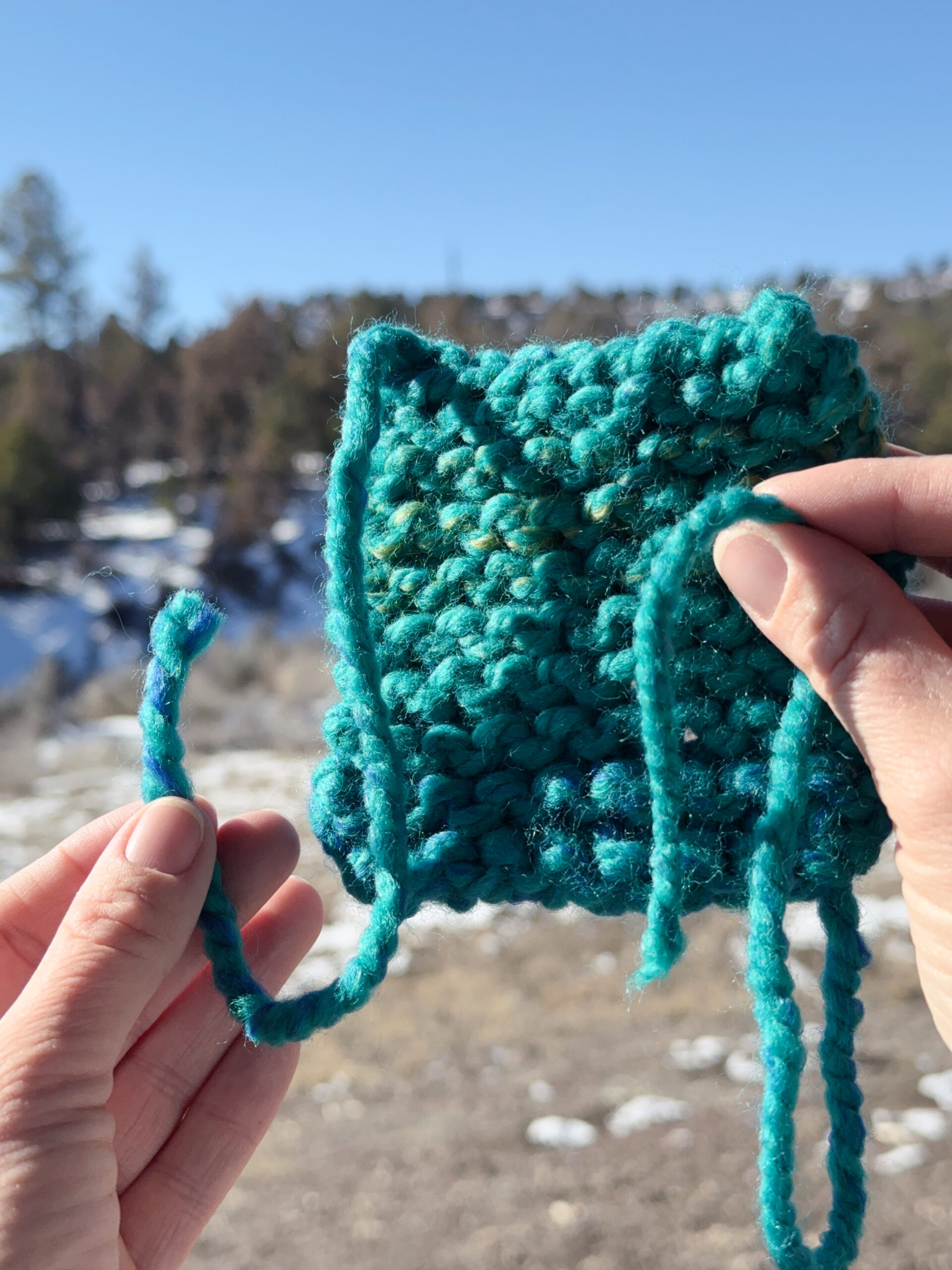
When you have finished following a knitting pattern, your project will almost always have extra strings. Knitters call these “loose ends” or “yarn tails.” At the end of a pattern, you will see an instruction that says, “weave in loose ends.” 

Weaving in loose ends is the way knitters get rid of those extra strings without them looking messy or coming undone. There are different ways to weave in your loose ends, but all of them start with threading the loose end onto a darning needle. This lets you sew the ends into the fabric, where they’ll be hidden.

Here, we will match the design of the knitting when we sew the ends into the fabric. Then, we will anchor our ends to a knit stitch and tie a pair of small knots to lock the yarn in place before trimming the ends.

Finished beginner knit coaster showing loose ends woven into the fabric in a kids knitting lesson.

Your last step

Below are both video and written tutorials to help you learn how to weave in the loose ends. Working on the Beginner Coaster? You can check your pattern here.

Kids’ Video Guide: How to Weave in Loose Ends

Kids’ Picture Guide: How to Weave in Loose Ends

After you have finished binding off your project, you will have loose ends to remove. We will weave them into the fabric one at a time using a darning needle.

How to Weave in Loose Ends

Once you have taken all the stitches off the left hand needle, it is time to cut the yarn that connects the knitting project to the ball.

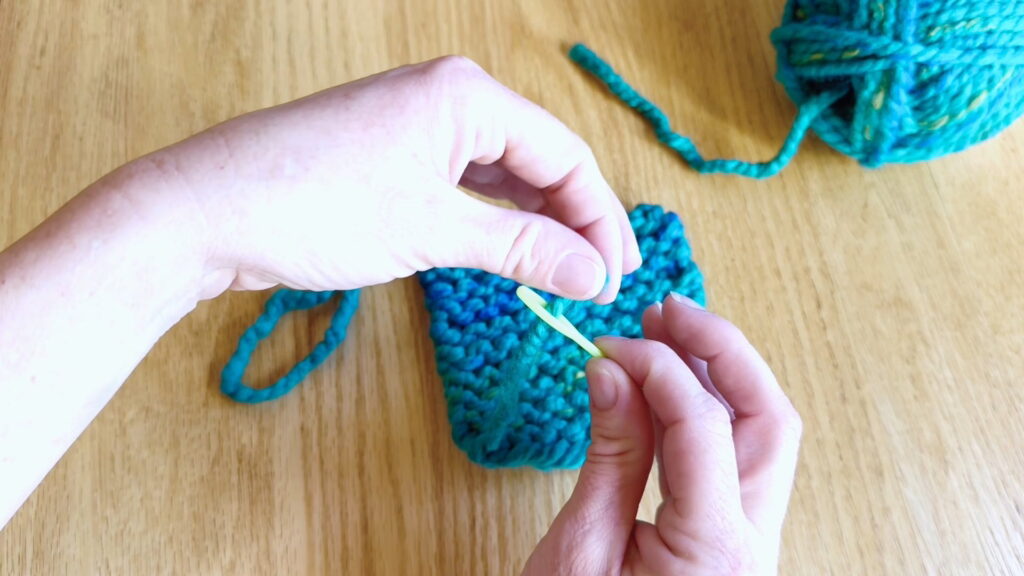
Weave in Loose Ends Step 1: Thread Yarn onto Darning Needle

Thread a loose end onto the darning needle by poking the end through the eye of the darning needle.

Threading a loose yarn end through the eye of a darning needle to begin weaving in loose ends in beginner knitting.

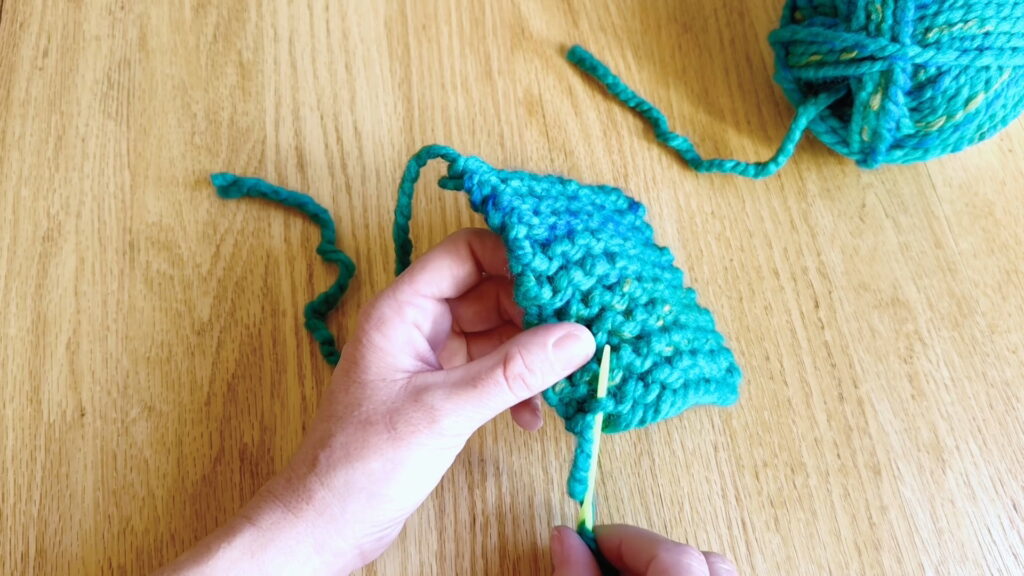
Weave in Loose Ends Step 2: Sew In

Choose a stitch near the loose end in the next row up. (This will be the stitch you anchor the end onto.) Poke the darning needle under that stitch pointing away from the edge of the knitting project. Sew the yarn through.

Using a darning needle to sew a loose yarn end into nearby knit stitches to hide the tail in beginner knitting.

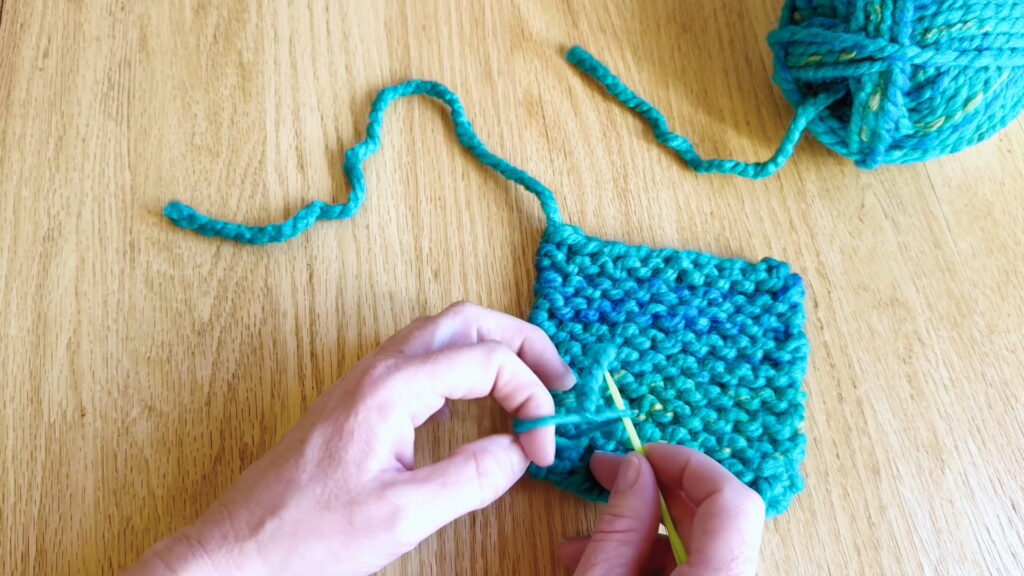
Weave in Loose Ends Step 3: Split Yarn

Take the yarn off the darning needle. Then, use the needle top to help you split the yarn end in half.

Splitting the yarn tail into two halves before anchoring the loose end in beginner knitting.

Weave in Loose Ends Step 4: Thread Half the Yarn

Thread half the yarn end through the eye of the darning needle.

Threading half of the split yarn tail onto a darning needle to secure the loose end in beginner knitting.

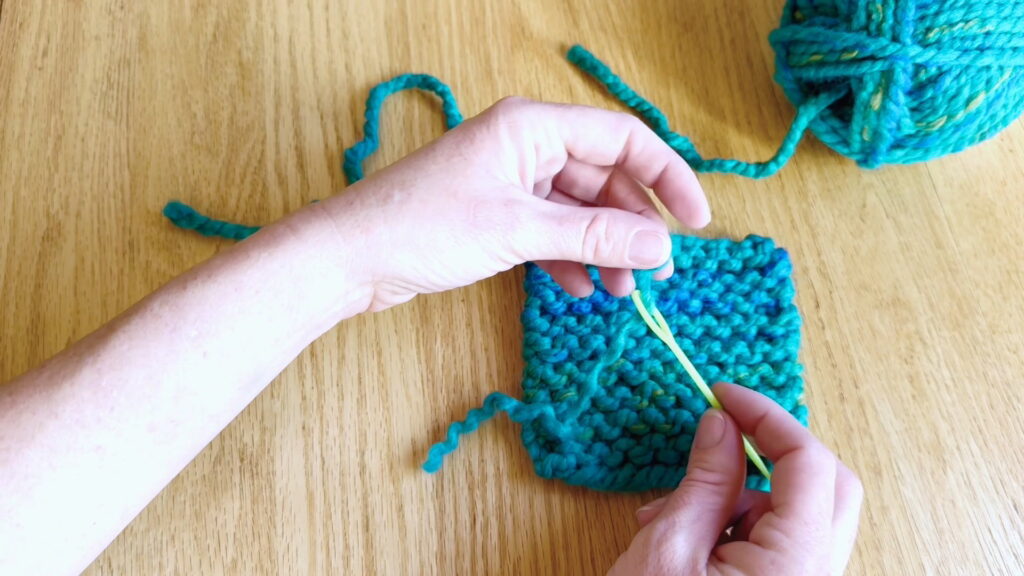
Weave in Loose Ends Step 5: Anchor

Sew that half of the yarn around the stitch you chose to anchor your yarn onto.

Sewing the split yarn tail around a knit stitch to anchor the loose end securely in beginner knitting.

Next, we will tie two little knots to make sure the end of the yarn stays in place.

How to Tie Up Loose Ends

Tie Up Loose Ends Step 1: Lay Halves in Opposite Directions

Lay the two halves of the yarn end in opposite directions, one pointing to the left and one to the right.

Laying the two split yarn ends in opposite directions before tying knots to secure the knitting project.

Tie Up Loose Ends Step 2: Pick Up Yarn Halves

Pick up the two halves of the yarn with opposite hands (the right strand in the left hand and the left strand in the right hand).

Holding the two yarn halves in opposite hands to prepare for tying a securing knot in beginner knitting.

Tie Up Loose Ends Step 3: Tie Knot

Tie the two ends in a simple knot: Cross the strands to make a loop, then tuck one end through the loop, and pull it through. Tighten just to the surface of the knitting, but don’t pull too tightly.

Crossing yarn ends and tying a simple knot to lock the loose ends in place in beginner knitting.

Tie Up Loose Ends Step 4: Tie Second Knot

Repeat steps one through three to tie a second knot.

Tying a second securing knot in the yarn ends to prevent unraveling in beginner knitting.

Tie Up Loose Ends Step 5: Pull Tight

Pull the second knot tightly. If it does not move, go to step six. If it slips when you pull, make one more knot (repeat steps one through three) before going to step six.

Pulling the yarn knots tight so the loose ends stay secure in the finished knitting project.

Tie Up Loose Ends Step 6: Cut Extra Yarn

Use your scissors to trim the two yarn halves near the knot.

Cutting excess yarn near the secured knot after weaving in loose ends in beginner knitting.

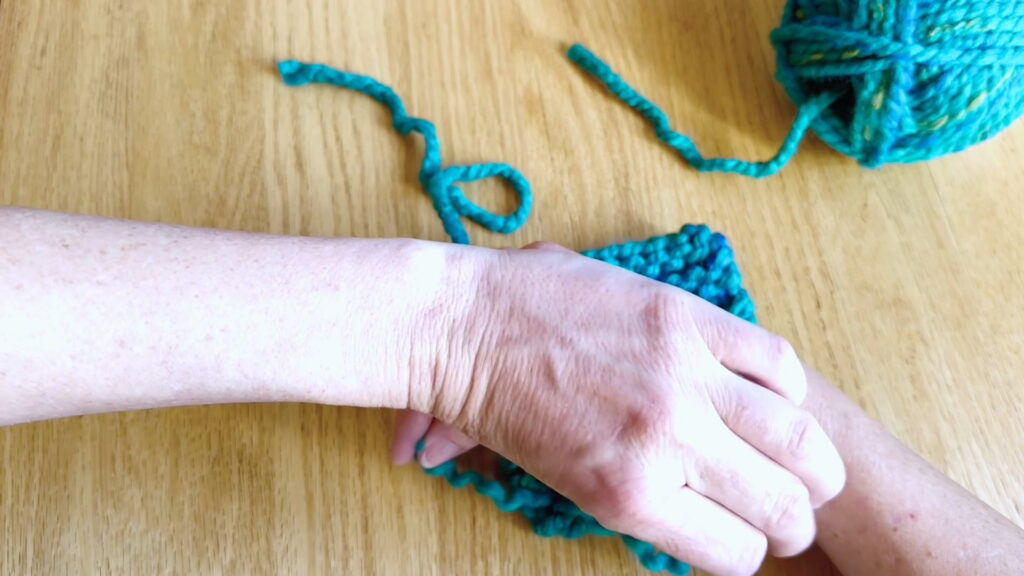
Repeat the steps to weave in and tie up any other loose ends that are still hanging from your project. When your loose ends are all gone, stretch your project to shape it into a more even square.

Beginner knit coaster showing one loose yarn end woven into the fabric.
Completed beginner knit coaster with all loose ends woven in and trimmed.

Great job! You finished your first knit coaster. If your coaster doesn’t look “perfect,” don’t worry: it is perfect. Every first project will have a few wobbly stitches. The more you practice, the more even your stitching will get.

Your Next Project

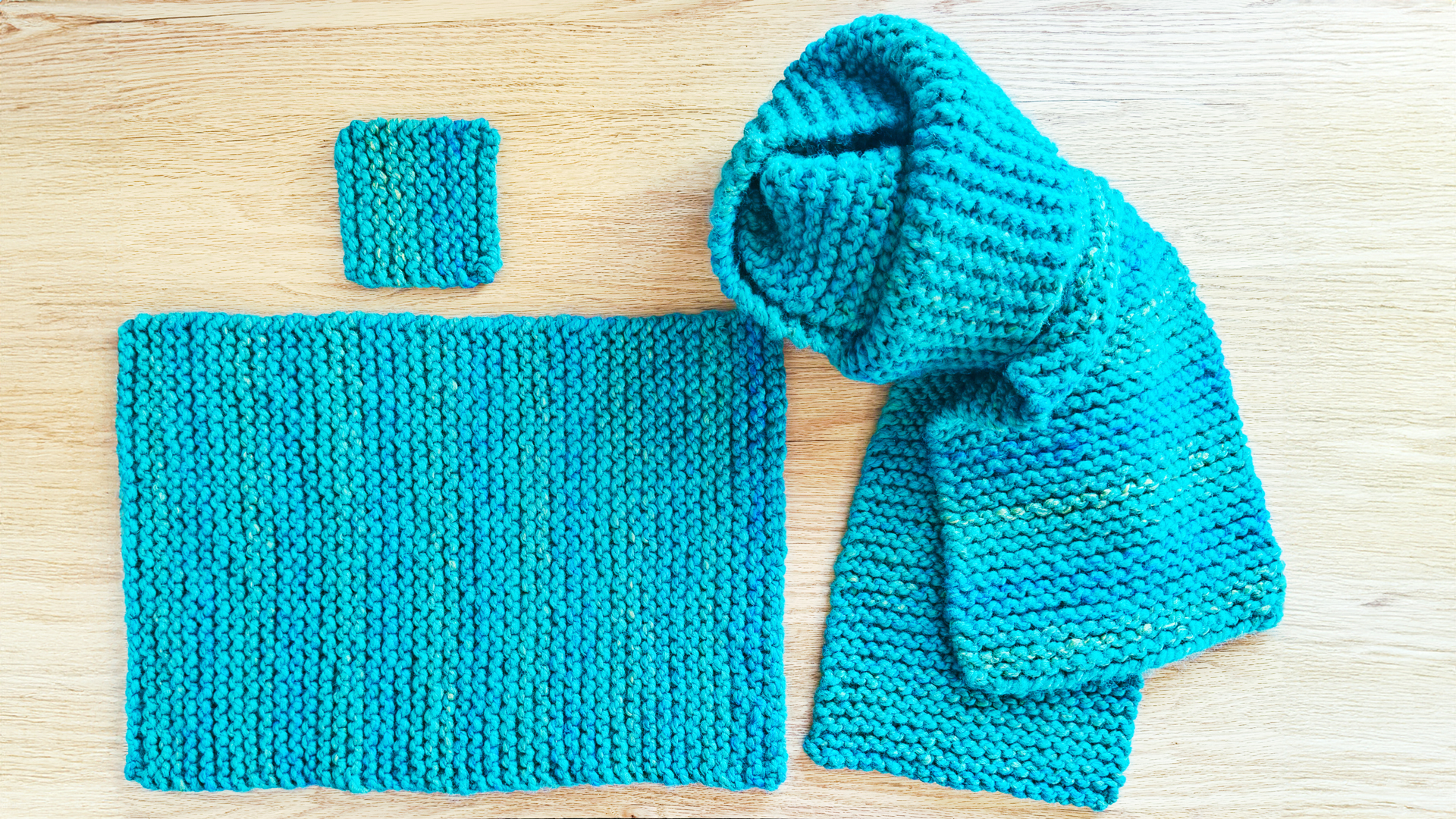
Using everything you’ve covered in the Kids’ Knitting Lessons so far, you can now make a placemat and a scarf. These flat projects are made with the same skills as your coaster, but they’re just bigger. Making these next projects gives you a chance to practice your knit stitches. The more you practice, the better your stitches will look.

Beginner flat knitting projects including a placemat and scarf made using basic knit stitches.

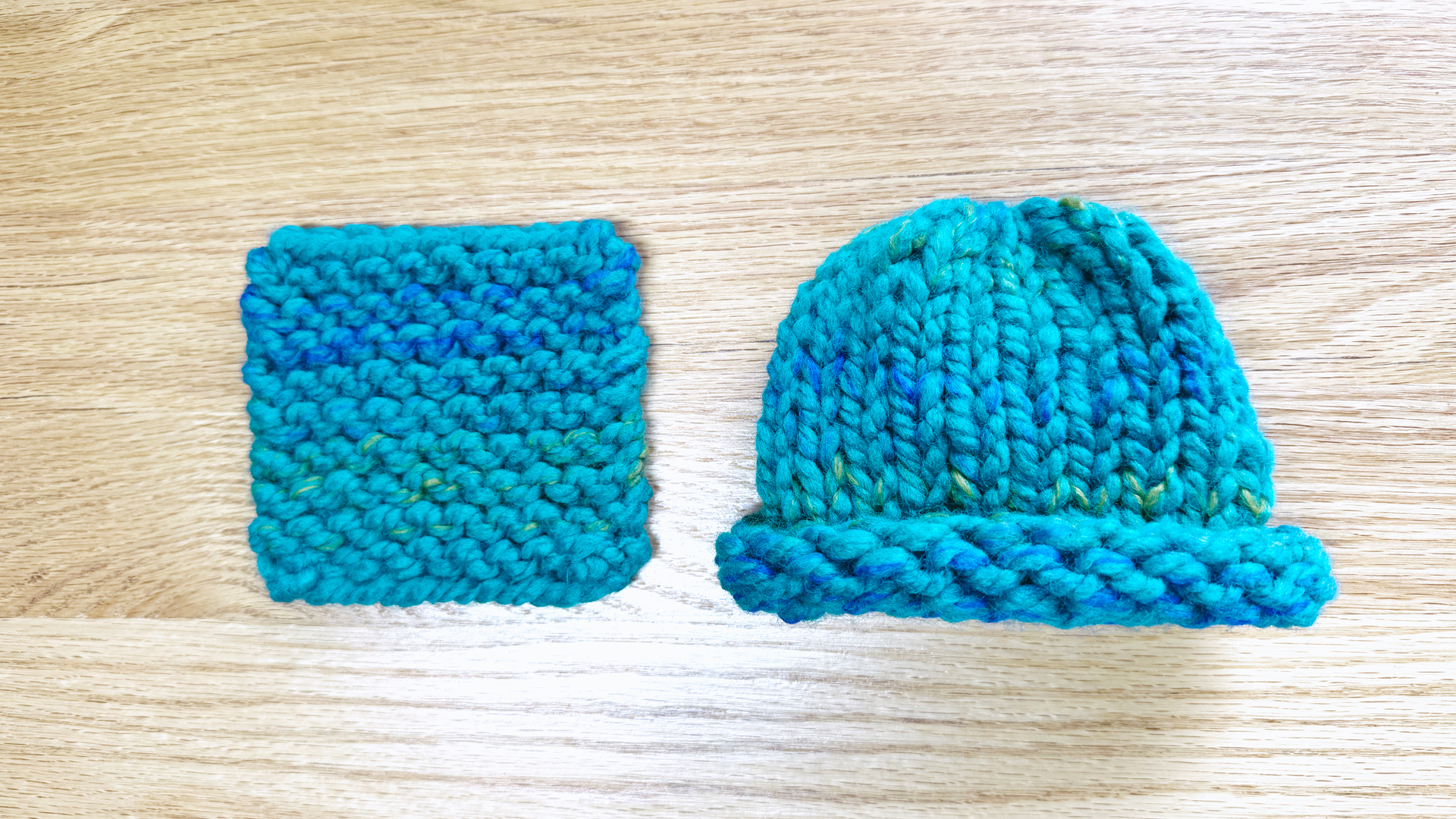
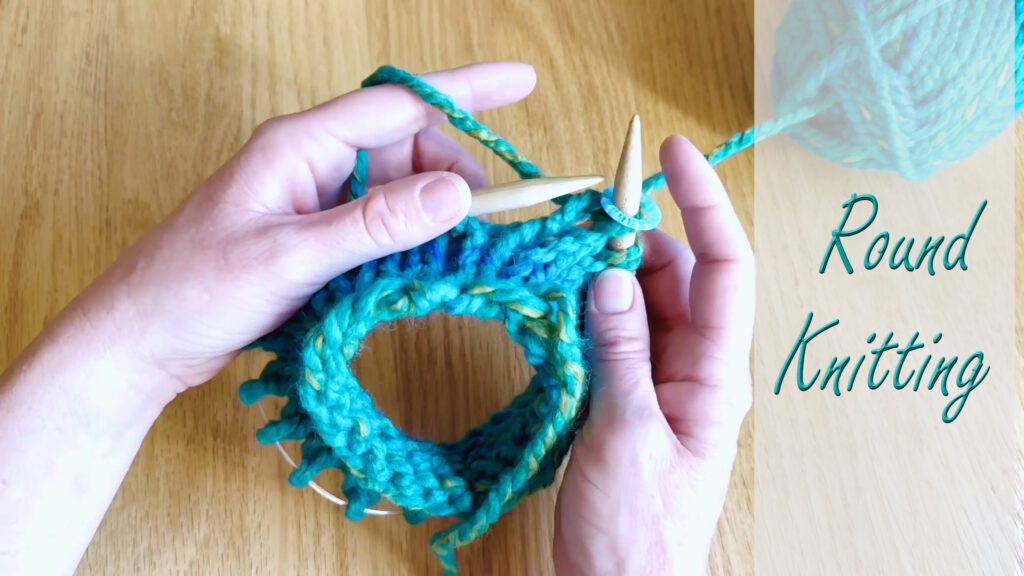
Or, if you are ready to learn the next skill, you can move straight from knitting your coaster to knitting your very first wearable hat! Move to the next lesson (Kids’ Lesson 8) to start learning to knit in a circle (“knit in the round”) to make a seamless hat that will keep you cozy and warm.

Beginner knitting projects showing a finished coaster and a simple knit hat for kids.

Up Next

Learn to knit in a circle and start your very first hat. Go to Kids’ Lesson 8 to continue. (Coming soon.)

Joining knitting in the round to begin a seamless tube for a beginner knit hat.

Return to the Kids’ Knitting Guide.

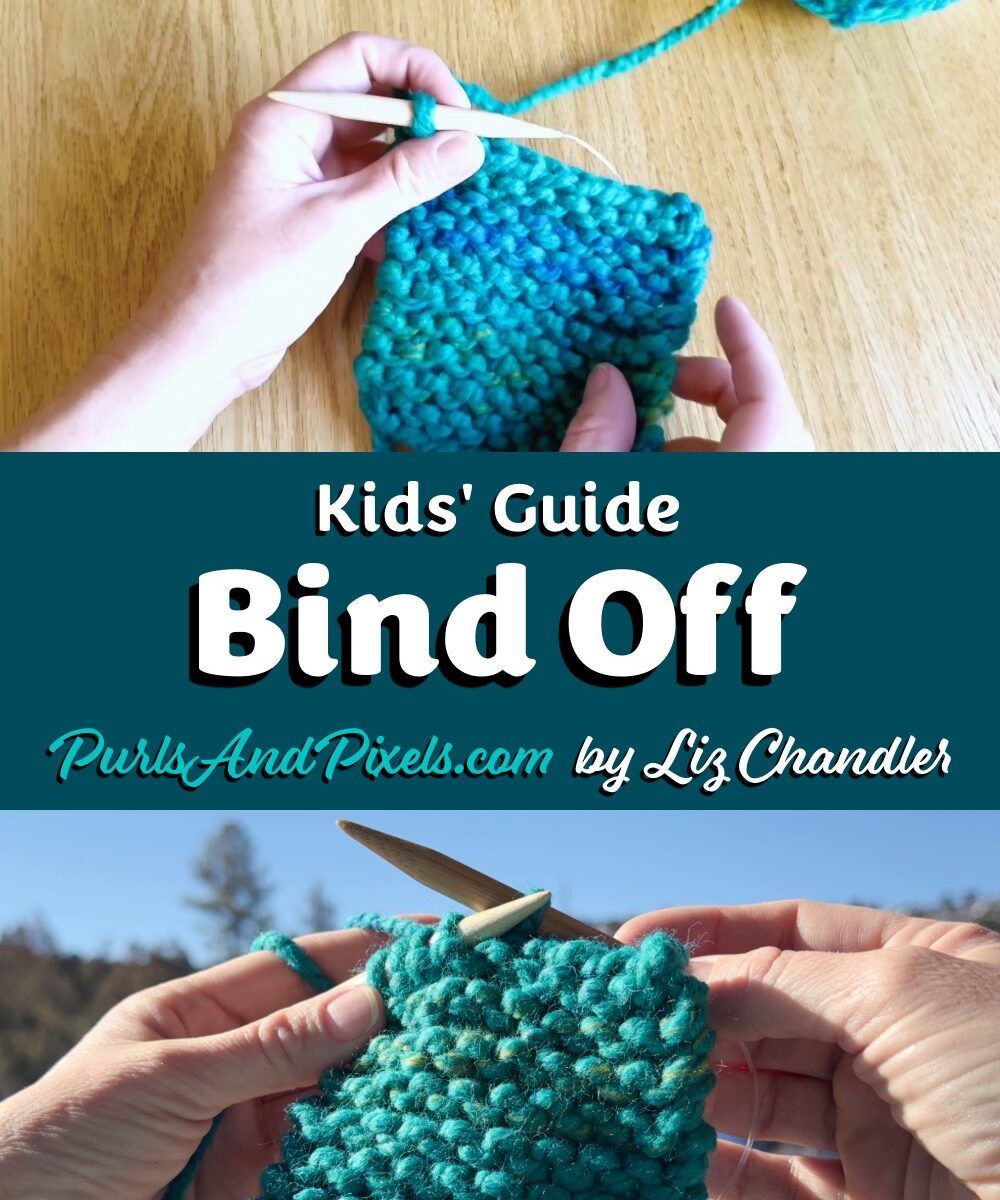
Kids’ Knitting – Bind Off

Lesson 6 in the Kids’ Knitting Guide showing how to bind off stitches to finish a beginner knitting project.

Lesson 6: Bind Off (Ending Flat Knits)

Binding off is a way of taking your stitches off the needles so your work does not come unraveled. In this kids’ knitting lesson, you will learn to bind off so you can finish your first project.

Bind off is the knitter’s way of saying that it’s time to take the stitches off the needles.  

At the end of your project, you’ll need to take the stitches off the needles in a way that keeps them from coming undone. A bind off links the stitches together, so they don’t unravel when you take out the needle. 

For this bind off, you will knit two stitches, then link them together before knitting the next stitch. There will never be more than two stitches on the right-hand needle when you are binding off. 

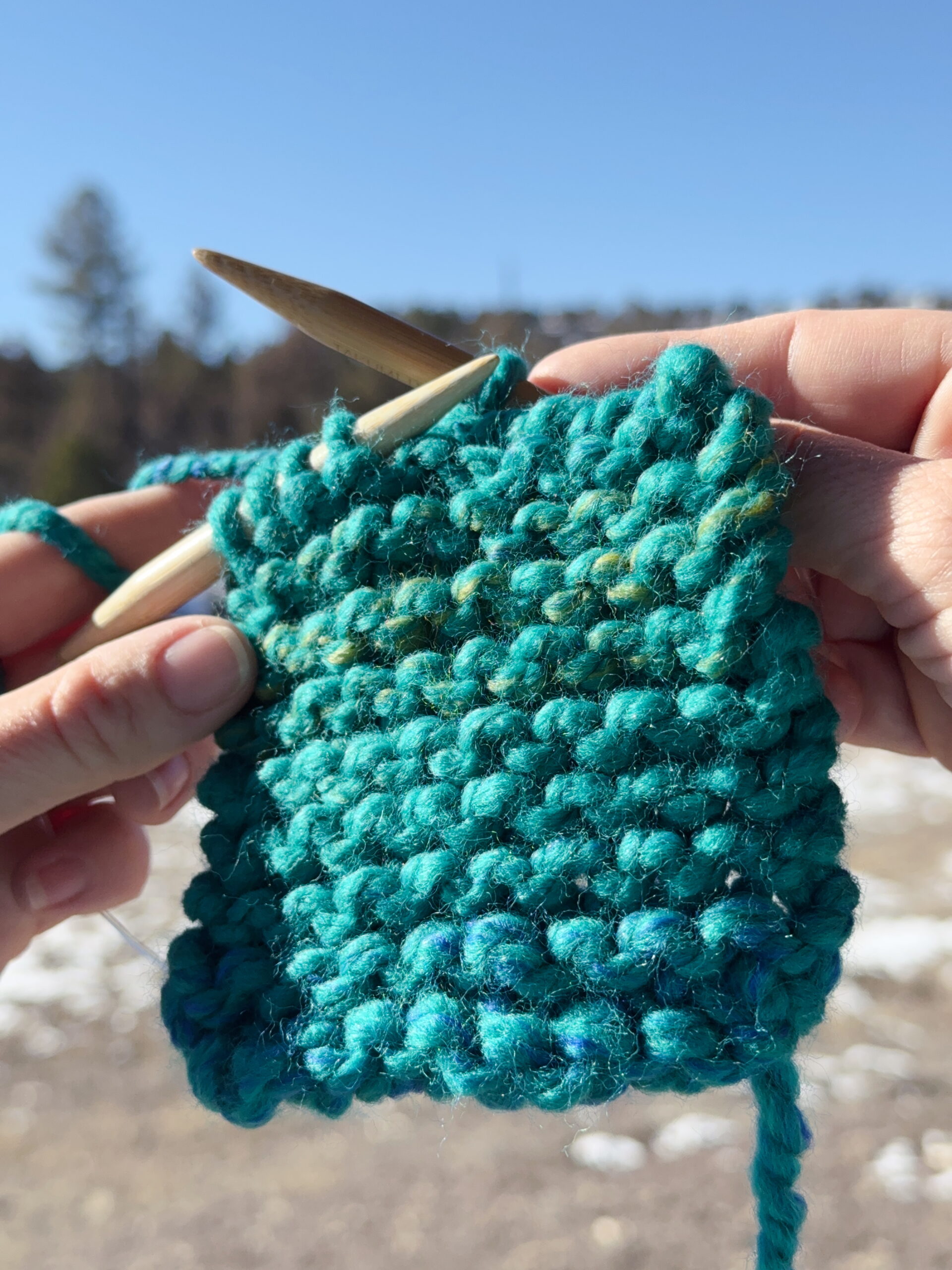
Hands showing a partially finished knitted bind off on a beginner knitting project.

Your last row

Below are both video and written tutorials to help you learn how to bind off. Working on the Beginner Coaster? You can check your pattern here.

Kids’ Video Guide: How to Bind Off

Bind Off (Kids’ Knitting Lesson)

Kids’ Picture Guide: How to Bind Off

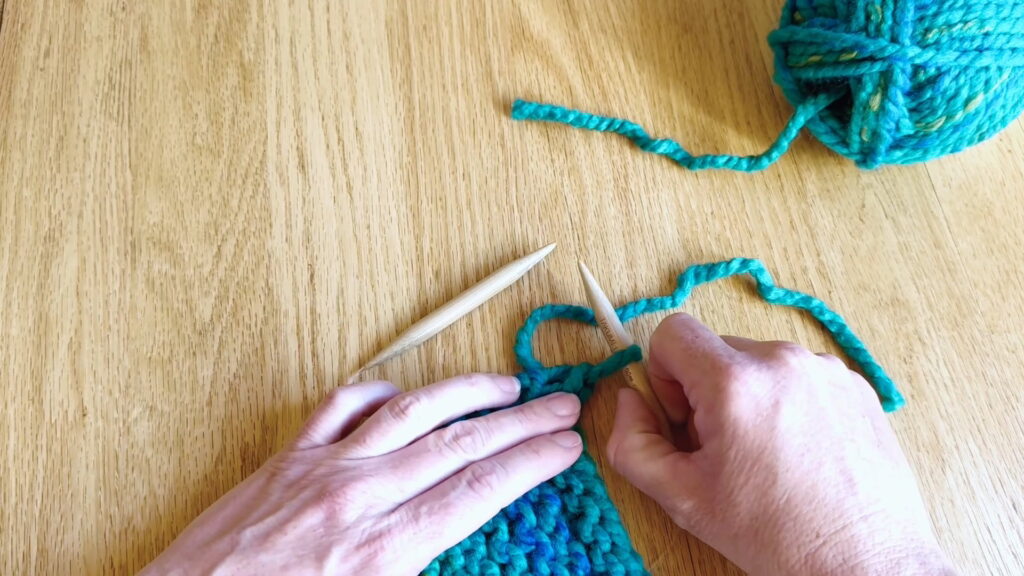
Before you cut the yarn, you will knit a bind off row to connect your last stitches together.

How to Bind Off

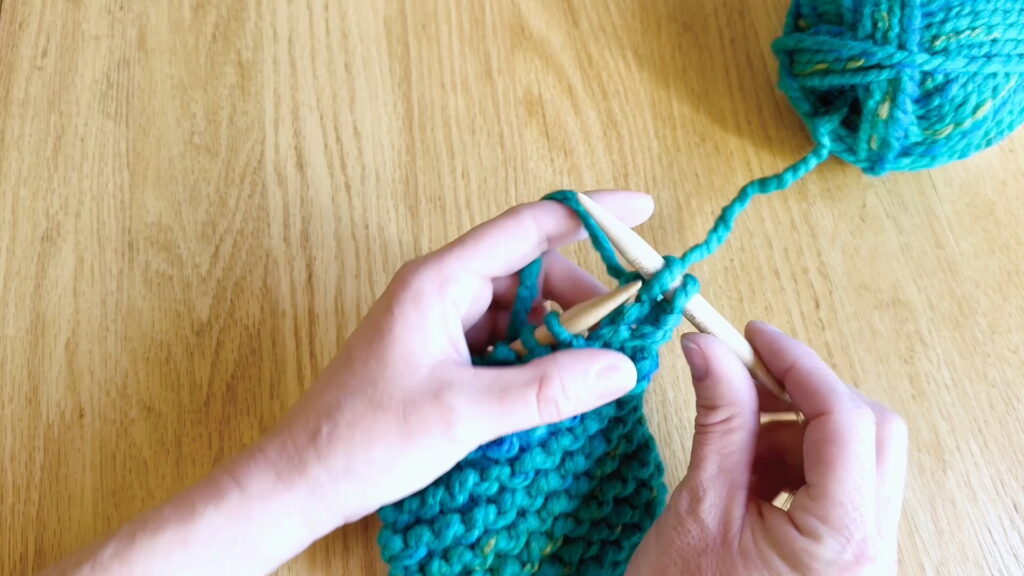
Bind Off Step 1: Knit 2

Knit two stitches.

Knitting two stitches to begin the bind off row in a beginner knitting project.

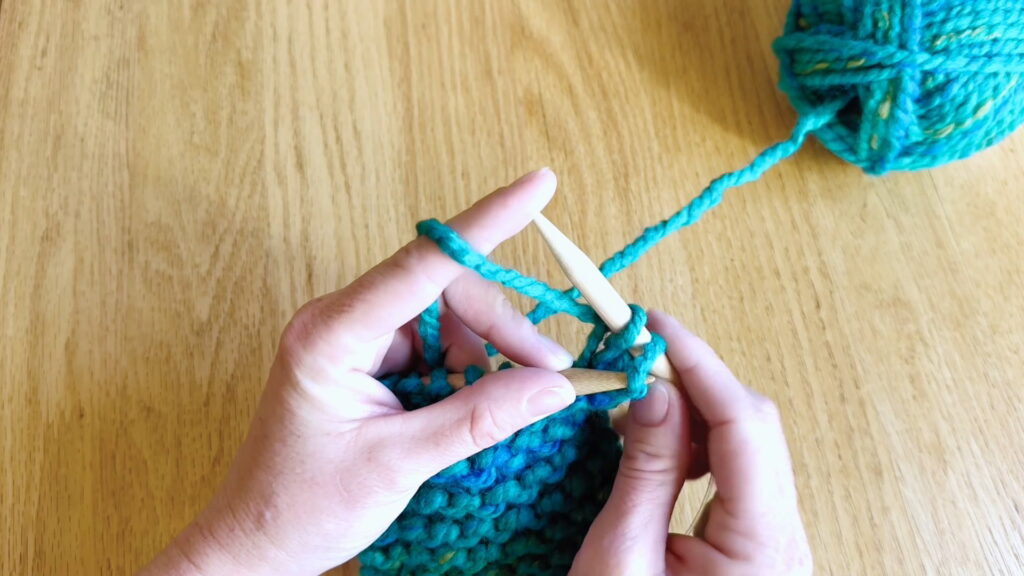
Bind Off Step 2: Lift

With the left-hand needle tip, lift the first stitch on the right-hand needle up and over the second stitch.

Left needle lifting the first stitch over the second stitch during the bind off process.

Bind Off Step 3: Pull Through

Bring the second stitch through the first stitch.

Second stitch pulled through the first stitch while binding off knitted stitches.

Bind Off Step 4: Slide Off

Let the first stitch come off the needle. Check that the first stitch is now looped over the second, leaving only one stitch on the right-hand needle.

First stitch sliding off the needle leaving one stitch on the right needle during bind off.

Bind Off Step 5: Knit 1

Knit one stitch, then repeat steps 2-5 until no stitches are on the left-hand needle and one stitch is on the right-hand needle.

Knitting the next stitch to continue binding off stitches across the knitting row.

Once you have taken all the stitches off the left hand needle, it is time to cut the yarn that connects the knitting project to the ball.

How to Cut the Yarn

Cut Yarn Step 1: Cut the Yarn

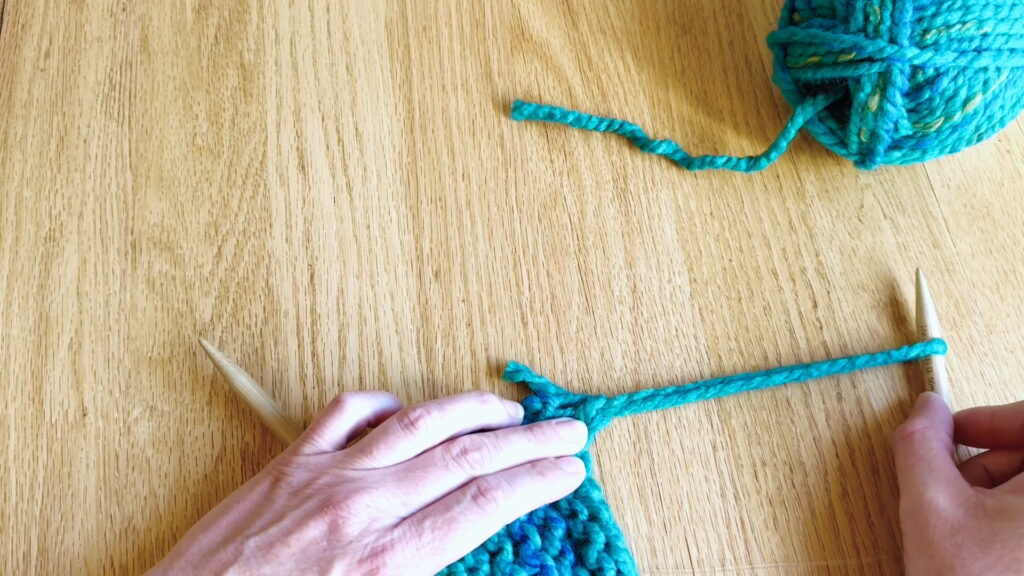
Set your work down, being careful not to let the last stitch fall off the needle. Measure about 10 inches of yarn away from the last stitch, then cut the yarn at that point. (You will use this long end later.)

Measuring and cutting the yarn tail to finish a beginner knitting project after binding off.

Cut Yarn Step 2: Grab the Right-Hand Needle

Use your left hand to hold the project in place, then grab the needle near the last stitch with your right hand.

Holding the knitting project and needle near the last stitch before securing the final loop.

Cut Yarn Step 3: Pull Stitch Away

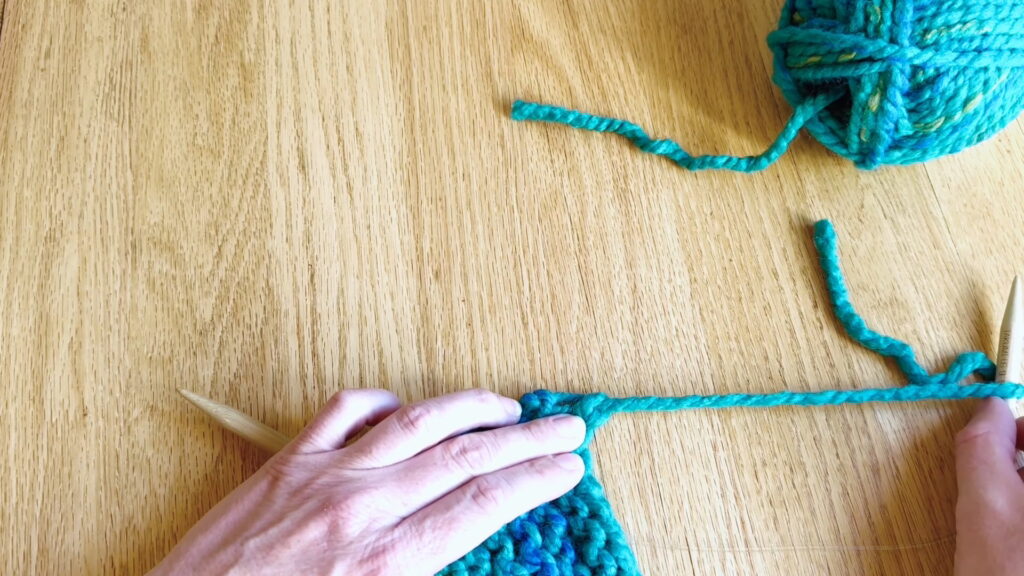
Pull the needle and stitch away from the project making the loop on your needle bigger.

Pulling the final stitch larger to remove it from the needle and prepare to secure the yarn.

Cut Yarn Step 4: Pull Yarn Through

Keep pulling until the yarn comes through, turning the loop into a straight end.

Pulling the yarn completely through the final loop to secure the end of the knitting.

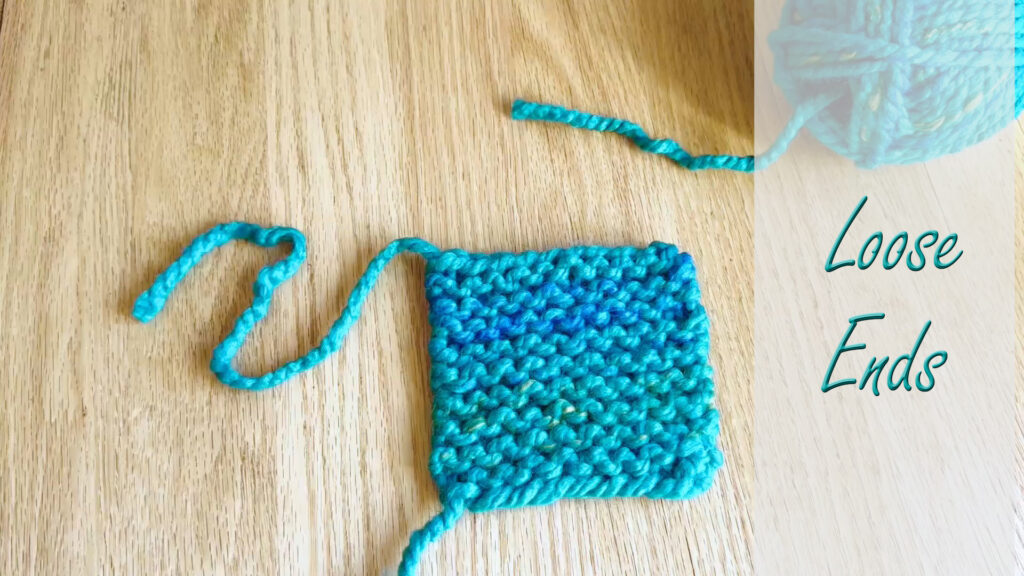
Now, you have taken your first knitting project off the needles. The very last step is to get rid of the two loose ends that are still connected to your project.

Up Next

Tie up loose ends. Go to Kids’ Lesson 7 to continue.

Finished beginner knit piece showing loose yarn ends ready to be woven in.

Return to the Kids’ Knitting Guide.

Kids’ Knitting – The Knit Stitch

Lesson 5 in the Kids’ Knitting Guide showing how to make the knit stitch in a beginner knitting project.

Lesson 5: Make the Knit Stitch

Once your cast on stitches are in your left hand, you will be set up to make the next row in your knitting project and to learn your next skill: the knit stitch.

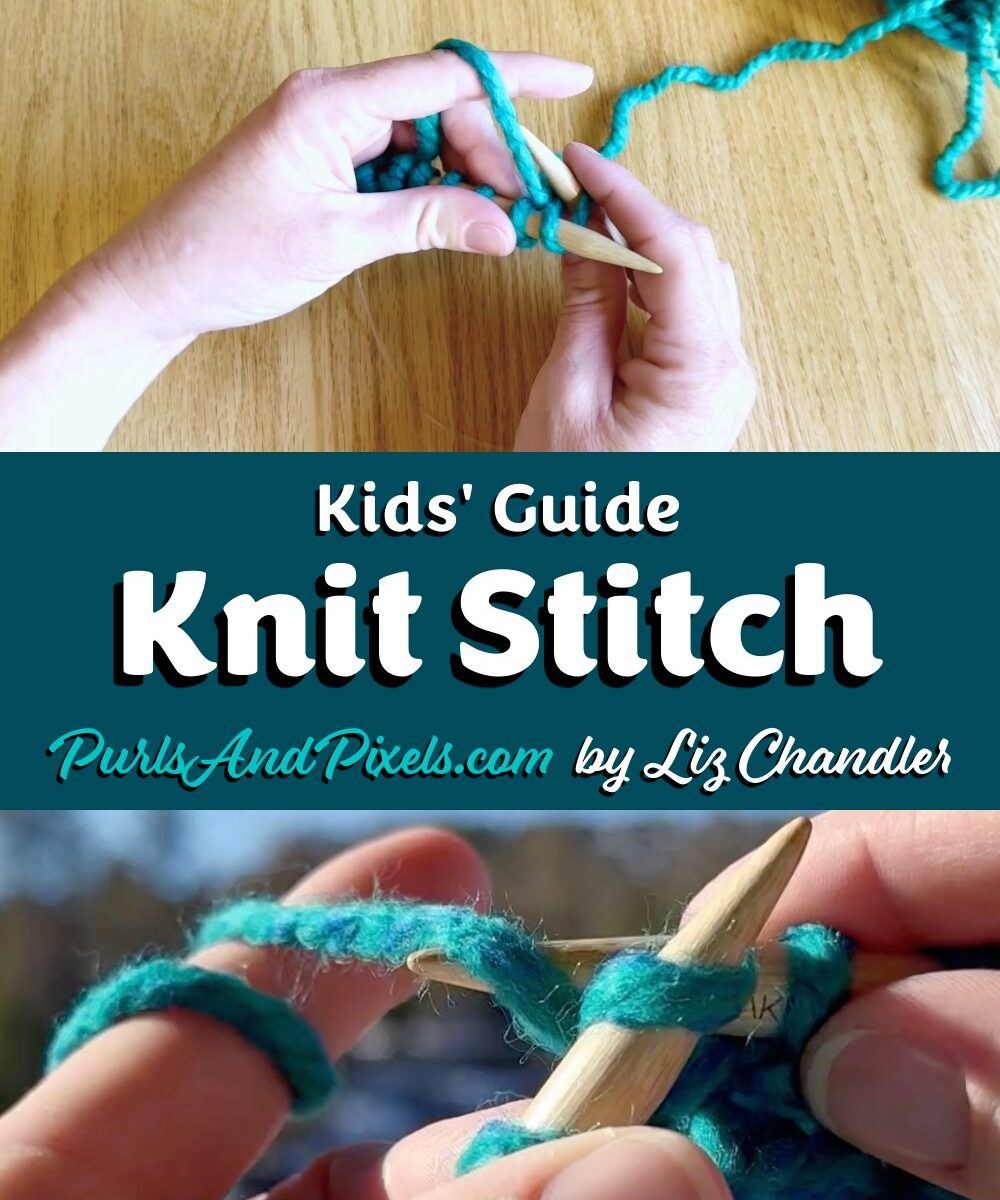
The knit stitch is a way to loop yarn around knitting needles to make fabric out of yarn. In this kids’ knitting lesson, you’ll learn how to make the knit stitch so you can make your first knitting project.

A knit stitch is the most used skill in knitting and all the projects in the Kids’ Knitting Guide are made of knit stitches.

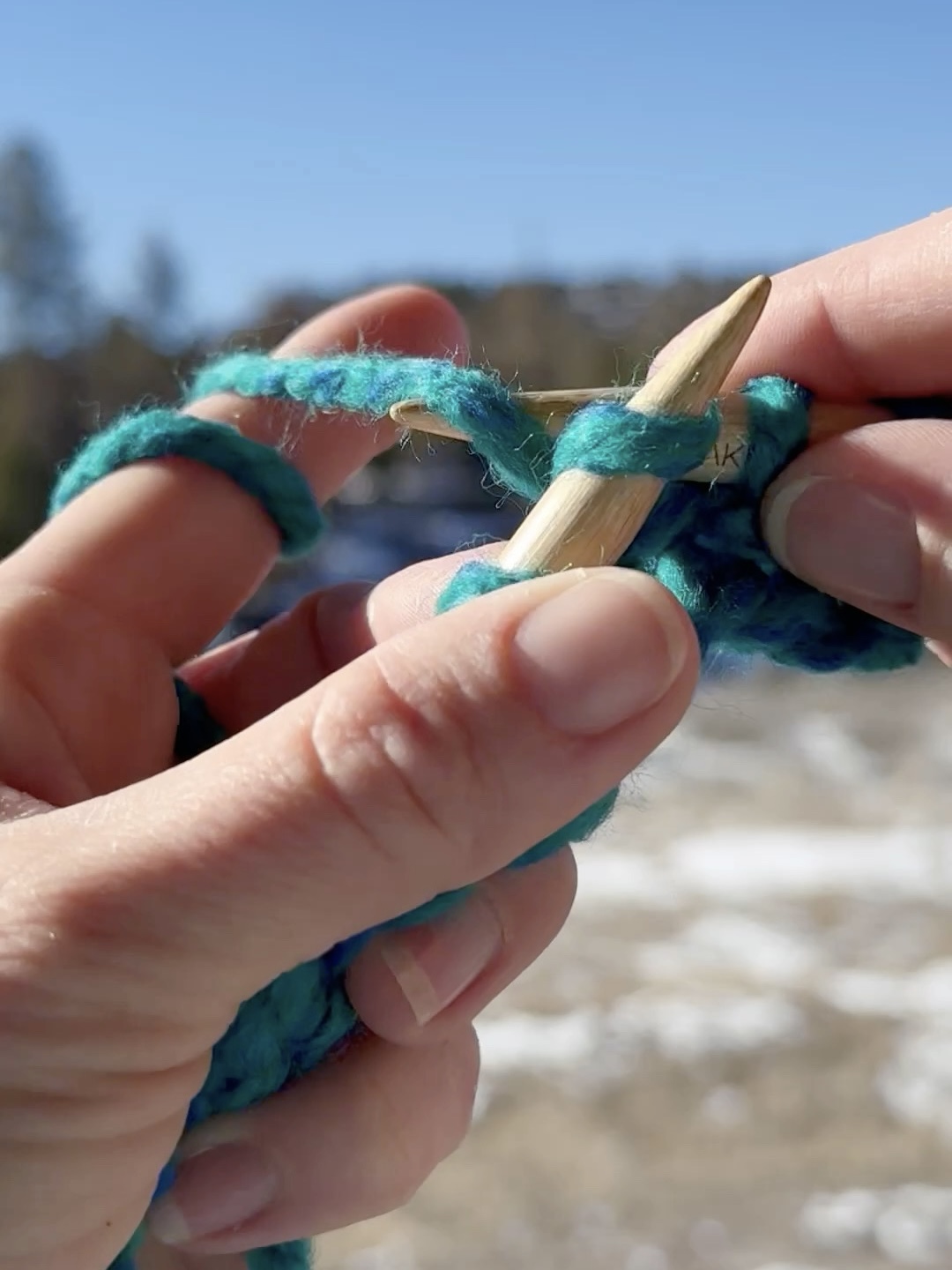
Hands holding yarn to demonstrate making the knit stitch.

Below are both video and written tutorials to help you learn how to make the knit stitch.

Working on the Beginner Coaster? You can check your pattern here.

Checking the coaster pattern, our next instruction says: “Rows 2 – 18: Knit 10. (10 stitches) Turn.” This means we will be knitting every stitch in every row of the project. First, we will learn to make a knit stitch, then practice by repeating it until the project is ready to come off your needles.

Kids’ Video Guide: How to Make the Knit Stitch

Knit Stitch (Kids’ Knitting Lesson)

Kids’ Picture Guide: How to Make the Knit Stitch

Step 1: Hold Yarn and Needles

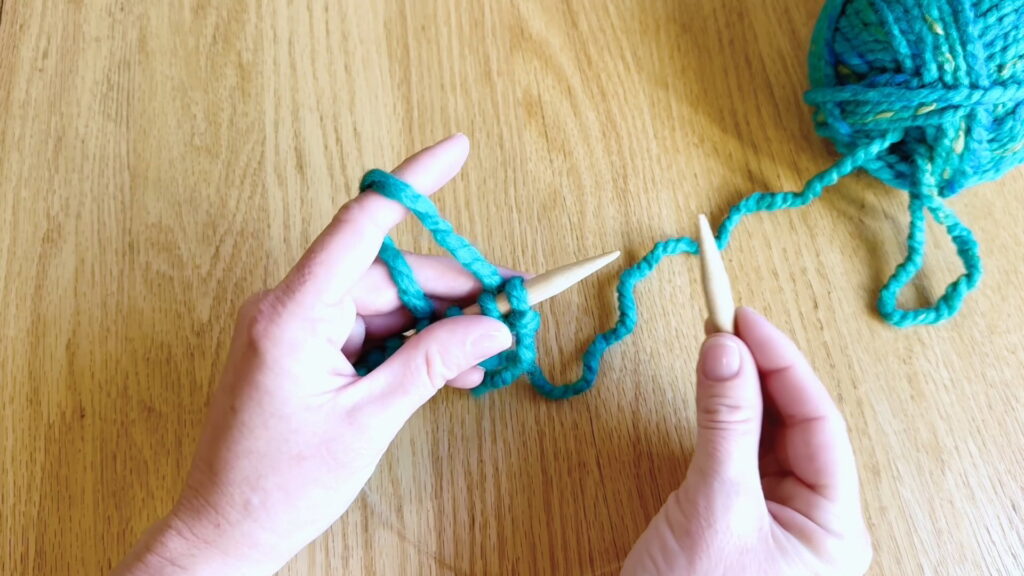
Keep holding the needle with stitches in your left hand. Drape the yarn that connects the project to the ball over your pointer finger and under your middle, ring, and pinkie fingers. Hold the empty needle tip in your right hand.

Knitting held in the left hand while the working yarn is draped over the pointer finger and the empty needle is held in the right hand.

Step 2: Poke

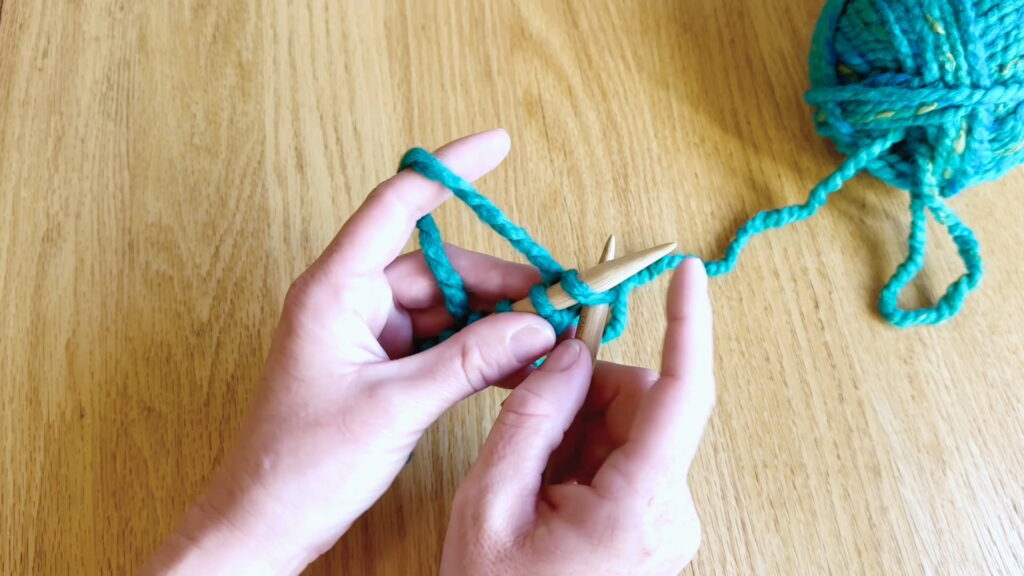
Poke the right-hand needle tip into the front side of the first loop on your left-hand needle.

Right knitting needle inserted into the front of the first stitch on the left needle to begin a knit stitch.

Step 3: Grab

Bring the needle tip over the yarn that rests in front of your pointer finger, then grab that yarn with the right-hand needle tip.

Right needle wrapping the yarn and grabbing it to pull through the stitch.

Step 4: Pull

Pull the yarn and needle tip through the loop on the left-hand needle. You should now have a loop on the right-hand needle.

New loop pulled through the stitch so a loop forms on the right knitting needle.

Step 5: Slide

Slide the first loop off the left-hand needle. The new loop on the right-hand needle is your first finished knit stitch.

Old stitch sliding off the left needle, leaving the new knit stitch on the right needle.

Now that you’ve made your first knit stitch in your coaster, you can use the skills you have learned to finish your project. To finish the row, knit 9 more stitches in the same way. When you come to the end of the row, turn your work and start knitting the next row. Once you have knit 18 rows, your project will measure about 4 inches long. Then, you can take the project off the needles by “binding off.” 

Up Next

Binding off: how to take your stitches off the needles. Go to Kids’ Lesson 6 to continue.

Knitted fabric on circular needles showing stitches ready to be bound off in the next lesson.

Return to the Kids’ Knitting Guide.

Kids’ Knitting – Turn Your Work

Lesson 4 in the Kids’ Knitting Guide showing how to turn knitting needles to begin the next row of a flat knitting project.

Lesson 4: Turn Your Knitting

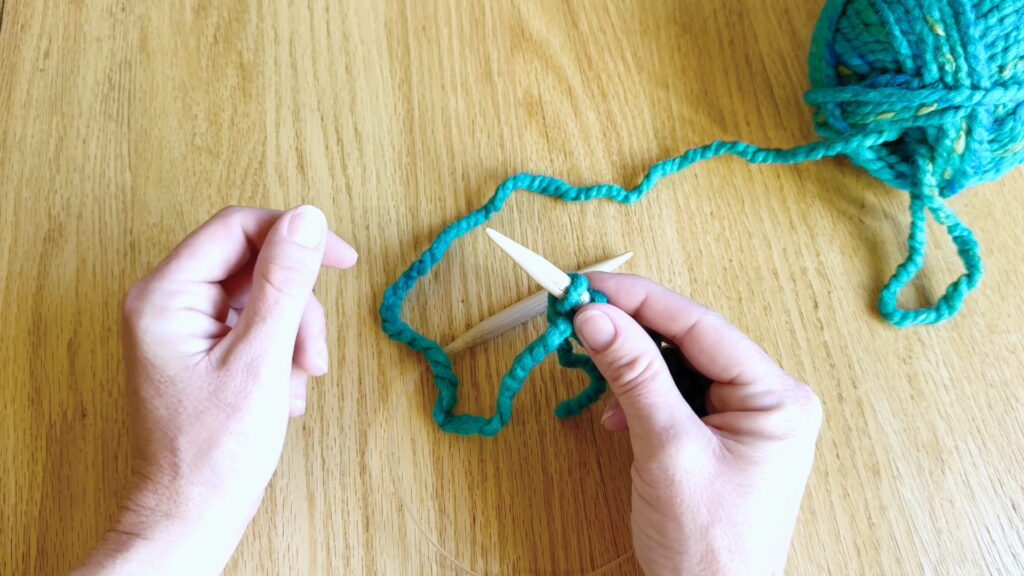
Now that you have cast on all your stitches, you are ready for the next step. Following our coaster pattern, we’ve now cast on all 10 stitches, and the pattern says: “Turn.” Turning your work after each row lets you knit a flat square or rectangle.

Turning your work in knitting means flipping your knitting over so you can make the next row in a flat project. In this kids’ knitting lesson, you’ll learn how to turn your work to keep going on your first project.

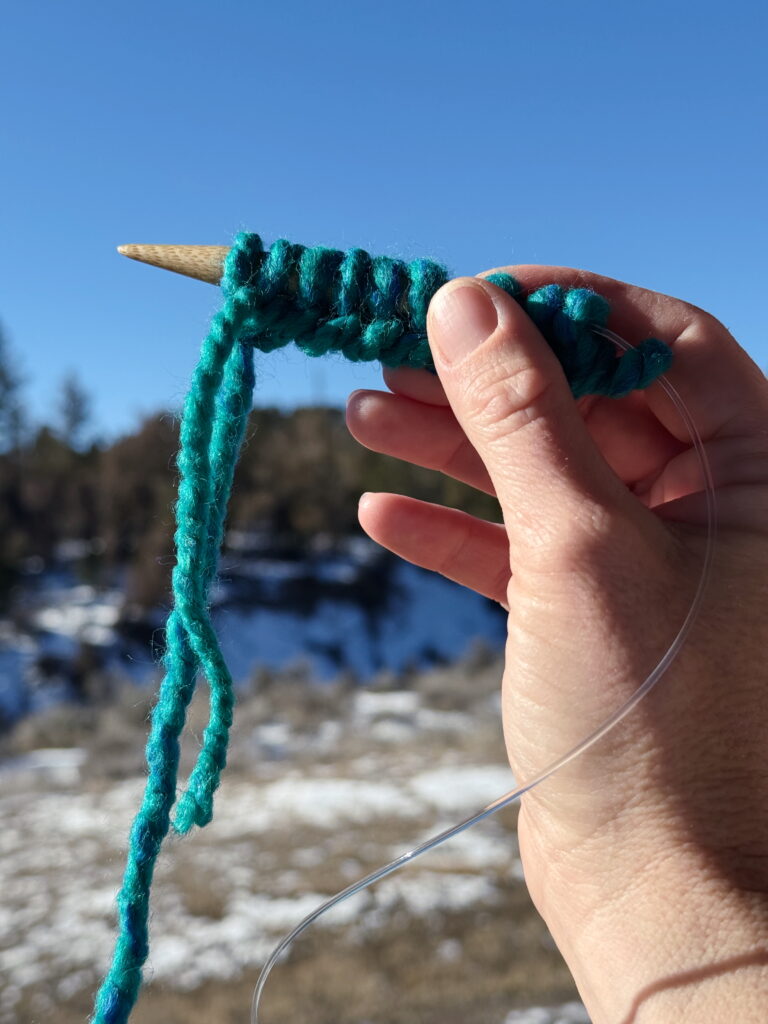
Knit stitches held in right hand after casting on.
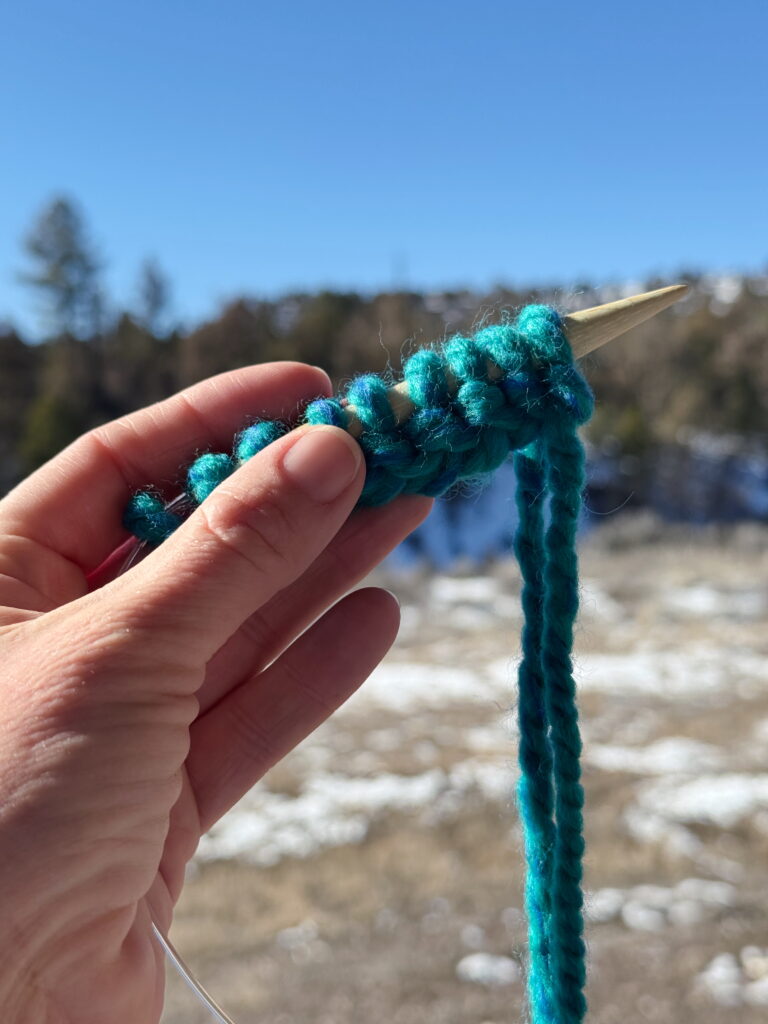
Knit Stitches held in left hand after turning the work.

Turning your work is a simple hand switch. You’ll flip the knitting needle that is full of stitches from your right hand to your left hand, so the tip is facing right. This will set you up to make your first knit stitch and start knitting in flat rows.

Below are both video and written tutorials to help you learn how to turn your work. Working on the Beginner Coaster? You can check your pattern here.

Kids’ Video Guide: How to Turn Knitting

Turn Your Work (Kids’ Knitting Lesson)

Kids’ Picture Guide: How to Turn Knitting

Step 1: From Right Hand

After you have cast on (or finished making a row), your stitches will be on the needle held in your right hand. The tip of the needle will be pointing toward the left.

A completed row of knit stitches held in the right hand before turning the work.

Step 2: To Left Hand

To turn your work, flip your knitting needle over, so the tip points toward the right, then place it in your left hand. Pick up the empty knitting needle with your right hand, making sure it points toward the left.

A completed row of knit stitches held in the left hand after turning the work.

Once you are holding the needle with stitches in the left hand and the empty needle in the right hand, you will be set up to start making your first knit stitches.

Up Next

The knit stitch. Go to Kids’ Lesson 5 to continue.

Hands preparing to teach the knit stitch in the next kids' knitting lesson.

Return to the Kids’ Knitting Guide.

Kids’ Knitting – Cast On

Lesson 3 in the Kids’ Knitting Guide showing how to cast on stitches to start a beginner knitting project.

Lesson 3: Cast On (The Long Tail Cast On)

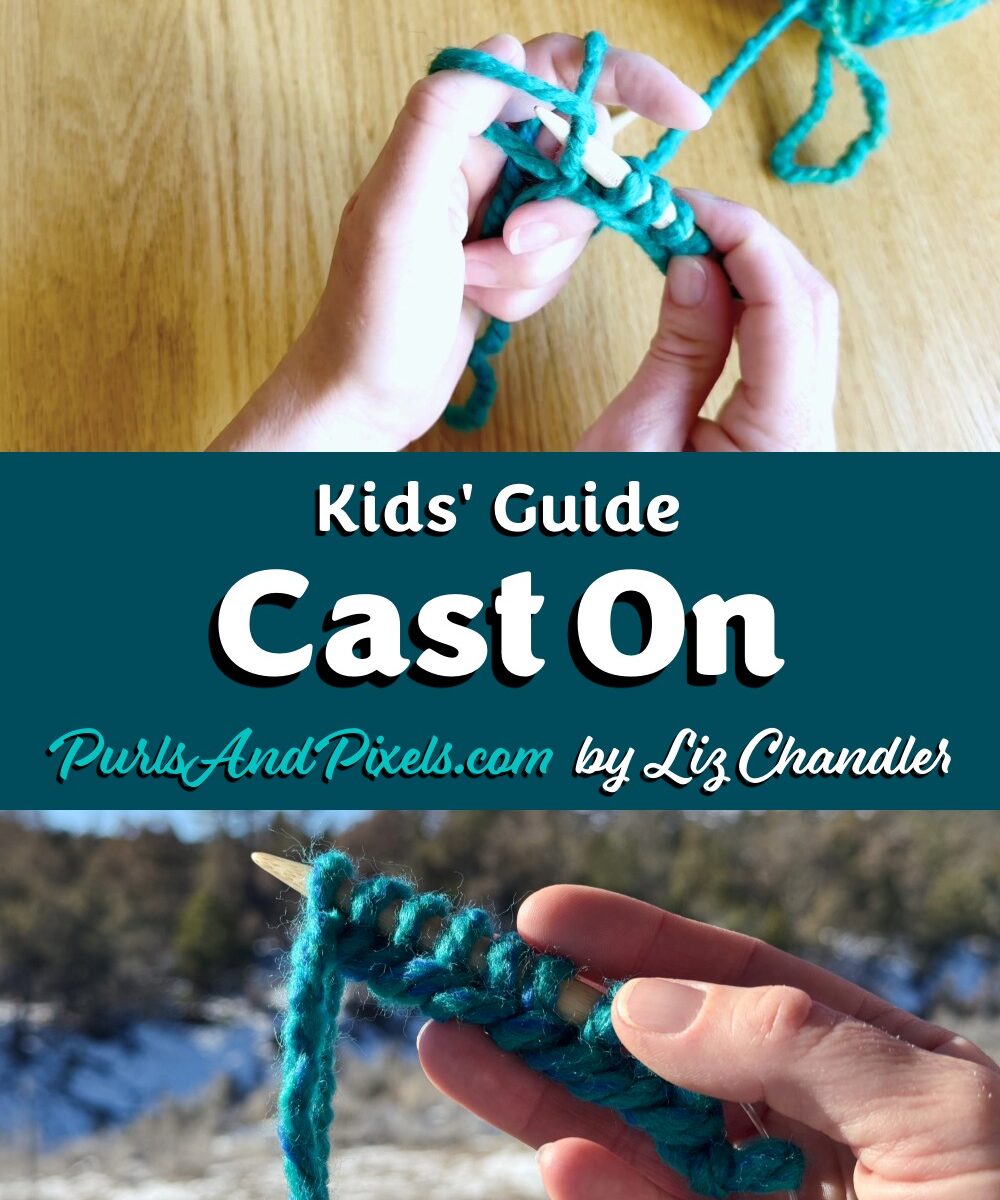
The long-tail cast-on is a way of creating your first knitted row of stitches. In this kids’ knitting lesson, you will learn the long-tail cast on so you can knit your first project.

“Cast on” is knitter-speak for putting your first stitches on the needles. There are a lot of different ways to cast on. Here, you’ll learn the “long tail cast on.” It’s called this because you pull a long piece of yarn (or “tail“) out of the ball before you start. Using that long tail, you will make loops that wrap around your knitting needle. These “cast-on stitches” make the base of your knitting project.

Check your knitting pattern to see how many cast-on stitches you need for every new project. Since we will make a coaster first, you can start by making ten (10) cast-on stitches.
Grab your knitting needles and your yarn. It is time to cast on your first knitting project!

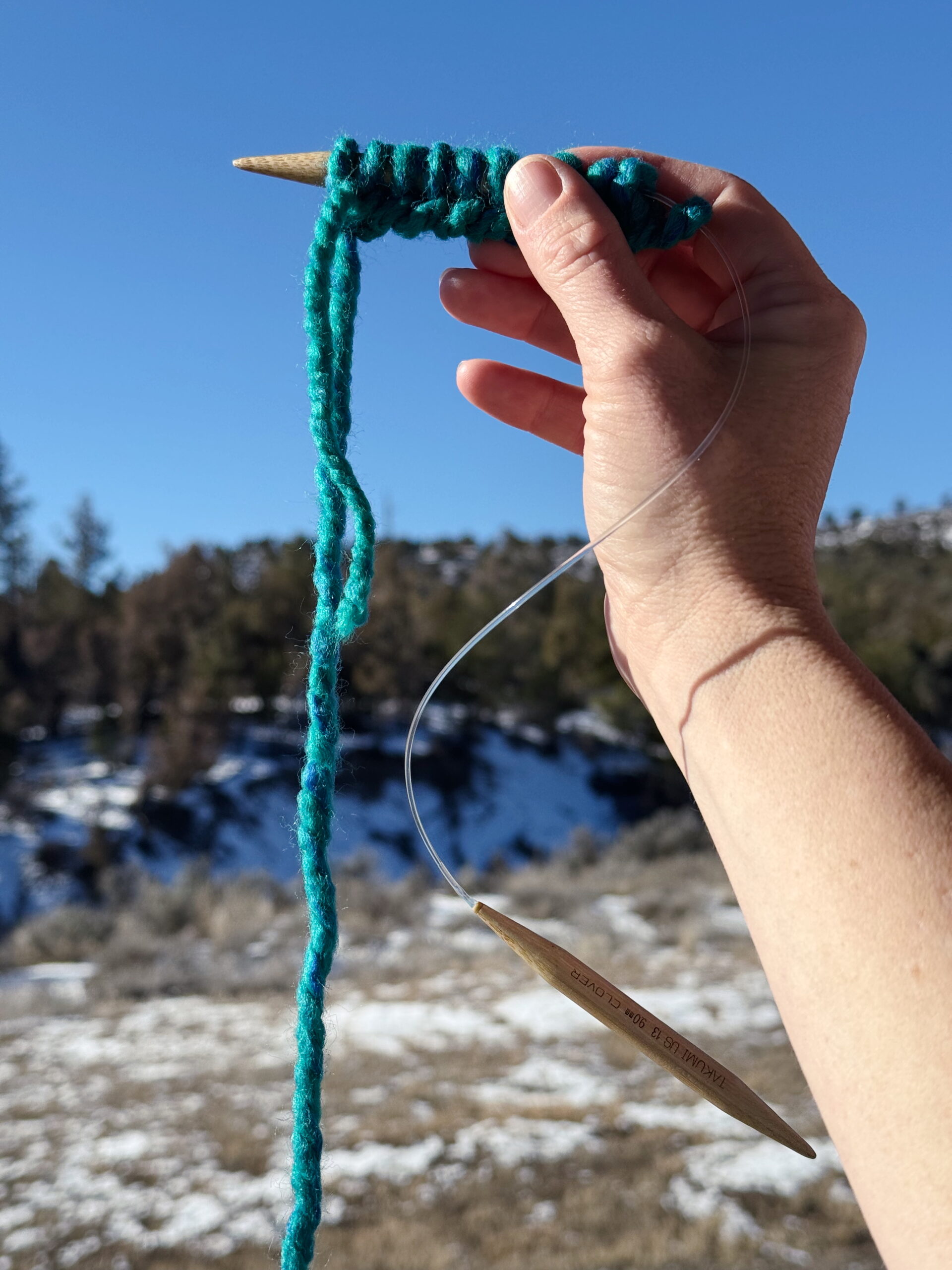
Super-bulky yarn cast on to a circular knitting needle, ready to begin knitting a flat coaster.

Your first row

Below are both video and written tutorials to help you learn how to cast on stitches. Working on the Beginner Coaster? You can check your pattern here.

Kids’ Video Guide: How to Cast On

Cast On for Kids (Beginner Knitting Lesson)

Kids’ Picture Guide: How to Cast On

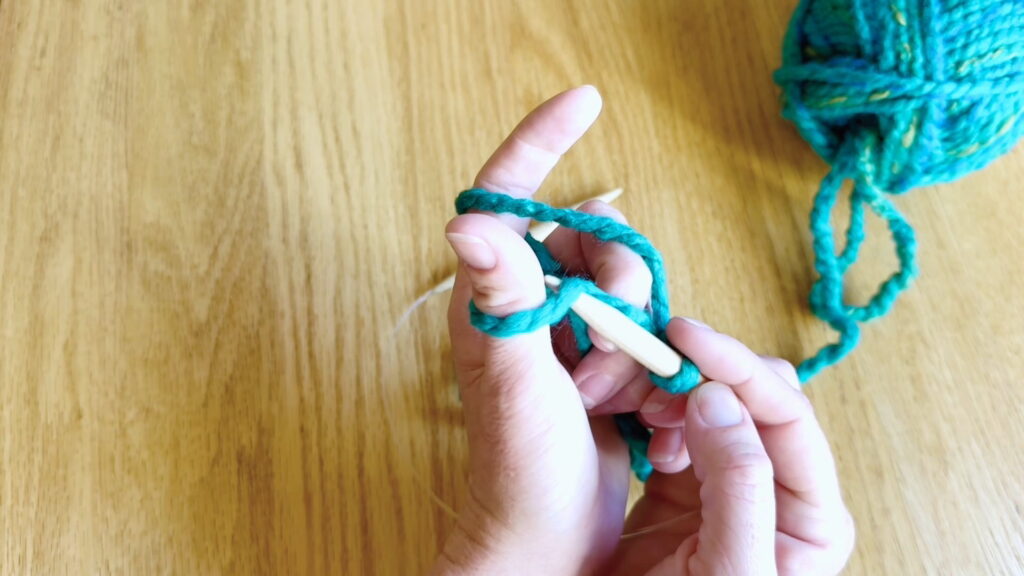
After you have made and placed your slipknot, follow the steps below to hold your yarn and needles so you can start making cast-on stitches. Then, you’ll begin adding cast-on stitches to form your first row.

How to Hold the Yarn for a Cast On

Hold Step 1: Pinch

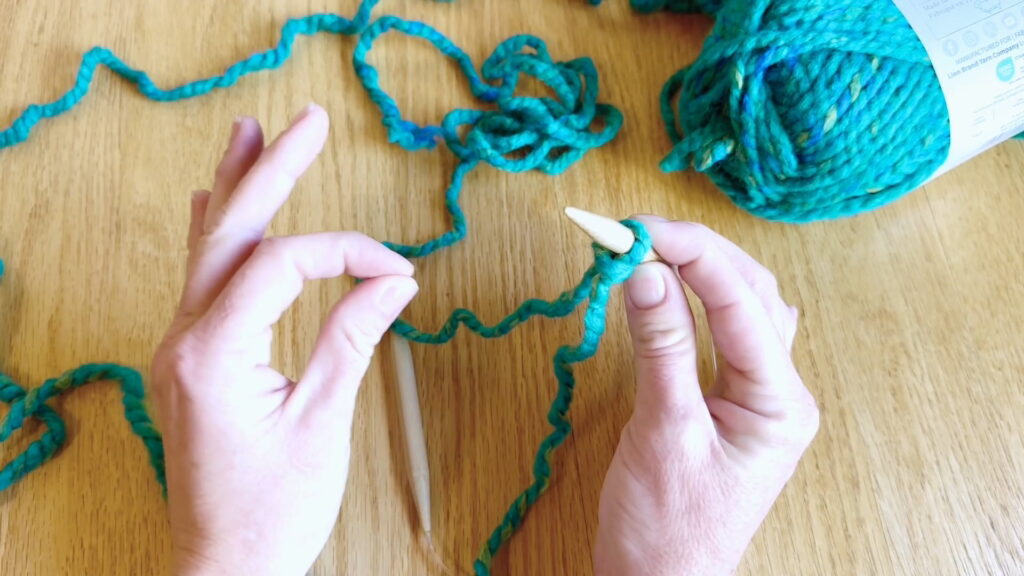
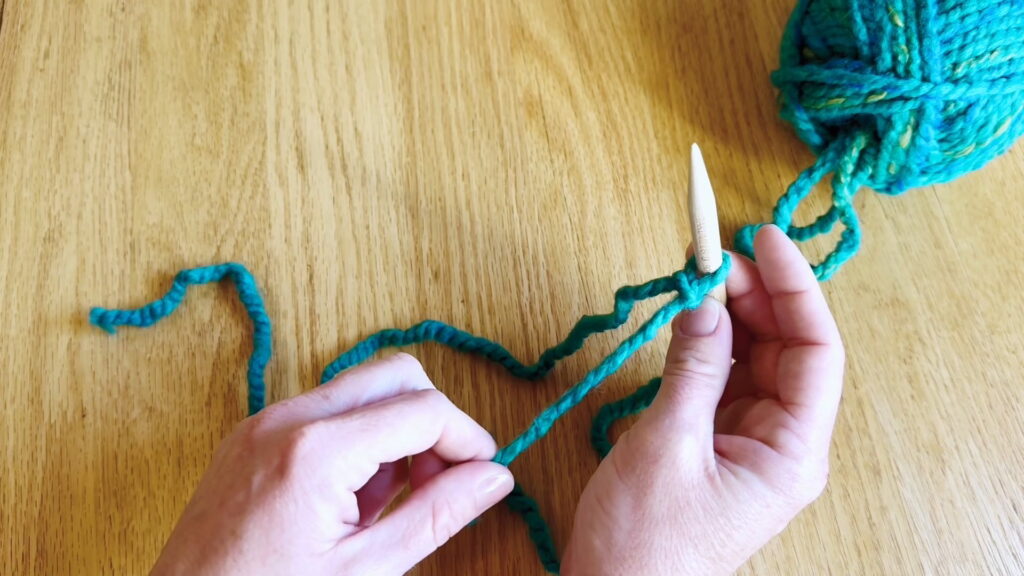
Hold the knitting needle tip with the slipknot in your right hand. Pinch your left thumb and pointer finger together, holding the other three out.

Knitting needle with a slipknot held in the right hand while the left thumb and pointer finger pinch together.

Hold Step 2: Under

Place the pinched fingers under the ends of the slipknot.

Pinched fingers placed under the yarn strands near the slipknot to prepare for the long tail cast on.

Hold Step 3: Grab

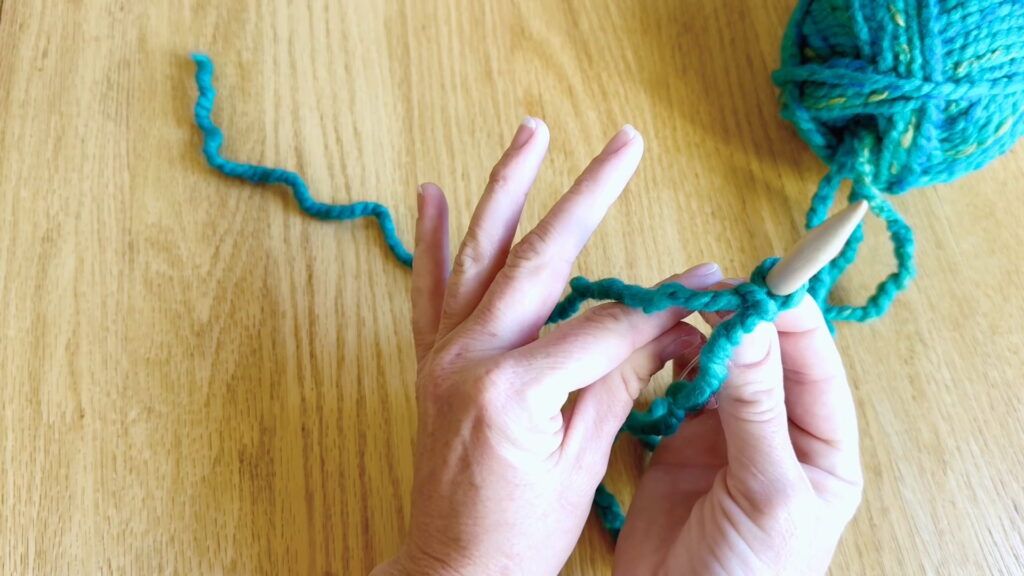
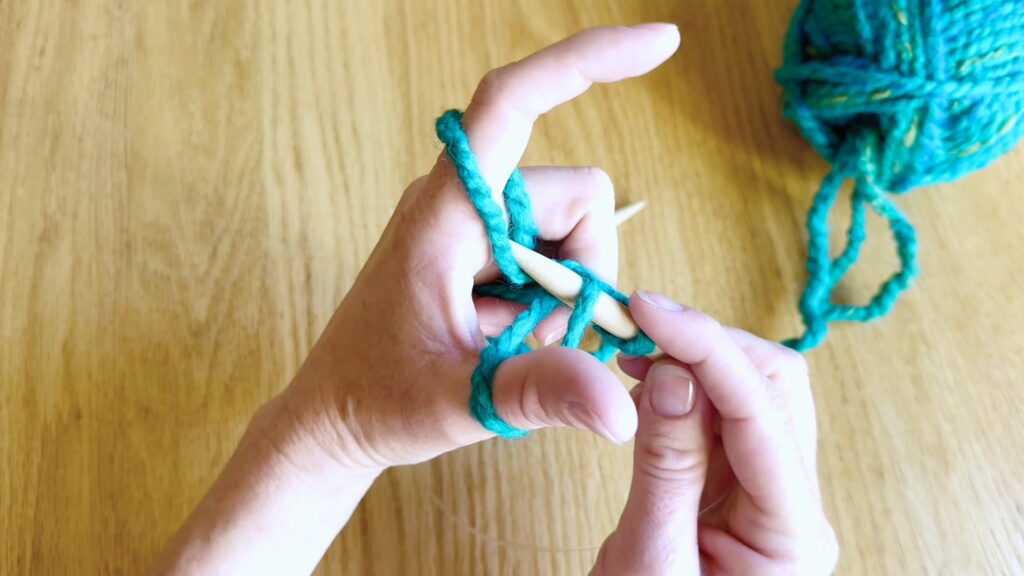
Close your hand over the yarn and grab the yarn with the last three fingers on your left hand.

Left hand closed over the yarn with the last three fingers holding the yarn strands.

Hold Step 4: Rotate

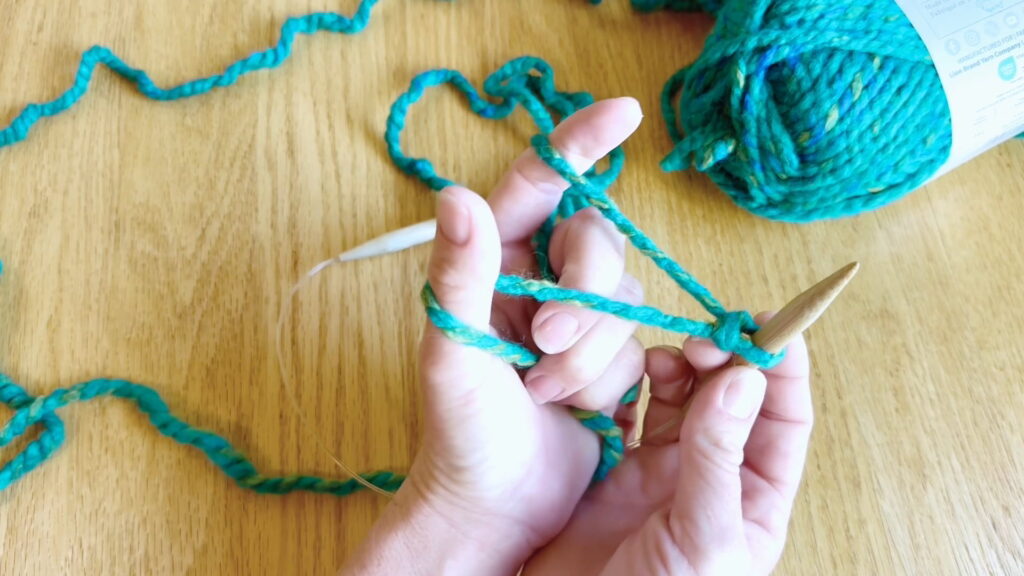
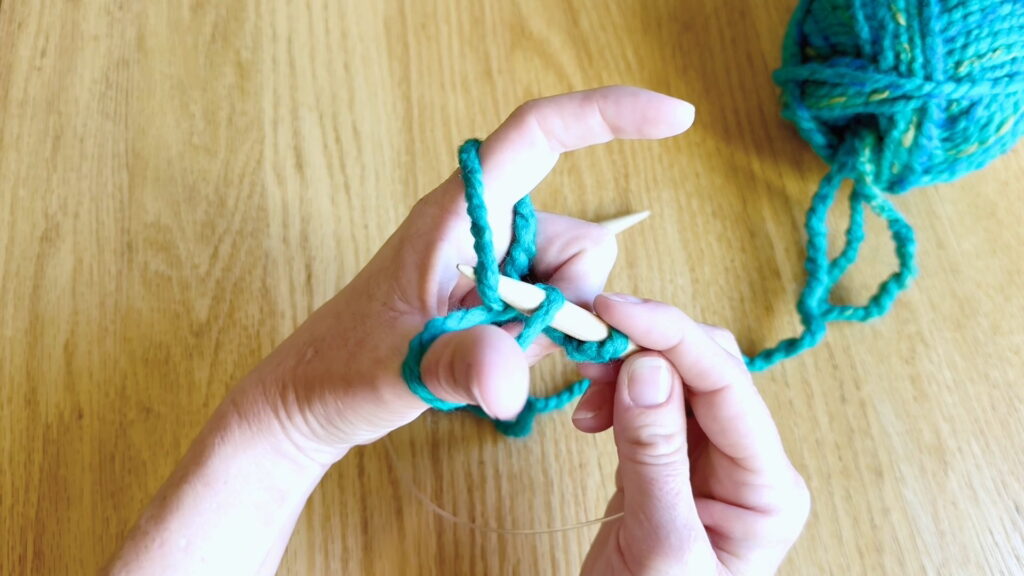
Rotate your left hand so that you can see your last three fingers and spread out your thumb and pointer fingers, so each holds one strand of yarn.

Left hand rotated so the thumb and pointer finger each hold a strand of yarn for the cast on.

Once you are holding the yarn and needles correctly, you will start making cast-on stitches.

How to Make Cast-On Stitches

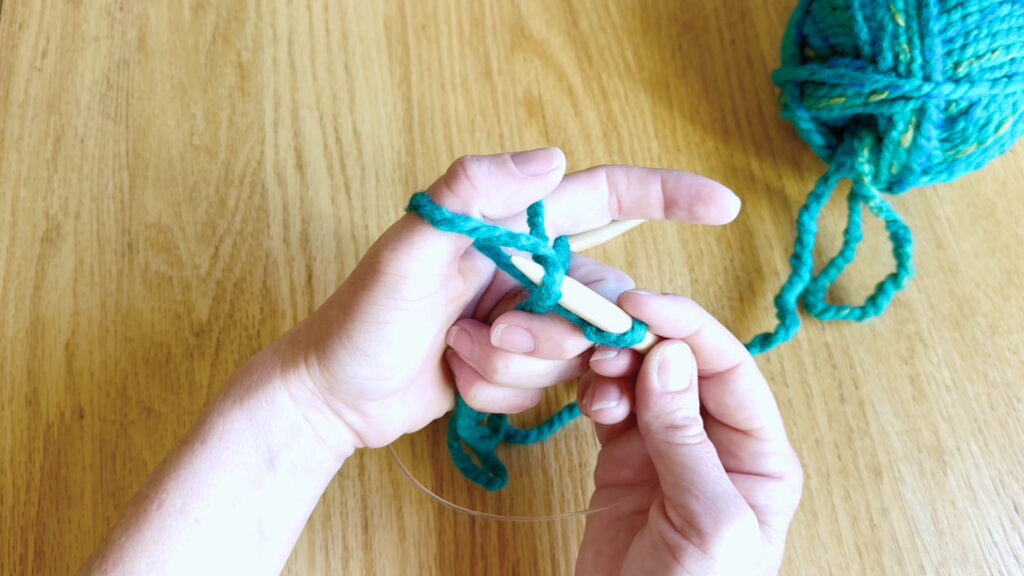
Cast On Step 1: Under 1

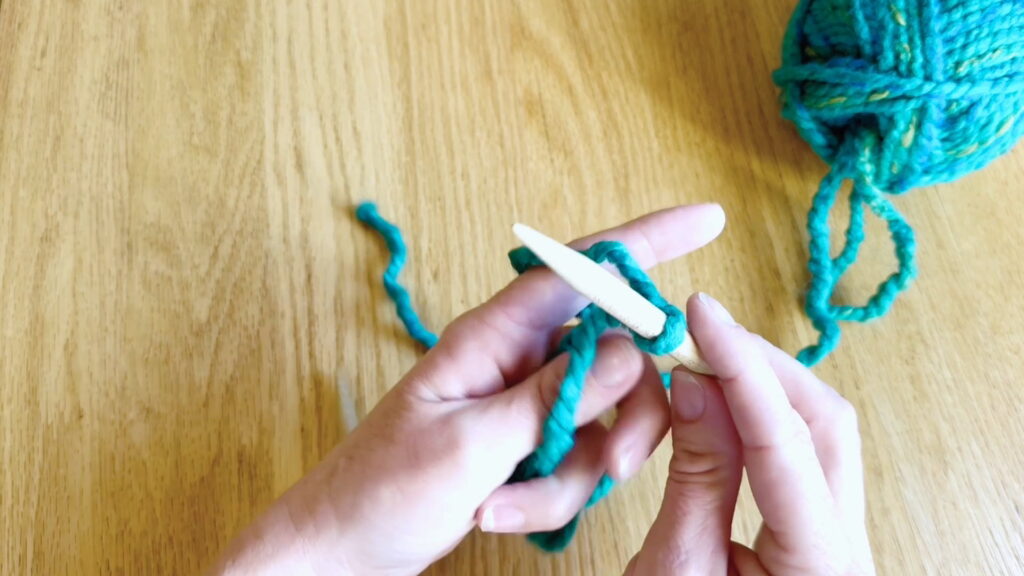
Move the needle tip under the strand of yarn that is looped around your left thumb.

Knitting needle tip moving under the yarn strand looped around the left thumb.

Cast On Step 2: Over 2

Bring the needle tip over the next two strands moving toward your palm.

Needle tip moving over the next two yarn strands toward the palm during the cast on.

Cast On Step 3: Grab the Yarn

Grab the second strand of yarn with the needle tip by placing it over the yarn and pulling the needle and yarn toward your thumb.

Needle tip grabbing the yarn strand and pulling it toward the thumb to form a new loop.

Cast On Step 4: Pull it Through

Pull the yarn and needle tip through the yarn loop that is on your thumb.

Needle tip pulling the yarn loop through the loop held on the thumb.

Cast On Step 5: Slide Off Thumb

Slide the loop off your thumb. Make sure to keep the loop on your knitting needle. The loop you just made on your needle is your second cast-on stitch.

New cast on stitch slid off the thumb and placed onto the knitting needle.

While continuing to hold the yarn in the same way, repeat cast on steps one through five to make as many stitches as your pattern instructs. For our coaster, stop casting on stitches when you have 10 on the needle.

Up Next

Turn your work. Go to Kids’ Lesson 4 to continue.

Knitting work ready to be turned to begin the next lesson.

Return to the Kids’ Knitting Guide.

Kids’ Knitting – Slipknot

Lesson 2 in the Kids’ Knitting Guide showing how to make a slipknot for beginner knitting.

Lesson 2: Making a Slipknot

A slipknot is the first loop you will put on a knitting needle to begin a project. In this kids’ knitting lesson, you’ll learn to make a slipknot to start your first guided knitting project.

To start knitting, you will make a slipknot as your first stitch. Wrap the yarn around your hand, bring a bit up and under to create a loop with a knot at the bottom. This loop starts big and then slips tighter when you pull the end of the string.

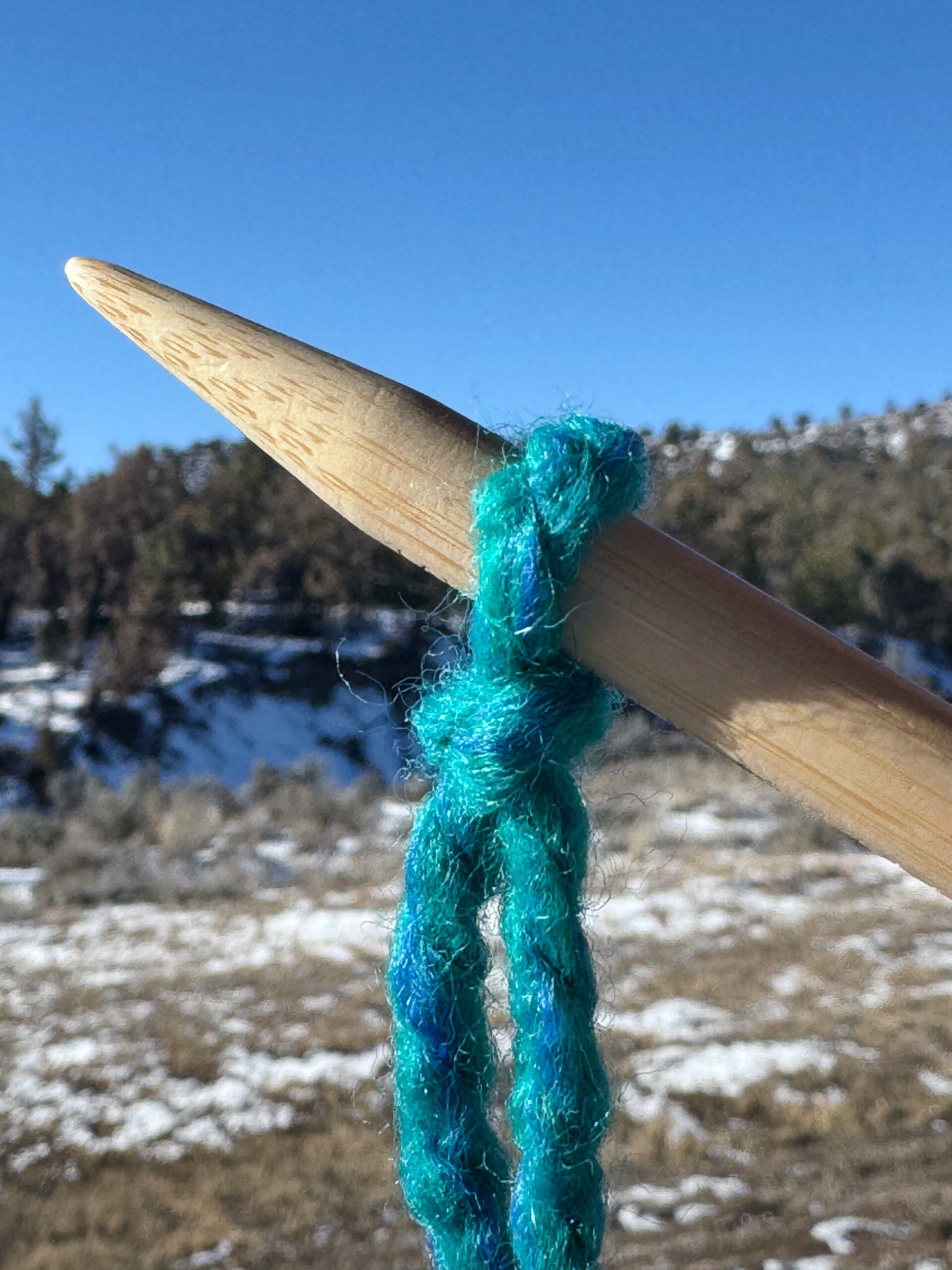
Closeup of the tip of a knitting needle with a slipknot looped onto it.

Your first stitch

Below are both video and written tutorials to help you learn how to make a slipknot. Working on the Beginner Coaster? You can check your pattern here.

Kids’ Video Guide: How to Make a Slipknot

Slipknot for Kids (First Knitting Stitch)

Kids’ Picture Guide: How to Make a Slipknot

Step 1: Pull the Tail

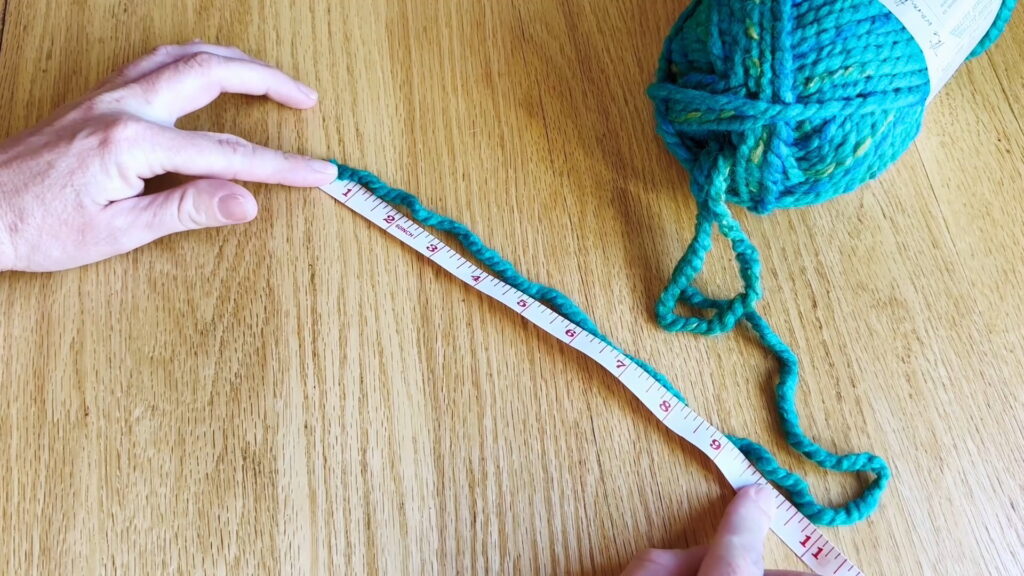
Find the end of the yarn and pull it out of the ball. Measure about 2 inches of yarn for every stitch you need to cast on. For our coaster, measure out 20 inches of yarn. This is your “long tail.”

Yarn pulled from the ball to measure a long tail before making a slipknot.

Step 2: Wrap Around Your Hand

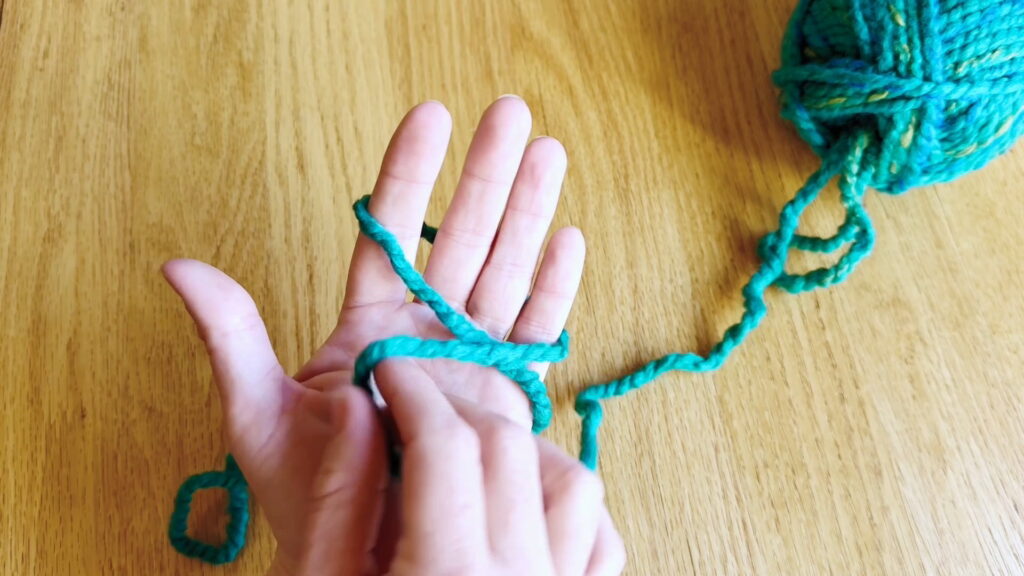
Starting at the 20-inch point, wrap the yarn around your left hand so that it crosses over your palm.

Yarn wrapped around the left hand with the tail crossing over the palm.

Step 3: Loop Under

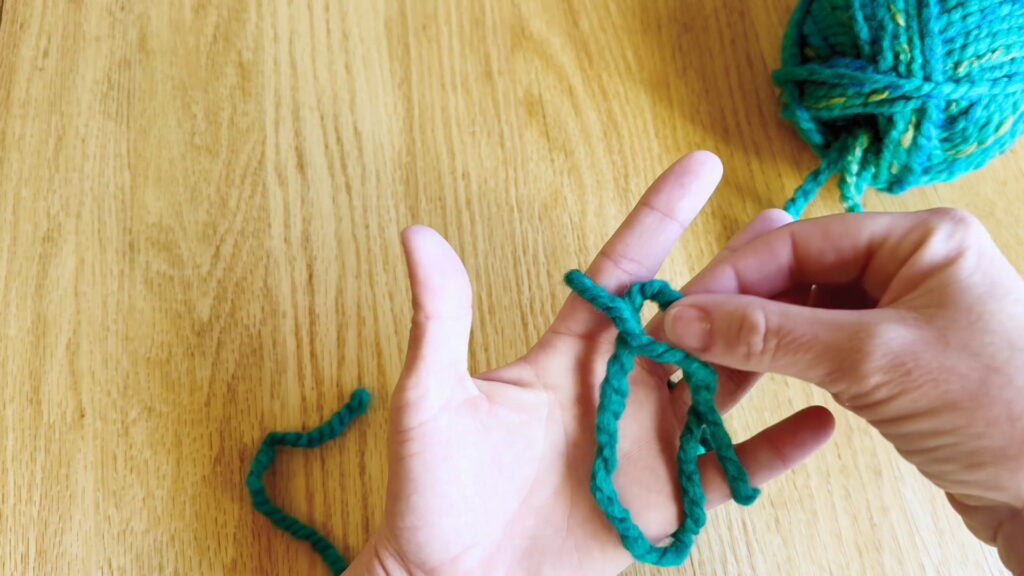
Loop the yarn you are holding in your right hand under the yarn that is wrapped around your left hand. This will make a small loop. Pinch the loop and carefully take your left hand out of the yarn.

Yarn loop being pulled under the wrapped strand to form a small loop.

Step 4: Pull Up

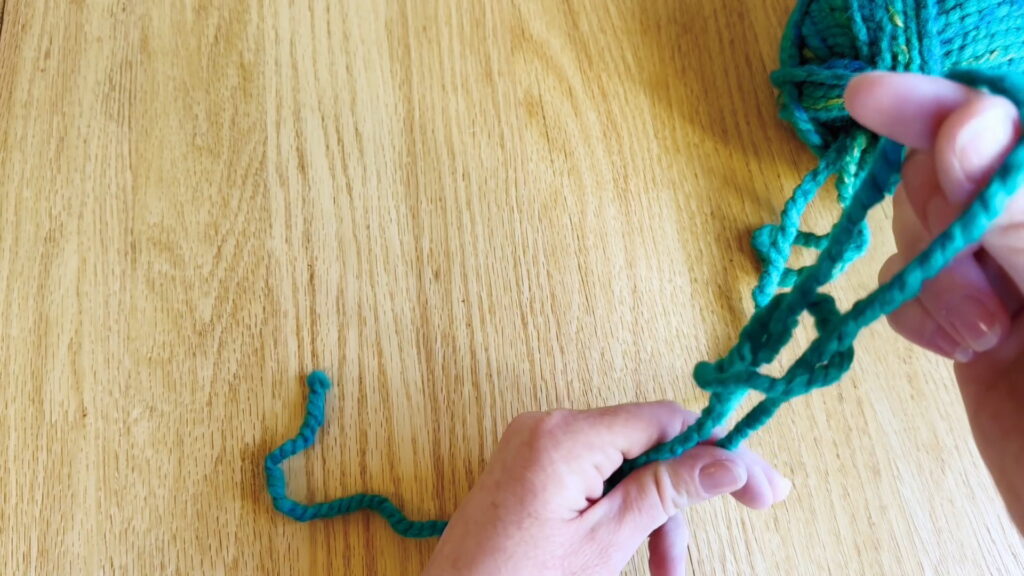
Hold the loop in your right hand and gently pull on the ends of the yarn with your left hand. This will tighten the knot at the bottom of the loop.

Hands pulling the yarn ends to tighten the knot at the bottom of the loop.

Step 5: Tighten

Continue pulling on the yarn ends to tighten the loop until it is small enough to fit around your finger loosely.

Slipknot loop tightened until it is small and loose enough to fit around a finger.

Step 6: Slip Onto Needle

Pick up one end of your circular knitting needle in your right hand with the tip pointing toward the left.

Slide the slipknot onto the knitting needle tip.

Tighten the slipknot so it fits snugly around the needle but can still slide back and forth.

Slipknot loop slid onto the tip of a circular knitting needle.

Up Next

Now we can finish our cast on. Go to Kids’ Lesson 3 to continue.

Link: next lesson, cast on.

Return to the Kids’ Knitting Guide.

Kids’ Knitting – Tools

Lesson 1 in the Kids’ Knitting Guide showing how to choose yarn, knitting needles, and beginner knitting tools.

Lesson 1: Choosing Yarn and Needles

In this lesson, you’ll learn how to choose yarn, needles, and knitting tools so you can start your first knitting project.

As a new knitter, you’ll discover an exciting world of yarn and knitting needles. To keep things simple, we are going to start with just one type of yarn and one pair of knitting needles. They will be the perfect set of kids’ knitting tools to learn the basics and make all five knitting projects.

Kids and beginners looking for a fast project should choose extra-thick yarn and knitting needles, plus a few small gadgets to help finish up. Use the affiliate links here to shop on Amazon or you can usually find these knitting supplies at your favorite local yarn shop.

Video Guide: Knitting Supplies for Kids & Beginners

In this video, I’ll walk you through the knitting supplies for this series of lessons. Then, keep reading below to find everything you’ll need.

Kids’ Knitting Materials (Everything Needed for All Lessons)

Yarn

The thickest, squishiest yarn that is still easy to handle is called “super-bulky” or “No. 6” yarn on the label. This fluffy string knits up in a flash. Here, we will use Wool-Ease Thick & Quick by Lion Brand Yarn. I worked in the color “Bluegrass,” but there are lots of choices. Choose your favorite! You will need seven balls of yarn to make every pattern in the Kids’ Knitting Guide. Or start with one ball of yarn for your first project.

Knitting Needles

Each yarn size has knitting needle sizes that match. For our super-bulky yarn, we’ll use a thicker needle. The size of needles is shown on the package with a US number and millimeter number. To learn with this series, look for a needle that is labeled US 13 (9 mm).

Instead of using the two sticks you might imagine when you think of knitting needles, we are going to use a “circular knitting needle.” This knitting needle has a bendy cable between the two pointy sticks. It will let you knit both flat things, like scarves, and round things, like hats. The cords can be long or short. For now, choose a circular needle that is 16 inches (41 cm) long.

The last thing you’ll need to choose from a knitting needle is material. They often come in metal, wood, and bamboo. When you’re learning, choose bamboo. It helps keep your yarn from slipping off your needles. Plus, it’s a little quieter to work with.

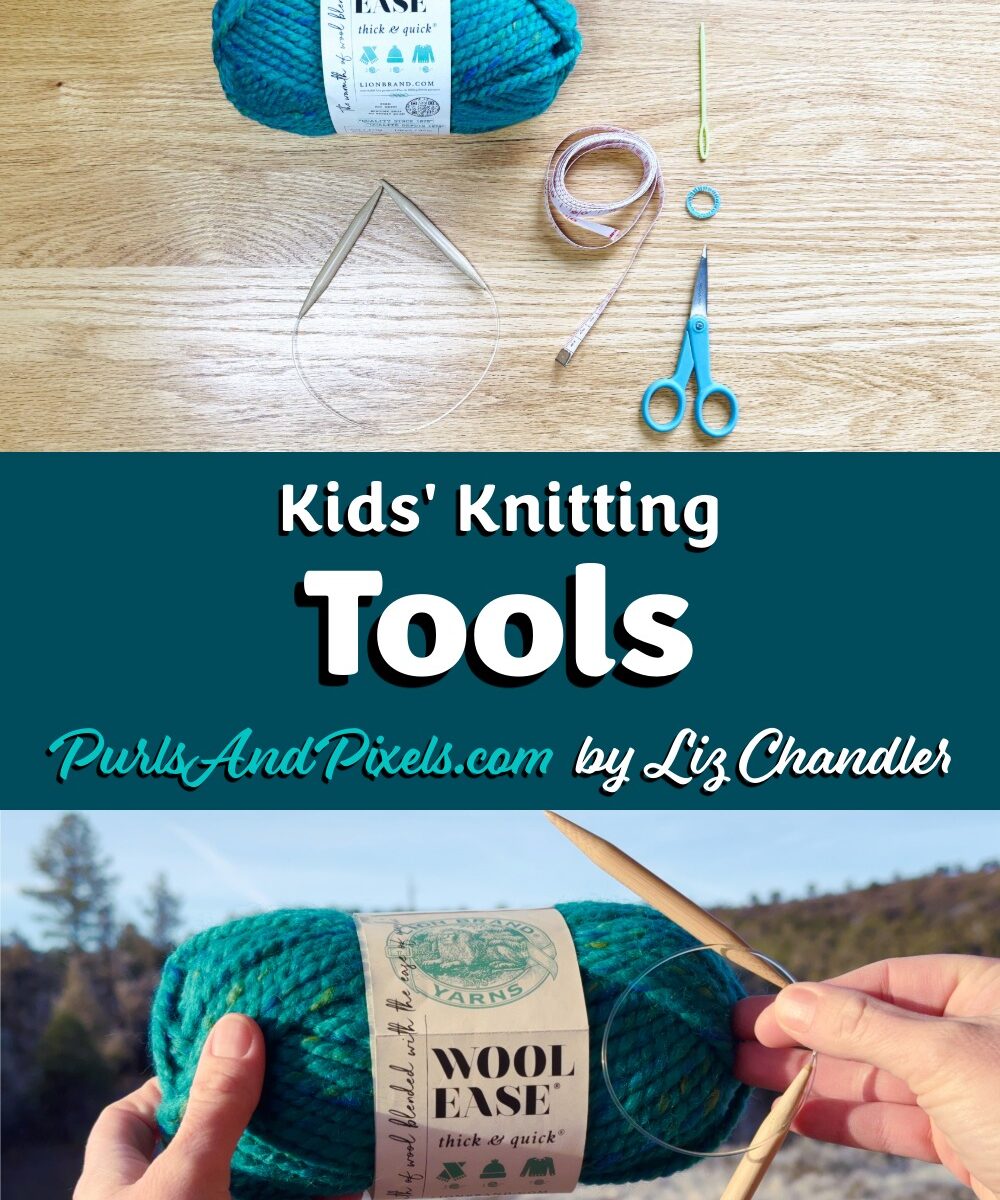
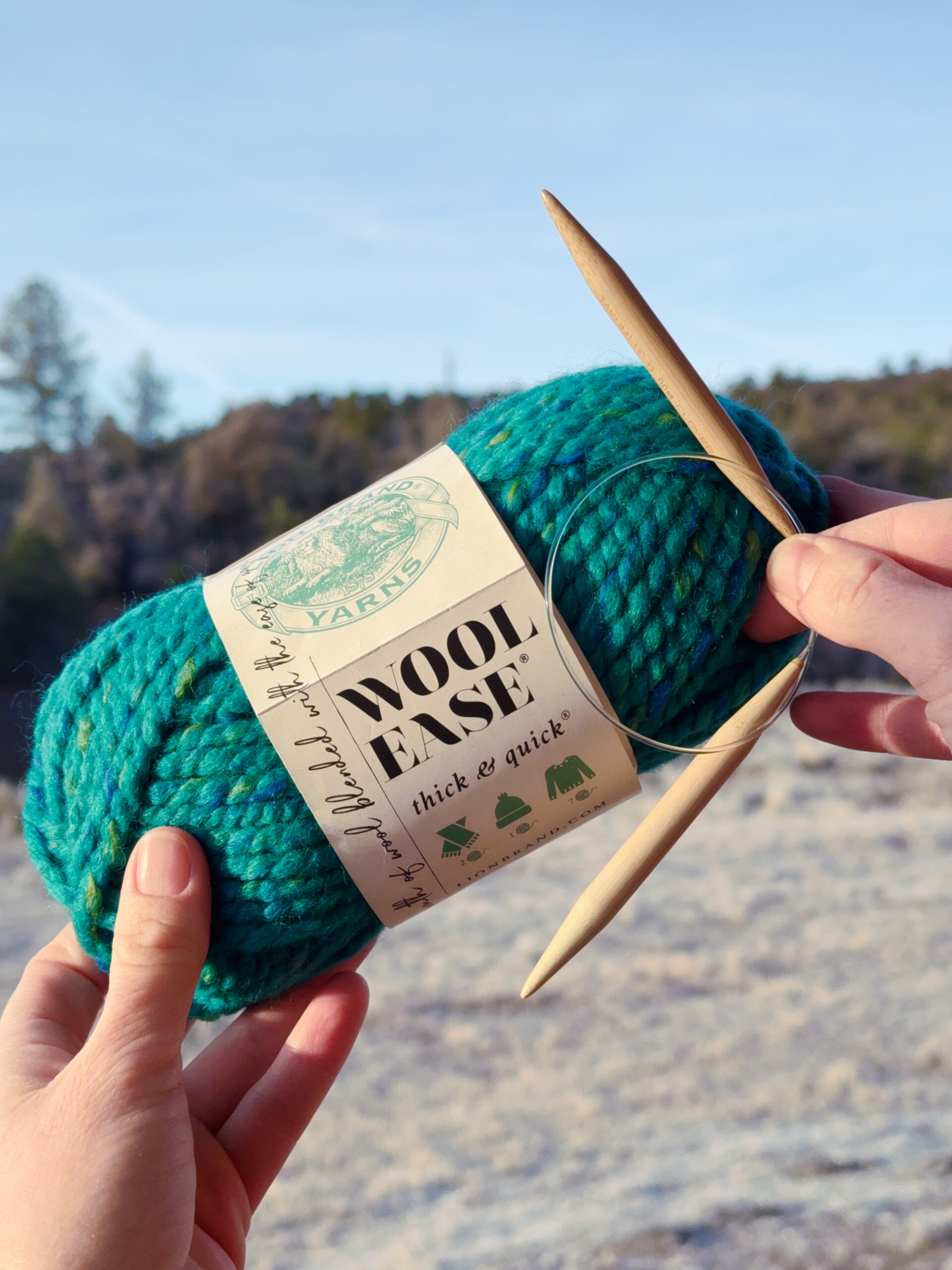
Super-Bulky Wool-Ease Thick & Quick by Lion Brand Yarn in the color Bluegrass (a teal and blue combination) held in hands with a circular knitting needle.

Other Kids’ Knitting Tools

Now that you have yarn and needles, you’ll just need a few more small tools.

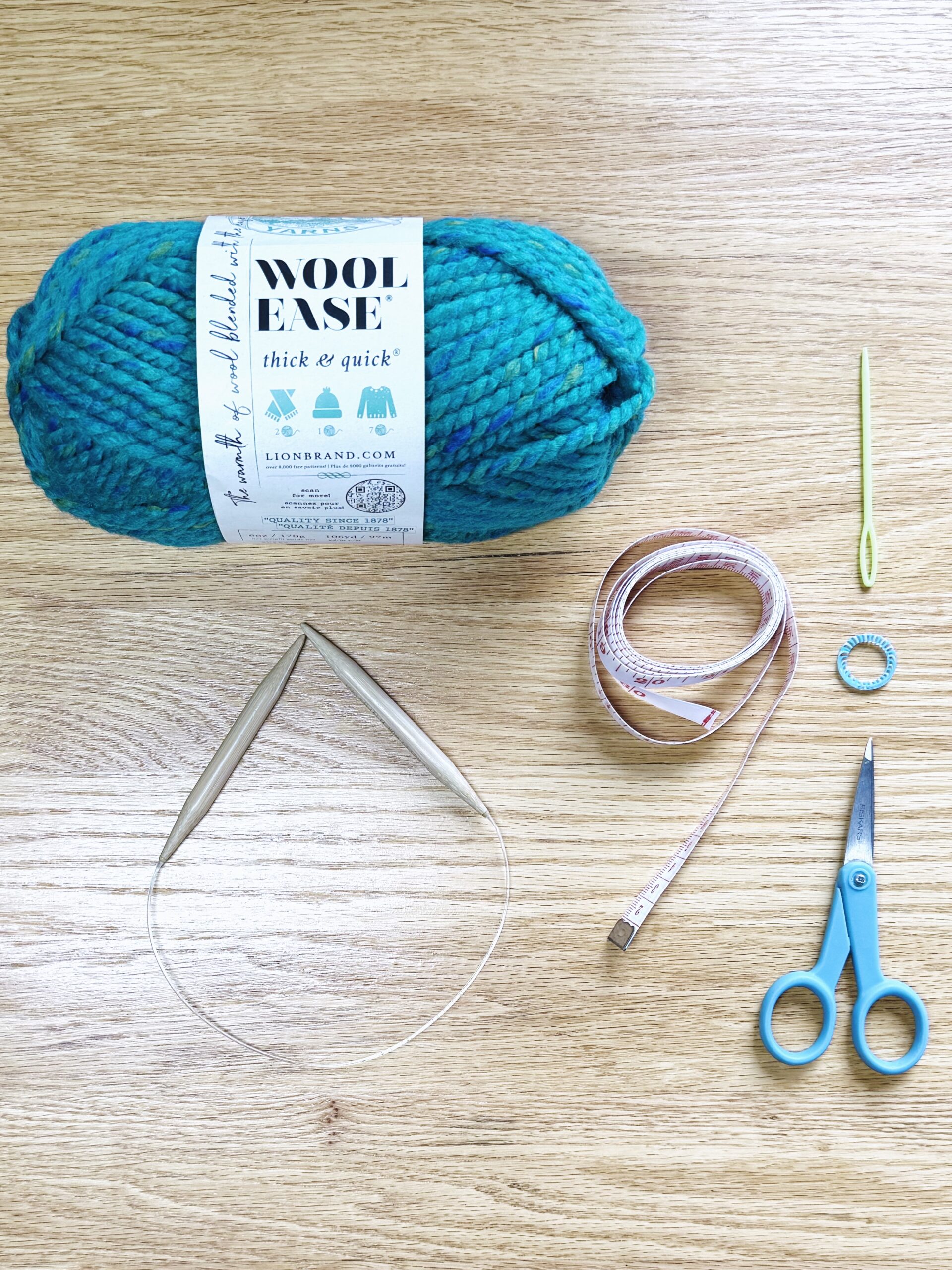
A measuring tape is helpful for your whole project. You’ll measure your yarn and your knitting projects to make sure they are the right size.

A stitch marker is a small ring that you can slip onto your knitting needles. This will help you keep track of where you are in your knitting projects.

Darning needles look like big sewing needles, but they are not sharp. These let you sew the yarn ends back into the knitting project. Make sure you get a darning needle with a large opening (called the needle “eye”) for our big yarn.

Scissors clip the leftover yarn away. These are make just for kids, but all scissors are sharp! (Kids, be careful and adults, make sure you help or supervise.)

Below, you’ll find a complete shopping list. Gather your tools and we can start knitting!

Your First Knitting Shopping List 🧶

  1. One ball of Wool-Ease Thick & Quick by Lion Brand Yarn in your choice of color. (Shown in the color “Bluegrass.”)
  2. One circular knitting needle that is 16 inches (41 cm) long in size US 13 (9mm). (Shown in Clover Takumi brand bamboo needles.)
  3. One measuring tape.
  4. One large stitch marker. (Shown in ChiaoGoo brand circle stitch markers.)
  5. One large-eye darning needle.
  6. One pair of scissors.
Kids' first knitting supplies for lessons laid on table: Wool-Ease Thick And Quick super-bulky yarn in "Lagoon" blue, bamboo knitting needles US No 13 (9mm), soft measuring tape, darning needle, stitch marker, and sewing scissors.

Next

Find your first knitting pattern. Here we will make a coaster. Open the coaster pattern, and also open your first lesson: Making Your First Stitch. The lessons will teach you how to use a pattern and make your first knitted thing.

This will be fun! Let’s get started.

Return to the Kids’ Knitting Guide.